
OGGS Aquafaba Wants to Help Bakers’ Sustainability Goals
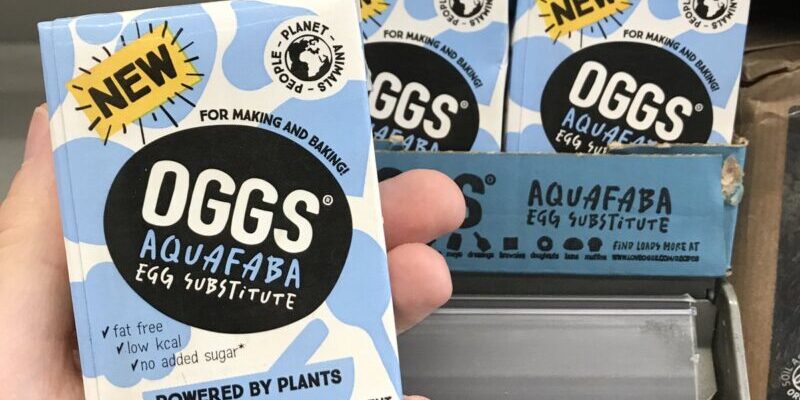
OGGS Aquafaba, the plant-based egg alternative, presents itself as an answer to reducing the bakery industry’s carbon footprint. Swapping out eggs for OGGS results in considerable carbon impact gains, says the company. For every 1kg of liquid eggs, the CO2 emission is 4.67kg compared to just 0.92kg of CO2 emission for OGGS Aquafaba – a 72% reduction in carbon impact.
While egg only accounts for around 20% of the volume of the average sponge cake, it contributes a significant 60% of the CO2 emission of that same cake, a recent study by Zevero, GWP Report comparing Alternative Foods to animal-based products, has found. Manufacturers switching even 20% of egg for OGGS in baking can go a great way towards meeting internal and external sustainability and carbon neutral goals.
Founder of OGGS, Hannah Carter, says: “The results of our trials so far are quite staggering. We’ve always known that plant-based has some big benefits when it comes to improved sustainability, and now the results truly speak for themselves. Until recently, we only provided Aquafaba for grocery and food service. Historically, it’s been difficult to compete on price, but with the current market Aquafaba is now becoming a cost-effective solution that offers real sustainability gains.”
OGGS is already working with two of the largest British bakery manufacturers on their sponge cake products who are replacing eggs with the brand’s Aquafaba product.
OGGS Aquafaba is made using chickpeas and has been through a R&D process involving two top universities in the UK and Portugal to develop a consistently performing plant-based egg alternative, which works effectively for large scale manufacturing.
100ml of OGGS Aquafaba offer 85% fewer calories than egg (just 18 calories per 100ml compared with 131 calories per 100ml with egg), 96% less saturated fat than egg, 88% less salt than egg.