
How to Navigate a Mature, Demanding Market: Frozen Desserts, a Growth Catalyst
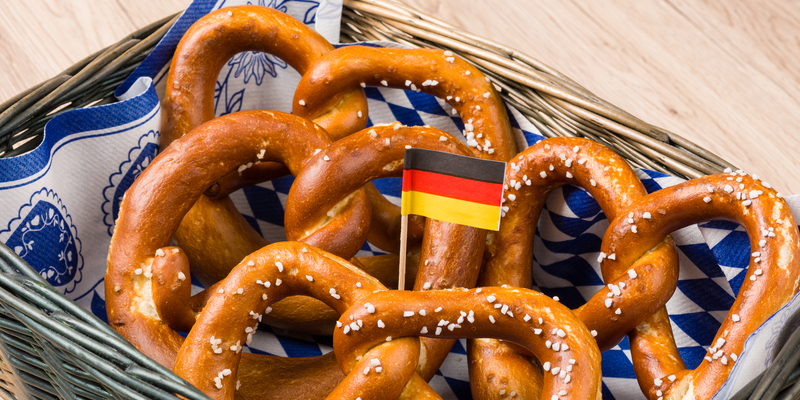
The German market for bakery goods has an appetite for innovation, with a dynamic new product development – all opportunities in a mature environment for business and consumption, which is expected to have a linear, steady evolution over the next years as well.
With help from Euromonitor International research data, we looked into mechanisms driving Germany’s developed market. We found out that baked goods in Germany continued to be stationary in terms of value and volume growth in 2017, which was because of very high levels of maturity and saturation, as well as the large amounts already consumed by the average German.
Therefore, the current value growth of 1% and a marginal increase in retail volume terms in 2017 have to be seen as a success rather than as a failure, Euromonitor comments. Compared to the factors and circumstances working against a better development of baked goods in Germany, such as a mature and saturated market, those in favor of the category mainly consisted of consumers trading up to higher value offerings against a background of favorable economic development in the country.
Cakes Grow Better Than Bread
Looking at other categories of baked goods, we notice more optimistic figures. For example, the cake category recorded a value of EUR3.1bn in 2013 and is forecast to reach EUR3.3bn in 2022.
Dessert mixes are expected to grow from EUR171.3m in 2013, to EUR191.9m in 2022.
The most impressive rise will be seen for the frozen desserts category, which starts from EUR374.5m in 2013 and it will reach EUR414.7m in 2022.
A moderate growth is expected for pastry products from EUR1.1bn in 2013, to EUR1.2bn in 2022.
Regarding the prices, the average unit price of baked goods in Germany increased by 1% in current value terms to reach EUR2.60 per kilogram in 2017, the experts from Euromonitor say. “The low increase was in line with the average rise over the review period. Towards the end of the review period, consumers began trading up to higher value offerings in the form of premium or super premium products, with higher-quality ingredients and innovative USPs becoming more important. Commodity and energy costs were quite stable in 2017,” they add.
Bread Figures Remain Constant
The whole category of bread is expected to reach EUR9.7bn in 2022, recording a moderate decline in comparison with the value forecasted for 2018 of EUR9.8bn.
Unpackaged flat bread posted the strongest current value growth of 3% in 2017; however, with sales of only EUR57m, it remained rather insignificant compared with overall sales of baked goods in Germany, Euromonitor says. “Growth was mainly the result of an increasing number of people with a migration background in Germany, but was also due to Germans without such a background becoming more interested in what was once seen as a very exotic product, as the usual norm in Germany is leavened bread. Sales were also supported by increased availability in consumer foodservice outlets,” the research company adds.
As a prospect, at constant 2017 prices, the baked goods market is expected to record a stagnant development over the forecast period, reaching EUR15.0bn in 2022. Because of the very large size of the category, especially when compared to other categories within packaged food, even a success in a certain category will not translate into a considerable change overall. “The expected stagnation of baked goods over the forecast period is slightly worse than the low growth posted over the review period, which is due to slightly greater maturity and saturation, and also due to coming from an even higher base,” Euromonitor says.
Packaged or Not?
On the other hand, when analyzing the relationship between packaged baked goods (bread, cakes and pastries) and their unpackaged counterparts, in 2017, unpackaged bread was clearly more successful than packaged offerings. In terms of cakes and pastries, the difference in performance was smaller, with a slight better posting for packaged alternatives. “The main reason behind these developments, according to industry experts, was the considerably higher importance of branded products in cakes and pastries compared to bread in the eyes of the German consumers,” Euromonitor says.
“Against the background of an almost unlimited number of different products offered within packaged baked goods on the one hand, and the extremely high level of distribution, usually including even the most remote areas on the other hand, the competition from homemade baked goods remained rather low in Germany towards the end of the review period,” Euromonitor says.
Home baking continued to have only a minor influence on sales of packaged products. This is despite the fact that a small proportion of households almost never buy packaged baked goods for fear of unhealthy artificial ingredients and similar reasons, while quite a large proportion of households at least from time to time bake their own cakes or make their own pastries, the research company explain. For the most part, this was the result of the much higher level of convenience for packaged food compared with homemade products.
However, baked goods continued to benefit from very good distribution in Germany. “Thereby, the trend towards modern grocery formats such as discounters continued, whereas traditional bakeries, which according to Euromonitor International’s definitions are covered under food/drink/tobacco specialists, had to deal with an ongoing decline,” the experts say.
As a conclusion, no major changes are expected in the distribution of baked goods in Germany over the forecast period. Modern grocery retailers are set to dominate, but will be in a somewhat weaker position than in other categories of packaged food due to the importance of stand-alone bakeries, which are covered under traditional grocery retailers, according to Euromonitor research.
If they are in line with current trends and offered at competitive prices, new products introduced towards the end of the review period should see a satisfactory development; at least in the short term and until such trends lose their importance. “The key to success in baked goods in Germany is, according to industry experts, ongoing optimization of internal and external processes and other factors, since strong competition within the category does not give much leeway in the case of substandard procedures or other problems,” Euromonitor concludes.