
Zeppelin Demonstrates Live How Dough Is Made
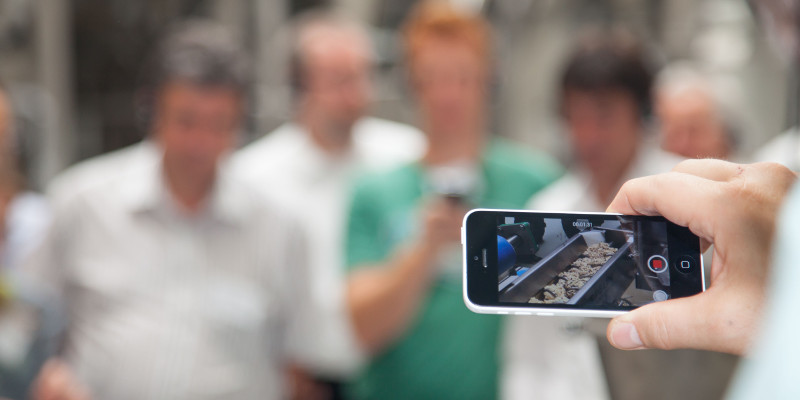
The main topic of Zeppelin’s Food Technology Seminar this year was “continuous dough processing”, at the third edition of event held in Rödermark.
“Overcome boundaries – create values.” This was the motto of the business unit Reimelt Food Technology at the interpack trade fair as well as its customer seminar.
The step from batch to continuous operation is one that requires overcoming a boundary. This topic is very present in the national and international fresh and long-life bakery products industry although it is only slowly being implemented in the companies.
The seminar was held on May 15 in English and on May 20 in German and about 30 industry representatives attended.
Producers naturally wish to avoid fluctuations in quality, save energy, use raw materials economically and reduce the scrap rate. But are they willing to overcome a boundary and switch to fully-automatic and continuous operations to do so? The seminar sought to answer this question, as the decision to modify existing systems and invest in new ones must be well thought out.
Continuous processing
The main advantages of continuous dough processing were clearly illustrated to the participants of the seminar: easier recipe change, easier cleaning, optimized dosing of raw material, energy and raw material savings, constant dough quality and direct monitoring of the mixture and kneading product. Producing dough in a continuous process is not only easier and safer, it is also more economical.
Experts from Zeppelin and from the IGV, Institut für Getreideverarbeitung GmbH (German institute for grain processing) presented their insights to the audience from various perspectives. Frank Zehle, baking technologist at the IGV, first explained the various requirements to dough processing in continuous operation before demonstrating the conversion to Zeppelin’s continuous mixing and kneading system Codos.
Visitors displayed interest in the continuous mixing and kneading process, as well as de demonstration of dosing of liquids and solids and the addition of decorative products.
{gallery}Gallery/zeppelin{/gallery}
Clean processing
In addition to the exchange of knowledge and experience in regard to dough processing, the Food Technology Seminar also provided information on the topic of hygiene. Konrad Nuber, sales engineer at Zeppelin Systems, described the impact of legal requirements, directives and recommendations on the hygienic design of modern plants in the food sector. Dead space free designs, avoidance of leaks, surfaces in contact with the product with an average surface roughness of Ra <0.8 µm that can be cleaned and disinfected as well as the drainability of the plant or its parts to prevent fluids from accumulating are some of the important factors that were discussed.
He also exemplified the points that need to be respected regarding hygienic design requirements when selecting vessels, pumps, valves, measuring devices, pipe connections and components built in the system. Furthermore, he introduced the “Bakery Equipment” EHEDG workgroup which was founded last year and in which Zeppelin, among others, represents the plant manufacturers. Participants also learned about Zeppelin’s experience with CIP plants in the beverage industry and about enhancements that can be made in the bakery industry, for example to sponge and sour dough plants.
Following the positive feedback, Zeppelin Systems announced the next edition will be held in Rödermark, in spring 2015.