
AHDB: Three Post-Brexit Scenarios for Wheat and Flour Trade
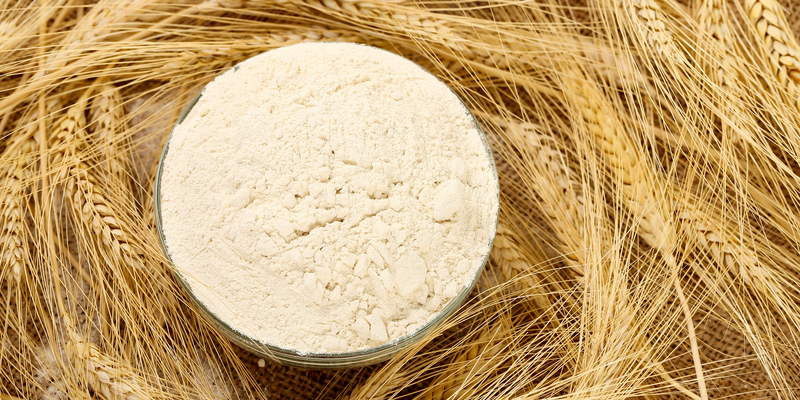
A new report published by the UK AHDB suggests Brexit will have a considerable impact on the UK’s milling industry under a range of trade scenarios.
The “what if” analysis was commissioned by AHDB to help millers and maltsters with their business strategies ahead of Brexit.
It also aims to help give insight into long term implications on planting and highlight potential impacts on grain prices.
The report – Brexit scenarios: Impacts on the UK’s milling and malting sectors – assesses the impact of three post-Brexit trade scenarios on supply and demand for milling wheat, malting barley, flour and malt.
Firstly, a Free Trade Agreement (FTA) with the EU agreeing zero tariffs, secondly a unilateral approach where imports are tariff free but exports are subject to tariffs and thirdly mutual application of World Trade Organization (WTO) tariffs in the case of a so called ‘hard Brexit’.
UK flour trade is likely to experience significant disruption post-Brexit, even if an FTA is negotiated. This is partly due to UK mills’ reliance on global imports of high-quality milling wheat, which may which may disqualify UK flour from preferential access to EU market.
This will impact mills on the British mainland if they lose free access to this market via the cross-border trade. By far the biggest impact could be the loss of trade with the Republic of Ireland, which currently receives two thirds of its flour from mainland British mills.
Dr Martin Grantley-Smith, strategy director for Cereals & Oilseeds AHDB, said: “There could be some tough decisions to be made by UK millers and maltsters in the near future depending on how Brexit pans out. This is a timely report providing some early warning of how the challenges may play out, so that businesses can revisit some of their options for post-march 2019. Up to now our trading arrangements with the EU have been of critical importance and this report clearly shows, whatever the outcome of Brexit, business-as-usual is not going to be an option.”
Wheat and Flour
The UK is, typically, a net importer of milling wheat, while any surplus in feed wheat is exported, according to AHDB. However, tighter domestic supplies of wheat, along with increasing global competition, have created a challenge for UK wheat exports in recent years. Since 2013/14, the UK has been a net exporter of wheat in only two seasons (2014/15 and 2015/16). Analysis of total UK wheat production and consumption (since the early 1990s) shows that the trend in UK wheat demand overtook the trend in UK wheat output in 2016. Subsequently, it is likely that the UK will maintain net importer status for wheat, at least in the near term. Figures 1a and 1b show that the majority of UK wheat imports are from the EU, which is also the main destination for exports.
When it comes to flour, this is traded almost entirely within the EU. More specifically, UK flour is only exported to any great extent from Northern Ireland (NI) and North West England to the Republic of Ireland (RoI), the report shows. The RoI is reliant almost entirely on flour milled in the UK. The flour is produced from wheat grown in the UK, other EU countries and third countries. The NI mills use both imported wheat and some wheat grown in both NI and RoI. There are a number of bakeries in the RoI and so some high-quality goods are also exported back to the UK following further processing. UK flour is reliant on blending UK-produced wheat with imported grains from the EU and, in particular, North America. Flour produced in the UK could contain up to 30% imported wheat.
Scenarios
According to AHDB’s experts, the possible scenarios after Brexit are:
- Free trade agreement (FTA) – potential to agree to zero tariffs but non-trade barriers, such as Rules of Origin, will be a factor and there will be further costs associated with customs control.
“While tariffs will be removed on both imports and exports, there could be a varying impact via the non-tariff issue of the RoO criteria. Quantitative analysis of the cost impact of the RoO criteria was outside the scope of this analysis and so requires further investigation. Customs costs will be incurred but are likely to be small for wheat and barley due to the large volumes traded,” the experts say.
Milling wheat:
- Possible indirect impact via new constraints imposed on flour trade. The effects of these are more likely to be felt in years when the UK has to import a higher proportion of wheat due to issues with domestic wheat quality.
Flour:
- RoO criteria likely to impede the flow in Ireland where at least some flours or goods would include higher levels of non-EU and UK flour than is likely to be permitted (10%).
- Supply chain traceability would need to increase and segregation more carefully controlled – perhaps even separate processing for the domestic and export market.
- The UK’S competitive advantage to supply the RoI export market could be eroded in favor of the EU. The cost impact on consumers is likely to be small.
- Unilateral – The UK retains tariff-free imports from the EU, but will also be open to tariff free imports from other origins on an MFN basis. Exports are subject to tariffs that are accepted by the WTO for the EU.
Milling wheat:
- No substantial increase in the cost of importing milling wheat – millers and consumers retain level of choice.
- Feed wheat prices expected to fall by around 3% due to imposed export tariffs. Generally, expect feed wheat prices to fall more in exporting years as cost of export increases but price fall would be limited by the EUR12/t TRQ tariff.
- Potential to export more feed wheat to North Africa, at the expense of the EU, means higher use of deep-water ports, resulting in lower price received by producer.
Flour:
- Oversupply of flour of around 240 Kt, with biggest impact in NI.
- Initial price fall due to the oversupply would persist until reduction in production capacity (potentially take 2–3 years).
- Mills with associated bakeries expected to fare better in these conditions compared with individual mills.
- Reduced flour exports from mainland UK and NI could pressure supply in RoI.
- Mutual application of tariffs – tariffs are placed on both UK imports and exports to the EU in alignment with the WTO MFN tariffs that are in place for the EU.
This analysis defines the boundaries of the most likely economic outcomes. It is recognized that these scenarios may not be implemented as simply as described above. For example, tariff rate quotas (TRQs) (see below) could be used or a zero tariff FTA may not be possible.
Milling wheat:
- Zero tariff applied to top quality wheat imports, so these are likely to continue and potentially increase.
- EU unlikely to provide wheat of sufficient quality to qualify for the zero tariff – likely that EU quality wheat would enter the UK subject to the non-country specific EUR12/t TRQ for all wheat.
- Potential increase in UK milling premiums as the price of imported wheat likely to be higher.
- Wheat import price likely to increase by around 15% assuming no reduction in flour production.
- Tougher competition for EU export markets but net price of feed wheat is unlikely to fall by more than 3%.
- Some feed wheat likely to continue to be exported from NI to RoI with the additional cost shared.
Flour:
- Flour production expected to be severely hit – expected loss of 235 Kt of exports to the EU, of which 188 Kt are currently exported to the RoI. Some of this loss will be offset by reduced imports.
- Likely that one or two mills would be forced to close with at least one of these being in NI.
- Until mills shut, overcapacity likely to cause major problems across the industry – mills linked with bakeries will be more protected.
Potential import substitution of bakery products.