
Key Ingredients for Shelf Stability
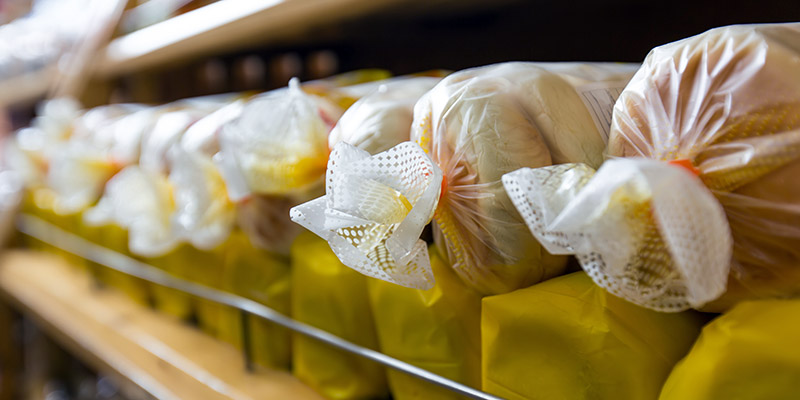
Baked goods have a short shelf life in terms of spoilage by bacteria, yeasts and molds due to the high water activity of products such as bread. Ensuring product consistency and shelf life is no easy task. It’s about understanding all the ways in which ingredients react with each other and the environment, in order to deliver a consistent product—every time.
The recent rise in demand for packaged baked goods has been driven mostly by the health concerns brought on by the COVID-19 pandemic, specifically by a desire from consumers for ‘hygienically wrapped’ products, as well as the move away from the physical bakery counters to online and pre-packed bakery treats.
Changing Consumer Behavior
According to McKinsey and Co., “throughout the pandemic, about 15% of consumers in France, Germany, Italy, Spain, and the UK shopped for groceries on a website that they had never used before and among those consumers, more than 50% said they intended to continue shopping at their newfound site for at least some part of their grocery needs”. As a result of this change in shopper behavior, producers have been looking more closely at how to deliver the best quality products to the door of consumers, and many have been turning to functional ingredients to overcome some of the challenges this can present.
BENEO is an ingredients producer that offers solutions which can be used by small bakeries as well as big industrial players. Rudy Wouters, vice president BENEO-Technology Center told us about how his team has successfully resolved this issue of water migration of iced baked goods by combining BENEO’s alternative sugar PalatinoseTM (isomaltulose) and sucrose in a specific ratio. “This is to ensure that the aw value of the icing is similar to that of the bakery product. The process of managing the aw balance has been fine-tuned for both fresh and frozen baked goods, improving not only the quality of the iced products, but extending their shelf-life as well.”
In a test application on donuts, PalatinoseTM was added to the icing via a two-step process. Based on technical trials, prototype recipes have been created for different aw values. “The test results showed that by using sucrose and PalatinoseTM to balance the aw value and thus limit water migration, the freshly packed iced donuts had extended shelf-life stability. In addition, the icing benefitted from a slightly reduced and more pleasant sweetness in comparison to a pure sucrose icing,” he explained.
In addition to its use in glazes or icings, the alternative sugar, Palatinose™ is also used directly in the dough. In principle, Palatinose™ can be used in a baked product to replace at least 30% sucrose and therefore benefit from the lowering effect on the blood sugar level. The ingredient also has texturizing properties comparable to sucrose, which result in baked goods with a nice brown crust color and a mild, sugar-like sweetness.
DSM is another ingredients manufacturer with a wide portfolio of shelf-life extending solutions. For example, DSM’s BakeZyme® Fresh XL and BakeZyme® Master enzymes address freshness challenges by improving the resilience, freshness and quality of bakery products to maintain a soft crumb and mouthfeel.
“BakeZyme® Fresh XL increases moistness in a range of bread types, including sourdough, white and rye bread. Meanwhile, the premium BakeZyme® Master maltogenic amylase enzyme complements BakeZyme® Fresh XL by enhancing the sensory profile of, and delaying staling in bread applications like ready-to-eat sandwiches (even when refrigerated), and improving the foldability of tortilla wraps. These benefits are important for enhancing consumer appeal and sustainability, particularly when producing tortilla wraps, which rely on excellent foldability,” said Kjeld van de Hoef, business director Baking, DSM.
You can read the rest of this article in the Summer Issue of World Bakers Digital magazine, which you can access by clicking here.