
Spanish Baking Industry Worried by Two New Taxes
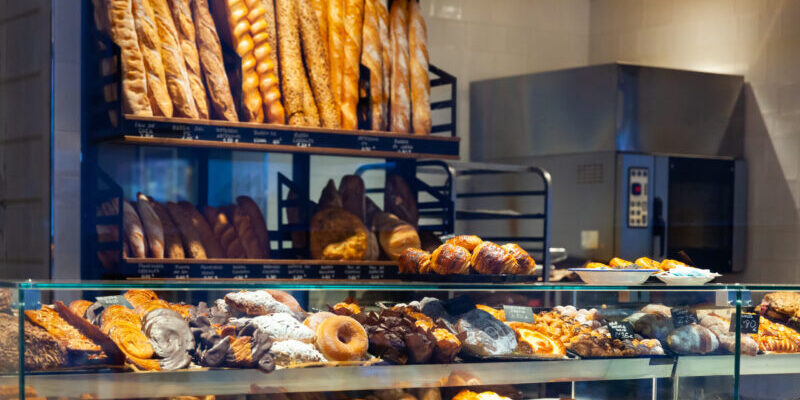
The Spanish Association of the Bakery, Pastry and Pastry Industry (ASEMAC) expressed its worry at two new taxes that take a financial toll on the recovering Spanish baking industry.
Both taxes came into force on January 1, 2023. The first one, approved by legislature in 2022, is a tax on non-reusable plastic packaging, which has a very broad scope and consists of a tax rate of €0.45 per kg of non-recycled plastic packaging. It is envisaged to collect approximately €724m of revenue annually for the Government, according to consulting company Ernst & Young. For the baking industry, the tax concerns the use of non-reusable bread bags that contain non-recycled plastic, either entirely or only partially (it is not taxed if reusable or if the plastic is recycled).
The second tax came as a surprise on December 27, 2022, with the Royal Decree 1055/2022, with the aim of preventing and reducing the impact of packaging and packaging waste on the environment. The main purpose of this new Decree is to make all packaging on the market recyclable by 2030 and, where possible, reusable.
For this reason, companies must design packaging to reduce its environmental impact and the generation of waste throughout its life cycle. Moreover, waste disposal must avoid harming human health and the environment.
According to consulting company KPMG, the new law also made provisions that the packaging producers must create a system to collect and dispose of the packaging they put on the market and all vendors must report the amount of packaging put on the market or face penalties.
“These obligations apply to all types of packaging and materials, covering domestic, commercial, industrial and service packaging,” says Silvia Martín, Director of Food Regulations at ASEMAC. “The latter, in the case of the bakery and pastry sector, would be the well-known bags that we find in bakery sales points in supermarkets. A large part of the companies associated with ASEMAC sell their bakery and pastry products through cardboard boxes that contain several product units. Therefore, they will have to record information on commercial packaging, implying a high impact on their administrative management.”
Both laws entail substantial changes in the operations of baking companies that bear significant costs. “Our industry is going to have to look for alternative materials and assume a huge administrative burden, in a very changing and excessively overloaded environment from a regulatory point of view,” says Martín.
ASEMAC worries that the industry will face renewed challenges to survive because the costs of the circular economy are being transferred to the daily operations of manufacturers.
“In any case, we must not forget that our sector is not immune to the consequences of the war in Ukraine, both because of the supply problems of the agricultural raw materials it uses and because of the increase in the price of energy. For this reason, it is essential that no new administrative or tax burdens arise and that market unity be guaranteed, that is, that there are no regional or municipal regulations on circular economy that hinder the free circulation of our products throughout the territory,” concluded Silvia Martín.