
Inspection & Monitoring: Early Fault Detection Saves Resources
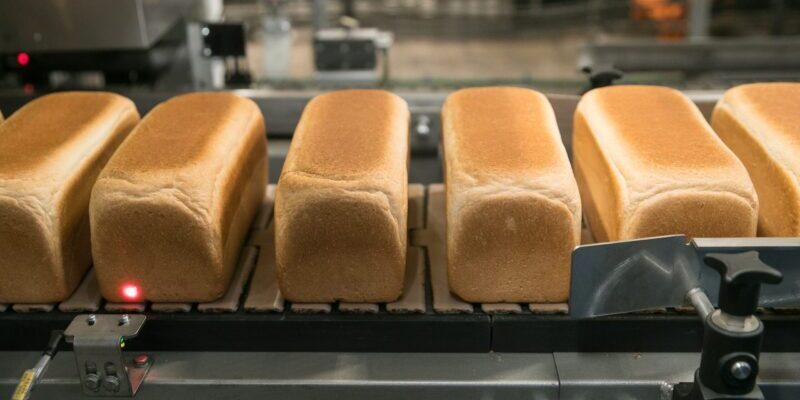
In times of sharply rising costs, product inspection systems can help food manufacturers to find ways of combating price increases, while also reducing waste and boosting productivity. By implementing the right product inspection systems on a production line, food manufacturers can save a significant amount of raw material, by reducing product giveaway and the potential for false rejects.
This is especially important right now because food manufacturers globally are all being impacted at varying degrees by high rates of inflation in the costs of both the raw materials and energy they need to buy.
While there is nothing that food manufacturers can do about these kinds of escalating costs, there are ways that inflationary pressures can be mitigated within the production facility and these need to be seriously considered by manufacturers.
More Efficient Production
The cost of energy is another big factor for manufacturers. Since there is no option but to use energy, the answer for food manufacturers is to use it more efficiently. Advanced x-ray inspection systems, for example, are now designed to operate at one fifth of the energy required by a traditional x-ray machine. Therefore, companies can look to tackle rising energy costs by being smarter in their consumption, while also benefiting from the innovative features of modern inspection systems, which can boost productivity in many ways. Another positive consequence is that the manufacturer can also tell a better corporate social responsibility (CSR) story regarding its more sustainable operation.
One of the innovative features on modern product inspection systems referred to above is a greater ability to minimize false rejects. This is when perfectly good products are incorrectly rejected by inspection machinery, leading to wasted resources and production time that could have been better used. False rejects can be caused by factors such as incorrect system set-up, the nature of the product and its orientation as it is inspected, and environmental factors such as temperature variations. The risk of this happening can be virtually eliminated by using advanced software that optimizes detection sensitivities on certain types of metal detection and x-ray inspection systems.
There is also a strong case to be made for installing product inspection systems such as metal detection and x-ray at early stages of the production line which will help identify contaminants before further value-adding manufacturing steps are taken. Early detection means that manufacturers can save the cost of materials that might be unnecessarily used in these subsequent stages, including those used in packaging and labelling. Manufacturers can also save operational time by avoiding the rework that might be required if the contaminant is discovered later on the production line.
Premium Baked Goods from M-Back Reliably Checked In-line
More than 200 million frozen baked goods leave the M-Back site every year. At the Gebesee production facility in central Germany, Mettler-Toledo provides the production inspection technology of choice. All of their produce meets the highest requirements in terms of quality and food safety.
Using the most innovative system technologies and gentle production processes, the high quality baked goods are produced according to tried-and-tested, traditional methods. The number of baguettes produced reaches a daily total of around 800,000. M-Back ensures that every single product undergoes a reliable quality assurance process.
Quality Inspection of Up to 160 Products/Minute
Five combination solutions, comprising a checkweigher and a metal detector, check the products to ensure that they are the correct weight and free from any metal contaminants, in just one process step. Non-compliant products are rejected here, into two different categories; underweight/overweight products and those which have been contaminated by metal. Rejected products containing metal foreign particles are collected in a lockable catch bin used specially for this purpose. This ensures that only those persons authorised to empty the bins do so. The ongoing product flow is monitored using a light barrier as a countercheck in the “good path”.
This checks whether the products were successfully rejected; specifically, ensuring that none of the products which need to be removed remain on the conveyor belt. If a non-compliant product is detected, the combination solution immediately brings the belt to a stop.
Consumer and brand protection
The combination solution can perform numerous tasks at once, such as inspecting all products, protecting consumers and ensuring M-Back’s excellent brand reputation. The proven combination system consisting of checkweigher and metal detector functions as a Critical Control Point in M-Back’s HACCP concept and supports the company in fulfilling high standards, such as the IFS (International Featured Standard, Food) as part of the GFSI initiative.
You can read the rest of this article in the Winter issue of Asia Pacific Baker & Biscuit, which you can access by clicking here.