
Report: Biscuit Snacks Lead in Social Media Conversations
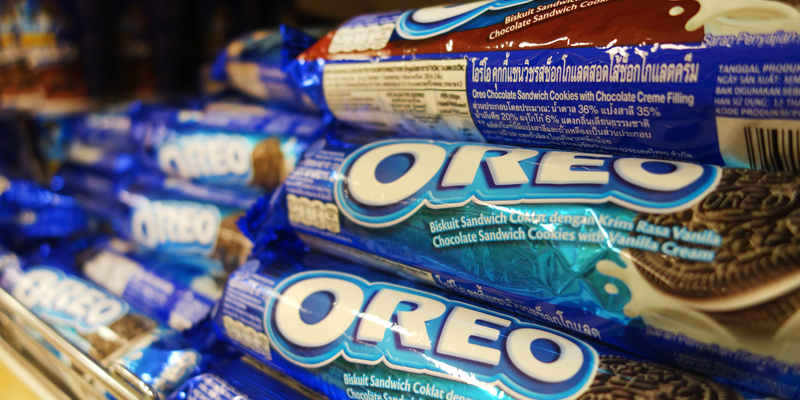
Oreo, Tim Tam, and Pocky hold the largest share of voice in Asia-Pacific’s snack market. While most user-generated content about packaged snacks was shared on Twitter, branded content on Facebook earned the most engagement, according to a report by Digimind, a social media monitoring agency.
The report analyzed consumer discussions and interactions with packaged snack brands online, June, 9 – 29, 2018. Analyzing public mentions and interactions on social media, blogs, and websites about leading brands such as Oreo, Chips Ahoy, Tim Tam, Pocky, Pepero, Loacker, and more, the report identifies consumer behaviors and trends and elaborates on how to use these insights to drive engagement and sales.
Snack brands embraced quality over quantity with their social media posts, the analysts consider. The majority of packaged snack brands opted not to post daily but instead towards the end of the week, when most users were on social media and enjoying their weekend.
Branded content during the period monitored consisted mostly of holiday greetings, and campaigns and contests held in collaboration with other brands and celebrities. Such collaborations helped to boost brand engagement for Pocky and Pepero, who during the time of study promoted campaigns with Uniqlo and K-Pop music group, EXO, respectively.
In the Asia-Pacific, Facebook was the most used platform for sharing branded content and earned the highest engagement, however, Twitter was the channel most rife with user-generated content.
Asia-Pacific’s Favorite Biscuits
The report also shows that 87.4% of user-generated content about packaged snacks in Asia-Pacific were about Oreo, Tim Tam, and Pocky. Oreo saw the largest share of voice in the market, with 57.3% of all mentions, which was boosted by the mentions of Oreo flavored desserts.
The Tim Tam Slam, a challenge that involves biting both ends of a Tim Tam biscuit and drinking through it like a straw, was fervently discussed by fans, making up 48% of posts about Tim Tam. A similar trend was also noticed with the Pepero Challenge and Oreo Dunk, showing that creating fun ways to consume snacks encouraged consumers to share experiences.
“While collaborations and user-generated content are a great way for snack brands to reach customers, sharing snackable content on social media was a go-to social media strategy for most brands. 59% of consumers prefer to buy products from brands that are familiar to them,” says Digitmind’s analysis.
Therefore, by feeding audiences with bite-sized pieces of content that is attention-grabbing, visual, and emotional, packaged snack brands are able to increase engagement and stay top-of-mind with consumers.
“As with all fast-moving consumer goods, consumer purchase habits for packaged snacks is largely ruled by convenience, with point-of-sale promotions continuing to be a key
motivating factor in driving sales. This raises the pressure for brands to keep their products top-of-mind in order to be the go-to choice at supermarket aisles. By understanding consumer trends and behaviors, brands can leverage social media to engage with consumers in their daily lives, hence increasing familiarity and driving sales potential,” says Stephen Dale, general manager APAC, Digimind.
The analysts consider that earned media from consumers, as well as related businesses like supermarkets and restaurant chains, are invaluable promotion channels for biscuit and cookie brands. At the same time, marketers, especially those of consumer packaged F&B brands, need to be vigilant in identifying key trends in consumer behavior, concerns, and demands on social media, and preserve their brand’s perception and market share by acting on them.
Packaged snacks, especially biscuits, cookies, and wafers, are baking up serious growth. The industry is projected to be worth USD109.96bn by the end of 2025, thanks to consumers’ growing disposable incomes and appetites for convenience and comfort in a fast-paced, urbanized world.