
Keeping Lubrication Food-safe and Contamination-free
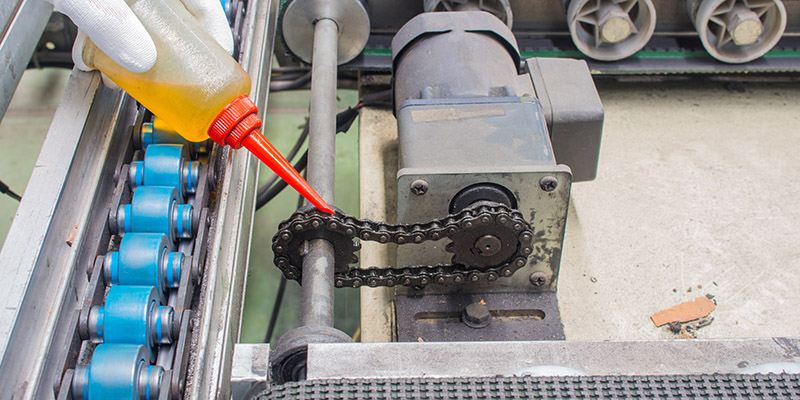
No matter the application, or if they will come in direct contact with baked goods or not, lubricants in bakeries require care, to reap all of the benefits – increased output, machinery performance and efficiency – but none of the risks. Contamination-free is the goal, while ensuring smooth operations.
There are almost no types of machinery that do not stand to benefit from lubrication; any parts of equipment that are in motion between two surfaces require lubrication, to reduce friction, respectively heating and over-time wear.
Certified & Safe
Many lubricants used in baking equipment require the food grade (FG) rating. Non-food-grade is strictly permitted only in areas where there is zero chance of contamination. For heavy-duty equipment, extreme pressure (EP) lubricants should be used. In some special cases, lubricants may be required to obtain unique certifications, such as Kosher & Halal ratings for Jewish and Islamic standards for food preparation. Requirements lubricants need to meet are set in place by various organizations; equipment technicians at Shaffer and Synova list some of the American ones for us: The International Organization for Standardization (ISO), the National Lubricating Grease Institute (LLGI), the National Science Foundation (NSF), The American Petroleum Institute (API), International Lubricant Standardization and Approval Committee (ILSAC), Independent Lubricant Manufacturer Association (ILMA), and the Society of Tribologists and Lubrication Engineers (STLE). On the old continent, the European Lubricating Grease Institute (ELGI) is the authority in this field, a group of scientific and technical institutes dealing with lubricating greases and associated products. The institute is involved in all aspects of this product group, particularly those concerning the technical, economic, ecological and legislative positions in Europe. In its selection of food-safe lubricants, the ELGI lists the H1 category, encompassing “Lubricants for incidental food contact, fitting in the HACCP plan with maximum incidental levels of lubricant presence in the foodstuff as defined by the FDA.” Moreover, lubricants holding the EU Ecolabel license meet the criteria that guarantee:
- Reduced impact on the aquatic environment and the soil during use;
- Reduced CO2 emissions;
- High percentage of renewable raw materials;
- Limited use of hazardous substances.
No Hands Dirty
The amount of lubrication needed is based on the equipment manufacturer’s recommendations and can be influenced by user experience. “Both under lubricating and over lubricating can have negative consequences,” Bundy Baking Solutions specialists stress. Some key challenges to using machinery lubricants in bakeries that they highlight include ensuring that food-grade lubricants are kept separate from non-food grade lubricants. Keeping lubricants properly identified and available to the varying applications is a fail-safe procedure, as is assuring that proper lubrication techniques are always utilized. “A simple, but effective practice is the use of color-coding of lubricant storage and dispensing devices (e.g. colored grease zerk covers that help prevent cross-contamination and misapplication),” they recommend.
The frequency of lubrication should be determined by the equipment manufacturers’ recommendations and may also be influenced by user experience. The recommendations set forth by the manufacturer vary according to running time and the equipment’s environment.
You can read the rest of this article in the September – October Issue of European Baker & Biscuit magazine, which you can access by clicking here.