
Making Bakers’ Work Easier, One Bun at a Time
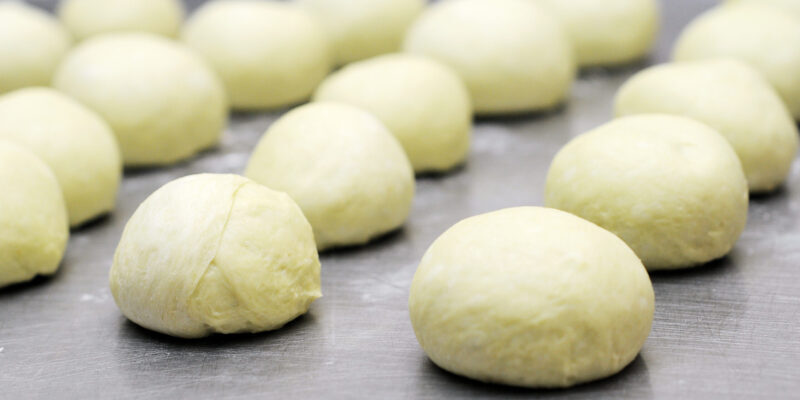
Dough dividers can split high volumes of dough into equal-sized buns and do it faster and more accurately than any human. Rounders, their pair, ensure the buns have even shapes while also protecting the fragile dough from deflating. Their matching functions allow bakers and manufacturers to both increase production and ensure consistency.
Dough dividers come in different sizes, suitable for each type of bakery or manufacture volume. They are built with a simple system of blades controlled by an overhead lever that slices dough as it’s being pressed. There are also electrical options that will cut automatically, so bakers can keep up with increased demand. However they work, they are essential for pizzerias, bakeries, and other businesses that require consistently shaped yeast-raised dough for their most popular foods.
While, in the case of manual dividing, the determination of the size is done by weight – the bakers use a scale to make sure all the buns or pizza dough balls come out in the same ballpark, automated dough dividers work primarily by determining dough volume instead. They must hit weight or volume targets without going over, which can be challenging with yeast-raised products in bakeries with fluctuating conditions. The actual weight of a dough piece of a given size is a function of dough density, which in turn is variably influenced by such factors as time, temperature, yeast activity, and formulation.
To produce quality baked goods, it is crucial bakers use a divider that maintains the texture and hydration levels of the dough, gently moving the dough through the machine, preserving cell structure while minimizing shear, compression and ram movement.
A New Bread Line for Manufacturers
One recent technology in this field is Sveba Dahlen’s new Glimek BL600, the largest and most complex bread line the company has released yet, which was launched at iba 2023.
The BL600 has been developed to accommodate the volume of an industrial bakery. The bread line is powerful and made of sturdy and hygienic materials, such as stainless steel and blue clean line mats. The bread line can handle dough blanks of 100 – 1,500 grams and can run up to 6,000 pieces per hour, depending on the type and weight of the dough.
The Glimek Bread Line BL600 consists of several independent dough handling machines that together make up a whole line. This increases safety on the line, as emergency stops can be easily reached from one location and used to stop the entire production flow. The line includes a dough divider, a conical rounder, an IPP intermediate pocket prover, and either one or two molders, depending on the production rate.
Its dividing and rounding modules ensure consistent dough piece weights due to its precise mechanism. “Its optimized design and extensive range of adjustable settings empower bakers to achieve the desired rounding results with precision,” says Åsa Ericsson, Marketing Manager. “Furthermore, the BL600 is fully customizable, tailored to fit seamlessly into our customers’ unique production facilities, ensuring a perfect match for their specific requirements and workflow.”
The BL600 has significantly enhanced its production capabilities compared to the previous version, especially in terms of producing a higher number of dough pieces per hour. “One of the key innovations in this production line is the introduction of a new solution for loading the Intermediate Pocket Proofer. This innovative feature allows us to load 12 dough pieces at a time, optimizing efficiency and streamlining the entire production process”, says Ericsson.
The production line is highly customizable and in order to make sure it answers the factory’s need, the design process begins by identifying the products to be produced, considering factors such as capacity, dough weight, and recipe specifications. Following this, Sveba Dahlen tailors the production line to seamlessly integrate into the existing setup and available space. Notably, the BL600 stands out for its robustness, setting it apart from other bread lines in the market. Ericsson says that its user-friendly design makes it exceptionally easy to clean, and it operates with remarkably low noise levels compared to its counterparts.
Craft Bakery Tech Keeps Up
While a large bread line is designed to serve the production needs of a plant, craft bakers can also benefit from tech automation with dividers and rounders that have a small footprint and are created with a small bakery’s needs in mind.
You can read the rest of this article in the November-December issue of European Baker & Biscuit, which you can access by clicking here.