
KPM Analytics Expands Rheology Center With New Industrial Baking Laboratory
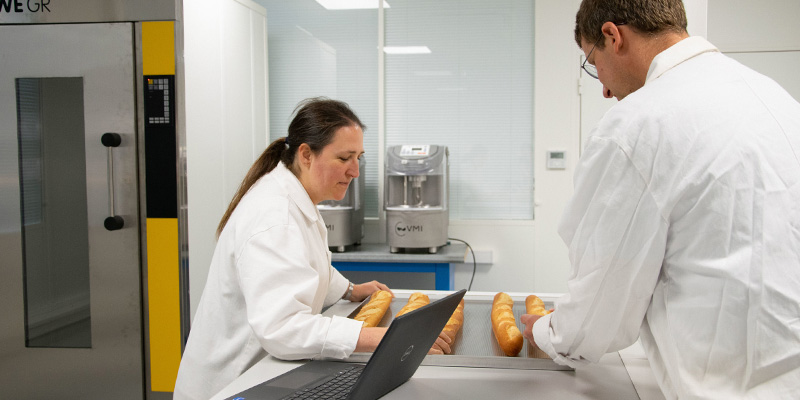
KPM Analytics has opened a dedicated baking laboratory within its Rheology Center of Excellence in France, creating a facility designed to connect traditional baking tests with objective analytical measurements for the baking and milling industries.
Located at the company’s French headquarters in Villeneuve-la-Garenne, the new laboratory combines industrial baking equipment with KPM’s portfolio of rheological, compositional and vision-based quality assurance technologies. The company said the facility is intended to help millers, bakers and ingredient manufacturers better understand the relationship between raw material characteristics, process conditions and finished product quality.
Traditional baking tests remain a standard method for evaluating flour and dough performance but can be subjective and dependent on operator technique. By integrating analytical measurements throughout the process, KPM Analytics aims to provide customers with more actionable data for quality control and process optimisation.
“The baking test has always been a valuable tool, but it does not always tell the complete story,” said Lionel Bernard, General Manager for KPM Analytics France. “With the new Baking Lab at our KPM Center, our goal is to help customers collect data from our many instruments so that they can work from ‘final product to flour’ and gain practical understanding for how to relate their analytical data to the baking test result. By combining baking performance with objective data from our analytical solutions, we can help millers, bakers, and ingredient manufacturers better understand why a product behaves the way it does, and how they can use data from our instruments to be more proactive in their process decision making.”
The expanded center includes Mixolab®, Alveolab®, Rheo F4 and SDmatic 2 rheological instruments, SpectraStar™ XT compositional analysis systems and TheiaVu® Vision measurement technology, alongside industrial mixers, proofing equipment and ovens. According to the company, these systems enable evaluation of flour composition, dough behaviour, baking performance and finished product characteristics.
KPM Analytics said the integrated approach could help customers streamline baking trials by pre-screening ingredients, while providing objective data to support formulation adjustments and other process decisions.
“For millers and bakers, the question is not always whether a product passed or failed a baking test, but what caused the results and what they should do to correct any problems efficiently,” Bernard said. “The Baking Lab gives us a platform to investigate those questions in a practical way. We can demonstrate how analytical data can better support troubleshooting, more consistent specifications, and greater confidence in quality decisions.”
The facility will also serve as a customer training center, allowing users to gain practical experience with KPM’s analytical technologies and understand how different measurements can be combined to support quality control.
Development of the baking laboratory was supported by investment from the Synar Group and its subsidiary Euro Food Product Company, a Kazakhstan-based distributor of KPM rheological instruments.
“Synar and KPM Analytics share a similar philosophy toward serving the milling and baking industry,” said Rustam Mamirov with the Synar Group. “Our investment is far more than equipment in a lab, but a declaration of our partnership, trust, and shared ambition for the future of cereal and flour analysis.”
“The Baking Lab is something we have wanted for a long time, as it will help our teams connect what they see through analysis with what is happening at their bakery. We are very grateful to Rustam and Synar for making this dream come true,” Bernard added.