
GoodMills Innovation Expands Regular Shift Operations
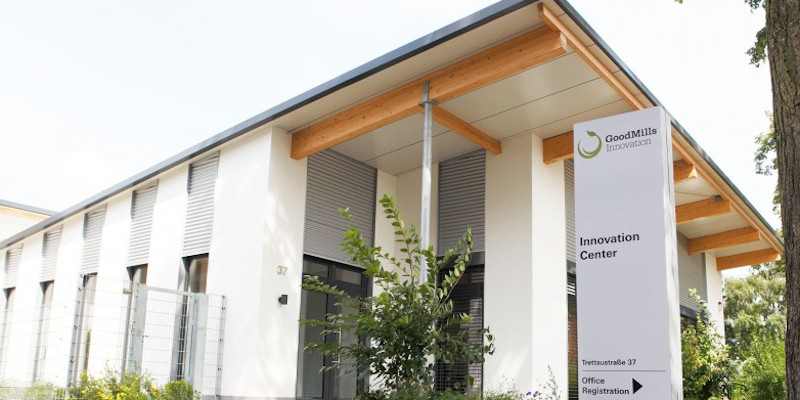
GoodMills Innovation GmbH, together with its sister companies, is one of the systemically important suppliers of basic foodstuffs that has expanded working hours, during the coronavirus crisis, managing director Michael Gusko said.
He underlined that the company’s international supply of raw materials is guaranteed, but difficulties appear because of the local restrictions. “Owing to a strong order pipeline, we’ve actually expanded our regular shift operations. Of course, local restrictions on international border traffic and extremely long waiting times will cause problems and might mean that not enough truck drivers are available. Here, however, we benefit from the fact that grain delivery to almost all of our nine locations in Germany is trimodal; it can be delivered by truck, rail or ship, which provides additional security of supply,” Gusko said.
He appreciated that the retail trade and its suppliers will certainly benefit from this crisis, because more food is eaten at home. By contrast, as a result of company closures, the traditional HoReCa segment will suffer dramatically. Although bakers are recording rising sales of baked goods, they’re missing out on the revenue derived from the high-margin coffee and snack business, Gusko added. The medium-term consequences depend on how long curfews and shutdowns last. “A lockdown lasting several months will result in a wave of insolvencies. After that, I doubt that anything will be the same again,” he stated.
Safety Measures
Speaking of the measures taken by GoodMills Innovation to ensure the health of the employees, the managing director mentioned the company is coordinated numerous measures at a national and international level by several crisis teams. The top team consists of a multidisciplinary group that operates in a classic war room style. The main focus is on ensuring social distance. In practice, this means:
- external contact is reduced to a minimum;
- flights are currently prohibited;
- anyone who can should work from home;
- most meetings have been replaced by telephone and video conferencing.
The few remaining meetings, such as mandatory audits, now take place in oversized rooms where a minimum distance of two meters between people can be maintained. In product development, work is now done in two shifts instead of one; the two teams don’t overlap. Production is now completely isolated and the truck drivers who deliver our raw materials have to wear masks.
Government support should primarily be granted to SMEs,which have been hit particularly hard by plant closures and a slump in sales,” Gusko said.
On the other hand, Gusko underlined that the crisis showed how vulnerable the global economy is, exposing weaknesses in our systems and societies. The epidemic may put an end to the general carelessness often seen when handling food, he says. He offers the example of stockpiling, which has never been a major issue for the millennial generation so far. Speaking about supply chain security, he underlined that if the production of raw materials and products was shifted to low-cost geographies, such as China or India, this would offer access to cheaper ingredients, but, in the event of a crisis, these sources become unavailable.
Asked if there is any special philosophy or approach of the company learned during the crisis, Gusko said: “We rely on qualified and mature employees who are able to do their work independently; they are the backbone of our company. In times of crisis, agility and self-responsibility are paramount”.