
Pastries Dominate the Iberian Bakery Market
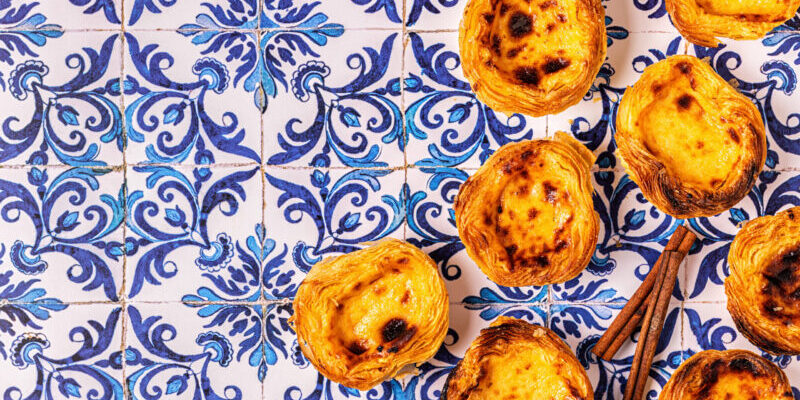
Spain and Portugal have a stunning culinary history, powered by the Mediterranean climate and a multicultural heritage. They produce amazing olives and olive oil and memorable cheeses and cured meats, make vegetables exciting by turning them into gazpacho and salmorejo, and invent hundreds of ways of cooking fish and seafood. But ask anyone who’s been to Lisbon what they loved most and they will say: pasteis de Nata. Because Iberian pastries are just unforgettable.
The market analysts at Euromonitor International looked at the data for the last couple of years and drew conclusions on what are the most relevant trends bakers and manufacturers should consider when developing their regional product strategies for the future.
Spanish Bakery Market
- Retail value sales increase by 15% in current terms in 2022 to EUR5.3bn
- Pastries is the best performing category in 2022, with retail value sales increasing by 23% in current terms to EUR890m
- Retail sales are set to rise at a current value CAGR of 0% (2022 constant value CAGR of -2%) over the forecast period to EUR5.3bn
According to Euromonitor International, after having declined in 2021, Spanish retail constant value sales (2022 prices) of baked goods rebounded in 2022. This was mostly driven by a surge in unit pricing that was part of a wider inflationary wave – retail volume sales exhibited a decline during the year, as some local consumers (particularly those on lower incomes) reined in their discretionary spending. By the middle of 2022, the annual rate of inflation in Spain had reached double digits, before easing later in the year. In particular, the price of baked goods was pushed up by disruption to the international grain trade due to the war in Ukraine, as that country is a major exporter.
The health and wellness trend is also depressing retail volume sales of baked goods, as local consumers are increasingly wary of carbohydrates in general and sugar in particular. This is predominantly impacting demand for cakes. Although the threat posed by the pandemic has waned, it has served to raise local consumer awareness of the long-term health risks associated with obesity, which is a growing public health issue in Spain.
In April 2022, new regulations related to the maximum salt content in bread came into force. The bread quality standard was approved in April 2019 and came into force in July 2019, but the specific measure on salt content was delayed until 2022 to enable manufacturers to gradually reduce the amount of salt that they used. The new standard establishes a limit of 1.31g per 100g of bread (if it is analyzed by determination of chlorides) or 1.66 grams of salt per 100g of bread (if it is analyzed by determination of total sodium).
Although the industry had been voluntarily working on reducing the salt content of bread, the new regulation has put additional pressure on manufacturers and bakeries to adapt their recipes without sacrificing quality or taste. Salt acts as a flavor enhancer, as it highlights aromas and flavors. Moreover, a reduction of salt content leads to a less elastic dough, with a smaller volume and less consistency and color.
Other regulatory changes have introduced definitions for certain products, such as whole wheat bread or different forms of preparation, like artisanal bread or bread made with sourdough. With regard to wholewheat bread, until now bread labeled ‘wholemeal’ often contained no more than a small proportion of whole wheat flour – typically refined white flour with a small addition of wheat bran and agents like malt to give it a golden color. Now, bread can only be called wholemeal if it is made from 100% whole wheat flour.
The Spanish Association of the Bakery, Pastry and Pastry Industry (ASEMAC) recently announced that traditional pastries were the most loved snacks and treats for public celebrations, such as the All Saints Day (Halloween). The Spaniards love tartas, pasteles and coulants in different shapes and flavors, but they also like muffins, croissants or puff pastries, which can be decorated with the celebration’s symbols. And there are also the traditional desserts linked to the celebration of the All Saints Day: buñuelos de viento, whose original recipe dates back to the 11th century in the Iberian Peninsula, panellets, a traditional sweet from Catalonia, the Valencian Community and the Balearic Islands, or huesos de santo, traditional both on these days and at Easter.
Another confirmation comes from Baker & Baker, the UK manufacturer that owns the pastry brand Croexsa in Spain – which recently turned 40. In the last twelve months alone, the company says, it has secured volume growth of almost 40% for Croexsa’s palmiers in the Spanish market. Palmiers are made of puff pastry dough and deliver a crunchy sweet experience. The Croexsa palmier has tapped into growing consumer demand amongst younger generations, with almost 50% of consumption amongst shoppers 30 or younger. And Baker & Baker is extending its operations in the neighboring country: last year, it acquired a manufacturing facility for Pastel de Nata in Portugal as the business understood the growing consumer demand for different regional pastry delicacies throughout Europe.
Portuguese Bakery Market
- Retail value sales rise by 7% in current terms in 2022 to EUR1.4bn
- Dessert pies and tarts is the best performing category in 2022, with retail value sales increasing by 7% in current terms to EUR11m
- Retail sales are set to increase at a current value CAGR of 3% (2022 constant value CAGR of 1%) over the forecast period to EUR1.6bn
According to Euromonitor International, the adoption of healthier eating habits by Portuguese consumers is increasingly shaping innovation in baked goods, most notably in bread. Leading grocery retailers are continuously expanding their private label bread portfolios to keep pace with rising demand for healthier alternatives.
Market analysis based on data provided by Euromonitor International.
You can read the rest of this article in the July-August issue of European Baker & Biscuit, which you can access by clicking here.