
Identify the Issues You May Not realize You Are Facing
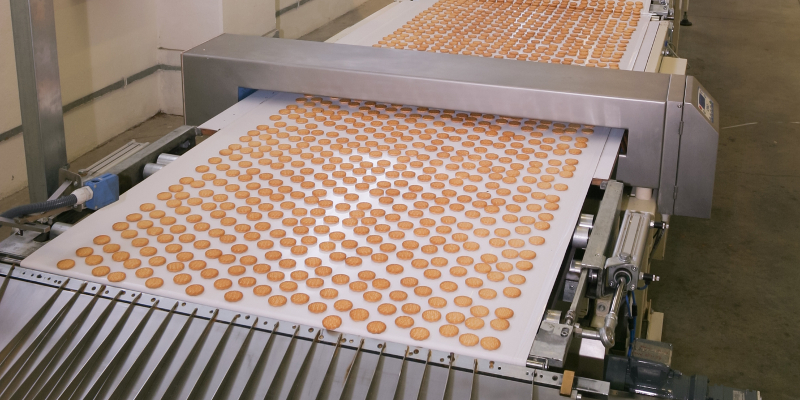
The acquisition of steel conveyor belts manufacturer Cambridge Engineered Solutions by Rexnord reflects clients’ need to consolidate vendors and choose a single supplier that is capable of providing multiple conveyors belts, parts and services, as Barry Voshell, Cambridge Engineered Solutions director of global business development explained.
When we talk about industrial production, we cannot say biscuits without also talking about conveyor belts. These are essential in pre-baking, baking and post-baking processes.
The two companies focus on innovation and equipment product development that allows bakers to move goods more quickly and efficiently from dough to door. “We now have the ability to offer both metal and plastic belts as well as all the gears, bearings and other parts needed to move baked goods from dough to door,” Voshell says.
When talking about trends, the specialist mentions the use of integrated intelligence to provide real-time feedback on how a conveyor system operates from anywhere in the world. “Using radio frequency identification technology (RFID), we will be able to install a tiny module on a belt that can be monitored from a computer, smart phone or tablet. The module reads tension, temperature, belt speed and other desired operating measurements. We plan to offer this new feature to our customers in early 2017,” the expert from Cambridge adds.
More than Transport Goods
Conveyor belts do more than just support and transport goods during bakery production. They are also instrumental in the proper forming and finishing of biscuits and other products while they bake, the specialist explains.
“By having the optimal opening widths in metal conveyor belts, producers can achieve the correct airflow for baking and make sure the right amounts of sugar, salt or other toppings fall through the belting to avoid unnecessary carryover to the next process”, he says. Several customizable straight line and spiral belts can be tailored at the time of factory production to achieve the desired opening widths. This also ensures that bakers have the correct support and strength-to-weight ratio for their biscuits, which helps them reach increased production goals while reducing energy costs, as excess metal is eliminated. Typically, conveyor belts are not what limit production capacity. The producers can adapt and design belts to handle more products and to move faster. A more likely limiting factor may be plant size for accommodating conveyor systems or having an oven with sufficient BTUs (British thermal units) to cook the amount of product needed in the time desired.
R&D process starts with a visit
The R&D process begins by being good listeners and observers. A specialist frequently visits plants to observe the operational challenges bakers face during production. The visits helps to identify other issues that bakers may not realize they are facing.
“If we are doing our R&D work properly, we understand our customers’ limitations and the production issues they face. We then design and develop new products that overcome those challenges. We may even go as far as building our own machinery so we can manufacture a new belt product a customer desires”, Voshell says.
Whenever we specify a new product, they try and recommend a belt that is positively driven so it tracks “true”. Cambridge also offers field service work to align a conveyor, to make sure the rollers are square and to ensure that the belt doesn’t wander off track. These two measures lead to minimal employee oversights other than staffing needed for standard cleaning and maintenance.
Challenges for biscuit production
Maximizing a bakery’s plant footprint (MFO) is a big challenge in Europe, especially as smaller independent bakers look to compete with larger operations. Many European customers want to increase volume, but cannot add a new spiral system because of the limited size of their plant floor. So, bakery systems are being designed without a cage and instead, sprockets are used to drive the belt on its edge. This allows a system to be placed in areas where traditional spirals can’t go (such as being constructed around factory columns). They also reduce the plant footprint, because the coils, fans and conditioning systems can be placed at the center of the spiral.