
Soybean: Magic Qualities
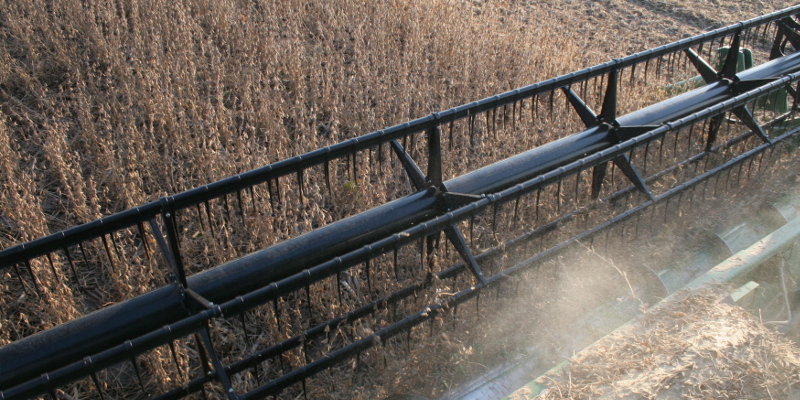
Versatile, adaptable and cheap, soy is a perfect food. Full of protein and amino acids it has a great health record – omega 3, no transfats, said to reduce the risk of heart disease and colon cancer. And its easy to grow and farm with a high yield per acre. It is a useful substitute for many mainstream foods and now soy flour is making its mark.
One of the most adaptable products in the food chain is the soybean. It is a source of complete protein that contains significant amounts of all the essential amino acids needed by the human body. On the scale that measures protein content, the Protein Digestibility Corrected Amino Acid Score, soy protein equals the nutritional content of meat and eggs, with a score of 91. Egg whites score 100 and beef 92.
Soy is a primary ingredient in many processed foods, almost all margarine and shortenings contain soybean oil and it is frequently found in mayonnaise, salad dressings, frozen foods, imitation dairy and meat products and commercially baked goods. Soybean oil has the advantage of having little flavour and, therefore, does not interfere with the taste of food. Some 75 per cent of vegetable oil sold comes from the soy bean.
Soy bean oil is low in saturated fat, contains no trans fat, and is high in poly- and mono-unsaturated fats. It’s also a principal source of omega-3 fatty acids and in the US it is the primary commercial source of vitamin E in the diet.A wide variety of soy products have been staple items in eastern Asian cuisine for thousands of years, such as well-known products like soy sauce and edamame. Less well known in the western world are products such as soy flour, now growing in popularity the world over.
Soy flour is made from roasted soybeans ground into powder. Three types are available – natural or full-fat, containing the natural oils found in the soybean (50 per cent protein); defatted, which has the oils removed during processing and is an even more concentrated source of protein than full-fat soy flour; and lecithinated, which has lecithin added.
Due to its high oil content a specialised mill must be used for grinding rather than the more common hammer mill.
All soy flour gives a protein boost to recipes. Soy flour is gluten-free, so yeast-raised breads made with soy flour have a more dense texture. It is best used for fortification of other flours. Adding up to 10 per cent of soy flour can greatly increase the protein and nutritional content of bread, chapattis, tortilla and pitta breads. The addition of soy to wheat or corn bread increases its shelf life. Soy flour absorbs about twice as much water as its weight. It also retards oil absorption in fried foods.
Soy flour has been used for thousands of years in Chinese and Japanese cuisine, particularly for the manufacture of sweet and confectionery dishes. It was probably introduced into Europe in the late 19th century and has been a bi-product of soy oil production in the United States for some time.
William Shurtleff and Akiko Aoyagi, curators and authors of one of the most comprehensive soy websites believe that roasted soy flour has one of the greatest potentials in the west of all traditional soyfoods. To quote from www.soyinfocenter.com: “It can be produced at low cost, stores very well, has an excellent flavour and nutritional value… The great potential of roasted soy flour, which can be made with simple home, village, or small-scale commercial technology, requires little energy or water use in preparation, and is tasty, nutritious, and highly versatile, has not yet been realised in most Third World countries”.
Soybeans are a primary ingredient in many processed foods including margarine, vegetable oil, tofu and veggie burgers. Soybeans are processed to produce a texture and appearance similar to other foods such as butter, ice cream, milk, yogurt, cheese, lard, olive oil, ground beef, peanut butter, potato chips.
Soy has been officially recognised as a cholesterol-lowering food as well as providing other heart and health benefits and lowering the risk of colon cancer due to the presence of sphingolipids. An enzyme nattokinase made from fermented soybeans is valued as a clot-buster and blood thinner.
Some soyfoods and soybean oil are rich in alpha linolenic acid, an omega-3 fatty acid said to reduce the risk of stroke and heart disease and reduce the symptoms of arthritis, depression, hypertension and attention deficit disorder.
A partnership between Solae and Novozymes will see the development and marketing of soy proteins with specific functional and nutritional benefits. The combination of Solae’s background in developing, producing and marketing soy protein products and Novozymes’ work with enzyme technology should see the creation of ingredients with benefits for food manufacturers and consumers. Solbar Industries Ltd, an Israeli company operating globally, provides specialty proteins and isoflavones designed to provide natural soy solutions for all market segments.
Early work demonstrates that increasing soybean oil’s stearic acid content to at least 25 per cent yields a margarine-like base material. High stearic soybean oil appears to offer the best direct alternative to the partially hydrogenated basestock used to formulate a wide range of shortening products with respect to trans-fat solutions. Stearic is a type of saturated fat.
However, scientists suggest that, unlike saturated fatty acids with shorter carbon chain lengths, stearic acid does not increase (blood) cholesterol. The US Food & Drug Administration may consider labeling stearic to differentiate it from palmitic and other saturated fatty acids that have been shown to raise cholesterol. With consideration for both avoiding trans and limiting cholesterol, products formulated with high stearic soybean oil can support a dual health benefit.
In baked goods soy protein improves texture; holds moisture; creates cake richness; whitens bread; extends shelf-life; reduces breakage and crumbling; enhances nutrition; improves manufacturing, handling and machine ability; and improves mouth feel and overall quality as perceived by the consumer.
Bankom is the name behind the Bioprotein soy oil and protein factory in Serbia. The company is a major producer of soy bean flour. All the company’s products are GMO-free and it has won the Green Apple, a national award for product purity. As well as producing low-fat soy bean powder for biscuit manufacturers, the company also processes wheat, rye and corn.
The soya used in the factory is all grown in Serbia by local farmers. The export market includes Bosnia, Croatia, Macedonia, Slovakia, Greece and Bulgaria with plans to export to Russia and ex-Soviet countries in the near future. Annual soy production for the company is approximately 30,000 tonnes with plans to increase this figure to 50,000 tonnes by 2010.
The World Initiative for Soy in Human Health (WISHH) programme takes the benefits of US soy protein to developing countries. With over 800 million people worldwide, including 200 million children undernourished, soy is ideally suited to provide protein, calories and other nutritional needs. Created in 2000 by US soybean growers WISHH enhances the protein intake of many nations through market development, humanitarian assistance, education and research. WISHH works in association with the World Soy Foundation.
With thanks to the United Soybean Board