
Move To Improve: Bread Improvers
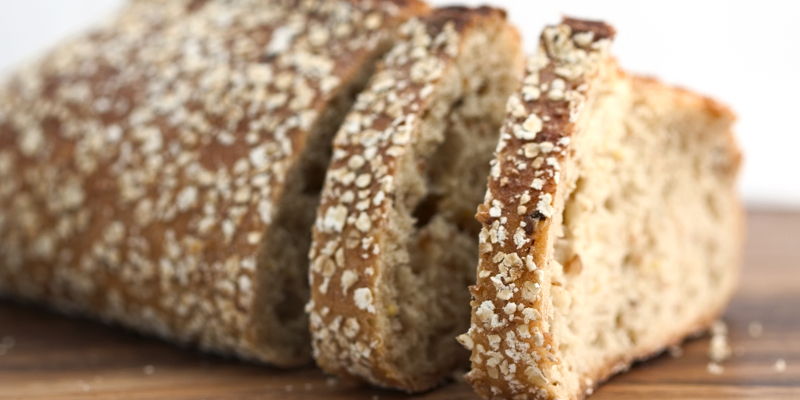
In years gone by bread improvers adhered to the adage ‘one size fits all’ and had universal applications, but over the years the improver has, pardon the pun, ‘improved’ and become increasingly hi-tech. Fiona Pavely reports.
Bread improvers offer the baker tolerance and safety and are used in everything from the largest industrial bakeries through to small artisan outfits. They help make the baker’s job easier and safer by acting on the behaviour of the dough. The formula of improvers, according to supplier Le Saffre, comprises all or part of the following five components: oxidising agents, reducing agents, enzymes, emulsifiers and various ingredients with specific effects.
The benefits of these concoctions to end products include improved crumb colour, crumb softness, product volume and extended shelf life. What’s more from a production point of view, using a bread improver removes the need for lengthy pre-production fermentation periods.
“In short they alleviate problems of machinability, dough tolerance to bear the stress of the process and of course cost savings by increasing productivity,” added Limagrain’s Anne Lionnet.
Originally, bread improvers had a somewhat universal application, in other words, they offered a broad functionality in bread-making. Market developments and the requirements of new baking technologies have meant that, for a number of years, bread improver formulation principles have become increasingly high-tech.
The improvers used in industrial baking take the form of powders or liquids.
Keen to provide a new and innovative solution, the Le Saffre group has developed Solubl’in, a water-soluble improver which offers all the key advantages of traditional improvers but marketed in a liquid form.
Solubl’in is a new concept in liquefiable improvers, available in several different formulations.
The related equipment takes the form of a compact, twin-tank module with stirring action, pumping, and an extensive powder pouring system. It is designed for industrial bakeries keen to limit the presence of dust in the bread-making area and to automate and boost accuracy when adding improvers to the mix.
“These principles adapt to increasingly important variables such as the diverse quality of flours, bread-making procedures and types of baking equipment. Consequently, an improver specially adapted
to the baker’s bread-making conditions makes it possible to obtain a desired end product,” said Lesaffre’s director of marketing Stephen Beague.
Lionnet concurs, pointing out that in the past, industrial bakers used to utilize some universal improvers but nowadays industrial bakers exist in a very competitive market, therefore they experience heavy pressure to always be at the top in terms of product quality, innovation and cost.
“In addition, ingredient suppliers and industrial bakers have improved their understanding of wheat, added ingredients and processes and they want both to have the control of their recipe and to have more transparency in the solutions proposed,” Lionnet commented.
But it is not the bread type that improvers are tailor-made for, but more the substrate and this is an important delineation. “Most enzymes are substrate specific, for example, amylase acts on starch, protease on proteins and lipases on lipids,” noted DSM Food Specialties’ Denisse Gaudin. “This means that, in general, enzymes are not bread-type specific. “However, different bread types have different manufacturing issues. “So, enzymes can be used to solve specific problems related to individual bread-types.”
DSM offers a full range of enzymes for the flour industry, bread improver companies and industrial bakeries. Enzymes act as biological catalysts by increasing the rate of chemical reactions which can normally take hundreds of years. “The enzymes themselves will not be consumed during this reaction and will be able to keep on acting as a catalyst. “The addition of enzymes delivers benefits at all stages of the baking process; from mixing to moulding, to proofing (fermentation), to baking, to retaining the bread properties as well as other bread characteristics,” insisted Gaudin.
Numerous bakery products are produced by using specific characteristics of flour that depend on the variety of wheat from which it is milled, the location where the wheat was grown and the conditions in which it was grown (climate, fertilisers etc). Global warming is having a more and more dramatic effect on our climate and consequently crop yields and quality as well. With this, as well as fluctuations in the global food economy caused by other factors, being felt more keenly by bakers, it begs the question whether flour improvers can compensate for poor or low quality flours.
“The flour quality is very important with regard to functionality, application and final product quality requirements of the baker and consumer. “While an improver may assist in certain ways, it will not compensate fully for poor/lower quality flours,” insisted Tim Cook, sales and marketing director of ADM Milling.
However, DSM Food Specialties has specifically targeted this group of customers by developing Panamore, a new, breakthrough enzyme that helps the dough to become more resistant to changes in flour variability.
Mühlenchemie meanwhile offers mills throughout the world products for standardising and optimising flour ranging from enzyme systems, bromate replacers and ascorbic acid in a form suitable for flour through oxidising agents, bleaches, baking concentrates for ready-mixed flours and vitamin and mineral additives.
“We are constantly adjusting to fluctuations in the quality of the wheat harvest in different parts of the world,” pointed out the company’s Anne Büenting. As well as improving flour quality there are other instances when some careful mixing can be beneficial, not least new product development.
“We have a large test kitchen in which we hold samples of each of our customers’ profile of flour. “Many of our customers ask advice on how to create new products and we can easily test samples. “For example a customer may have a flour with not enough volume that needs a particular enzyme or it may need a specific type of gluten to fortify the protein,” noted Lionnet.
The pendulum swing towards healthier baking products with added nutrition built-in is well documented, but what role do improvers have to play in this trend? Improvers or dough conditioners can add value to reduced fat and salt products. Indeed a key ingredient in many improvers is ascorbic acid (vitamin C), which helps the body absorb iron from foods and helps protect cells and keeps them healthy.
Enzymes like DSM’s BakeZyme Wholegain and Panamore also help to improve the processing of high fibre bread. “This makes the bread look more attractive to the final consumer and can contribute to a healthier diet. Panamore can also be used to replace chemical emulsifiers like DATEM,” Gaudin pointed out.
She continued: “Our product PreventASe is proven to be able to mitigate the formation of acrylamide in certain foods by as much as 90 per cent. The enzyme basically converts one of the precursors of acrylamide, asparagine, into another naturally occurring amino acid, aspartate.
“As a result, asparagine is not available anymore for the chemical reaction that forms acrylamide when carbohydrate-containing foods, such as bread, biscuits, crackers, processed potato products and cereals, are being heated.”
Limagrain meanwhile has created solutions to replace the fat and salt in the bakery products by improvers.
“In a strong natural consumer context with a lot of pressure on the fat, sugar, excess uses of additives we have developed improvers with functional flours, which are natural and limit the use of additives to be consistent with health trends,” said Lionnet.
It would seem then that flour improvers can do much to keep the consumer healthy and happy but while added nutrition in the end product is an important consideration for bakers, healthy profits have to be equally pivotal. With soaring utility costs, flailing consumer confidence and lower consumer disposable income worldwide can improvers help to boost the health of the bottom line for bakers and allow them to compete in this tricky climate? The short answers is ‘yes’ according to many suppliers out there.
Enzyme products like Panamore in particular offer a cost-effective way to replace emulsifiers according to DSM. The company also claims that its product CakeZyme can be used to cost-effectively reduce the use of eggs in cake-formulations by 30 per cent. “Improvers can be good solutions to reduce cost. They can replace some raw materials which are subject to rising prices,” explained Limagrain’s Lionnet. “For example gluten; this ingredient which is naturally present in wheat flour is sometimes added to flours or doughs in order to give them more strength. This ingredient is expensive and the quality between batches can fluctuate. Therefore it is quite difficult to manage regularity during production. We have launched ‘gluSAFE’ a clean label solution to reduce the quantity of gluten used in the formulation.” gluSAFE produces the same results as added gluten which are consistency, elasticity, tolerance of the dough, knife edge and loaf volume.
In fact Limagrain claims that gluSAFE allows bakers and millers to take out an amount of gluten from 30 per cent to 100 per cent.
However, ADM Milling’s Cook pointed out that ensuring the right quantities are added for the desired end product is the primary way to save on overall costs. “As improvers are part of many everyday baking processes, it is more important to ensure dosing is accurate and correct levels are used.
“This will ultimately help bakers to control costs,” he concluded.