
Prospects In Store
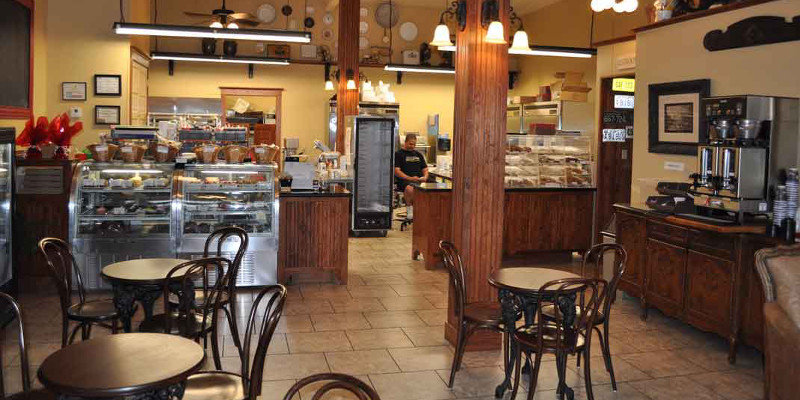
The in-store bakery has been one of the fastest growing sectors in recent years in the European markets and looks set to do well in the Asia Pacific region, too. But what sort of equipment is required in this sector and what is on offer?
David Abbott examines some of the options.
While the Asia Pacific region is highly varied, Westernised, European tastes are gaining in popularity in countries experiencing rapid urbanization. And as European and American retailers such as Tesco, Carrefour and Wal-Mart move into the region, they tend to bring in-store bakeries (ISB) with them.
Of course there is nothing new about ISBs; it’s all part of a well developed trend for authentic produce and seeking alternatives to plant-manufactured bread. But Daan van Bommel, export manager at Dutch oven manufacturer Levens Cooking and Baking Systems, puts his finger on it when he says “Bake-off in the store is entertainment. It smells good and people can see it being prepared, wait for it and then take it home fresh to eat.”
Apart from the entertainment factor, Van Bommel says, speaking in particular of bake-off products, in-store production also provides great flexibility to the retailer/producer. The advantages are clear enough; producers can cut waste and produce a more attractive and fresher product, while for consumers there is the feel-good factor. The smell and sight of bread and other products being baked stimulates the senses and of course, it gives a closeness and authenticity to the products which is lost if all that is on offer are the plant produced and pre-packaged brands.
But putting the bakery into a store also brings considerable problems and headaches when it comes to equipment; the needs are for high quality kit that can fit into smaller spaces, is easier to use and of course, as it is on view to the consuming public, looks good as well.
Van Bommel explains that the Leventi Bakermat range manages to meet the demands of ISBs by applying the very latest technology. The range is provided in a two forms: one for those who want a manually operated system and also a pre-programmable version which can store up to 200 baking programs.
The latest additions to the Bakermat range have incorporated Radio Frequency Identification (RFID) technology, which can program the oven in 0.4 seconds. The system uses a chip called a ‘PROtag’ which is embedded in a card. The user just swipes the card in front of the oven and one of 40 programs stored on the card is set into action. This is tremendously useful in maintaining quality and consistency of course, something that can be a problem for a large supermarket chain with possibly hundreds of ISBs.
And whilst the ISB tries to bring back some of the fun and authenticity to consumers, tough questions about performance in confined spaces can’t be dodged. This is why, says Van Bommel, the Leventi Bakermat series comes with a specially developed auto reverse fan, with adaptable speeds that provide optimal air circulation. An automatic break prevents air being blown out of the oven when the door is opened. Also in a busy store, oven doors can be opened more frequently than usual, but the Automatic Correction System ensures that extra baking time is automatically calculated and added on when the temperature drops.
These may seem like small things; but little things add up, and attention to detail is vital. It is all about perfect baking results and features to make the oven as user friendly as possible, says Van Bommel.
When it comes to producing high quality engineering that also looks good, the Germans can be guaranteed to be front-runners. Wiesheu, based at Affalterbach near Stuttgart, which has been building innovative ovens for 35 years, is no exception. For ISBs, Wiesheu produces the Dibas intelligent oven system, which has further developed the successful features of the Euromat series of ovens.
The Dibas system boasts the world’s first and only sliding oven door system. Adam Lutz, head of sales, says that the door system gives customers a big advantage: “The sliding door is our unique selling point. There is no door radius so it’s very comfortable to work with.” This gives customers a lot more flexibility in designing the sales area. It also looks good; the range is available in stainless steel and loading trays can be arranged neatly underneath the oven, making for a tidy and organised hi-tech look.
But as Lutz explains, this is not the only advantage of the Dibas system. The system is self-cleaning and maintenance access is from the front, so is always easy, allowing valuable time to be saved on these unavoidable tasks. And the system also comes with an easy to use control system. The control units use pictogram graphics, making it easy to operate. As for quality of bake, the rotation ventilator allows an even browning and flexible air distribution enables variation for crispy or light baking products.
A further innovation from Wiesheu, says Lutz, is the introduction of a manual version of the Dibas system. The first product developed has been a high-end product, with the sliding door controlled electronically. Now Wiesheu is providing a cheaper model with manual control. Lutz says the range can be customised according to customers’ needs, obviously an important factor in these cost-conscious times.
Lutz thinks that the market for ISBs in Europe has increased, especially for the big supermarket chains, as the number of traditional bakeries has declined. For the supermarkets there is the chance to move in on that business and undercut on price.
As for the Asia-Pacific region, says Lutz, there are great opportunities, but at the moment Wiesheu’s focus is on growing with its customers, who include several large supermarket chains. Nevertheless says Lutz, Wiesheu’s products have a lot to offer the region and over the next few years the company wants to expand business gradually.
Increased baking surface
For Swedish manufacturer Sveba-Dahlen, the key issue for the in-store bakery is to ensure that the baked produce is of the very highest quality. Of course, this is something that all equipment manufacturers will want, but Sveba-Dahlen has its own particular take on this issue.
As Pierre Eliasson, area sales manager, puts it, “When bake-off started, no-one cared too much about what the product looked like when it came out of the oven; it was still cheap to sell so it didn’t matter so much. Now though, bake-off has been around a long time and the quality of the product that people are putting out is very nice and they really need the equipment to do that.”
For Sveba-Dahlen, this has meant the overriding aim has been to ensure that all the benefits of a larger and more traditional oven have to be available, but in an oven with a smaller footprint. Eliasson explains that Sveba has produced two series particularly useful for ISBs; the C-series and the S400.
The C-series is particularly suitable for scratch baking, where the qualities of a full size traditional oven are needed, but with a smaller footprint, says Eliasson. Around 90 per cent of the C-150s are being sold to supermarket installations where a lot of bread is being produced and a bigger oven is needed.
A faster and more even bake is a vital part of producing the quality bakery produce that Sveba is after and a key to providing this is what Sveba calls the IBS, or increased baking surface. Heat exchange in the C-series follows the counter-flow principle, ensuring that oven air is progressively heated before being returned to the oven and control is through a user-friendly E-panel. This can be manually controlled or pre-programmed with 99 recipes and can be controlled through a master PC control system.
Sveba describes the smaller S400 as a rack oven with the qualities of a much larger oven, but Eliasson is careful to point out that it is not just a bake-off oven. The S400 also has the patented IBS rotation system and generates steam just like a larger oven, ensuring a consistent bake time after time. The oven often cuts baking times significantly, says Eliasson, though this obviously varies depending on the recipe.
The S400 is not a self-cleaning oven; but Eliasson explains that this is an advantage. The Sveba approach is to go for simplicity of design. This means, he says, that as the S400 is intended only for bakery produce, no fat or grease collects in the oven, so an expensive self-cleaning mechanism is not required. What you can be confident of, says Eliasson, is that a clean, healthy product will come out of this oven.
What are the prospects for oven equipment in the Asia Pacific market? Daan Van Bommel says that European exporters have not been helped by the exchange rate, whilst Lutz and Eliasson both note that it’s a hard market to penetrate; their companies tend to work by providing equipment to large European stores who are setting up in the region. Where the European firms can win, says Eliasson, is on their long-term commitment and the ability to provide top-class servicing deals.
The massive growth of the Asia-Pacific region produces various responses, but Eliasson puts it like this: “Sometimes it’s scary, but sometimes you can see really big opportunities.” He says that Sveba, which already has a sales office in Hong Kong, will be expanding over the next year. The market is slowing slightly, but, says Eliasson, “We won’t have the drop-off of other markets.” The curve in this industry is more gradual; in-store bakeries and the equipment that goes with them look like continuing to be in demand in the urbanising centres of the Asia Pacific region.
And if they want to be ready to compete in that market, in-store bakers will need the best equipment for the job.