
Pure And Simple
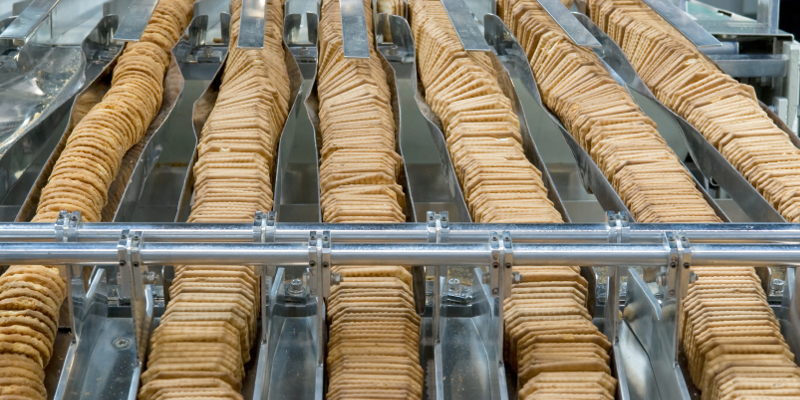
Biscuit manufacturers are using a variety of natural ingredients to satisfy consumer demand for clean labels. Nicola Cottam reports.
Food manufacturers have had to cope with a lot of bad press over the last few years. Not only have they been lambasted for the high levels of salt, sugar and fat in products, they have also had to contend with increasing competition, higher prices and consumer demands for natural and functional ingredients.
As a consequence, levels of new product development have spiralled out of control – particularly within the snacks, yoghurt and soft drinks sectors.
Progress has been slow within the biscuits sector, although manufacturers have started to introduce functional and natural ingredients that are appearing in recipes. Nuts, seeds and whole wheat flour are used to enhance the taste, increase the nutritional value and raise the clean label ratings of products, while natural flavours derived from fruits and plants are definitely on the increase.
Natural flavours are developed using similar compound techniques to nature-identical (or artificial) aroma chemicals. And although nature-identical aroma chemicals are chemically identical (at least at the molecular level) to their natural cousins, they are made using a chemical synthesis and are therefore frowned upon.
In the past there were limited opportunities in natural flavours, due to the lack of aromas available to processors and the inferior taste they produced; however, this has changed over the last 20 years. “Recent technology has led to the development of certain flavours that were hitherto impossible to manufacture naturally, such as nut flavours,” explains Jonathan Davis, managing director of the natural ingredients manufacturer, Create Flavours. “Technology has given us the ability to extract a much wider range of material from natural sources using standard separation techniques, and overall we understand the advances in biotechnology much better.”
Price has also had an effect on the availability of natural flavours, since they cost more to produce than nature-identical flavours. Production costs are higher and yields are lower, however the costs are balanced against the benefits in terms of their marketing and value-added potential.
“Cost can be an issue due to flavour losses during baking. Other than that, natural flavours, correctly developed to suit the application will work through most processes,” says Davies. “We specifically develop our range of bakery flavours
to work in bakery applications and test them thoroughly in product before offering them out.”
Research conducted by Create Flavours concludes that demand for natural flavours is likely to increase by over 35 per cent in the next three years, as Davies explains: “Manufacturers are being led by consumers who want products to be as natural as possible. The emphasis on healthy, functional and weight-reducing foods has had a huge impact on food manufacturing. There are certain flavours and flavour-imparting ingredients that show great potential for helping processors follow these trends and it appears likely that these trends, often starting off in areas such as soft drinks, will migrate into other food areas such as biscuits. Natural flavours can help in areas such as fat and sugar reduction as well”.
Figures from Datamonitor Productscan Online also confirm an increasing propensity towards using natural flavours in biscuits, like vanilla, ginger and coconut. Productscan Online director, Tom Vierhile says: “There are several worldwide trends in terms of natural flavours in biscuits. The use of so-called superfruits like blackcurrants is one emerging trend and floral ingredients is another, as we are seeing more food products in general using floral flavours like lavender, for instance”.
Fruit flavours are gaining popularity as well for their health-giving antioxidant properties, says Davies: “Pomegranate’s perceived value as an antioxidant was recognised by consumers last year. This year, pairing well with vanilla and allspice, cinnamon, orange and pears, it remains on the upswing.
Other fruits (and their flavours) benefiting from the public’s increased understanding of antioxidants include açai, which is also high in fibre, anthocyanins, minerals and vitamin E, and is showing up in functional beverages, nutritional bars and smoothies, in particular.
“New super fruits such as Indian gooseberry and Aronia Berry will have some part to play in the coming years,” adds Davies.
Natural sugar
Many bakery products, including biscuits, now contain alternative non-hydrogenated oils, like palm oil and canola oil to reduce fat content, are being fortified with vitamins, minerals and dietary fibre to improve their nutritional profile. In addition, manufacturers seek to appease consumer concerns over the possible ill effects of artificial sweeteners by using alternative natural sugars to sweeten and intensify sugary flavours.
The global high-intensity sweetener (HIS) market has an estimated value of over €700million and is growing by around four per cent every year. The
US and Europe are driving demand for HIS and account for 44 per cent and 21 per cent, respectively, of worldwide consumption.
Artificial non-caloric sweeteners such as aspartame, sucralose, saccharin and cyclamate currently dominate the HIS market but face the threat of being substituted by natural sweeteners
as consumers become increasingly concerned over the side effects of consuming artificial sweeteners and are seeking natural alternatives for a healthier diet.
DSM Food Specialties launched a natural low sodium alternative to salt in 2007, which also intensifies the sweetness of products. Maxarite Delite is specifically designed for use in bakery and cheese products and can reduce sodium levels by up to 50 per cent, while also enhancing the sweet taste sensation.
“With salt reduction in biscuits, taste may be affected by the choice of the baking powder. With sugar reduction, sweetness is often lacking, instead an off-taste from artificial sweeteners or from replacing the bulk component occurs,” says Nienke Gelderloos, marketing communication manager, savoury ingredients at DSM. “Maxarite Delite enhances the sweetness and masks the starchy, dull off notes. In addition, a natural flavour provides more richness in the taste perception.”
In the future we may also see the introduction of stevia-based sweeteners. Stevia is widely grown for its sweet leaves and is native to central and South America. As a sugar substitute, Stevia’s taste is slow-releasing and has a longer duration than that of sugar, although some of its extracts may have a bitter or licorice-like aftertaste at high concentrations. Stevia has up to 300 times the sweetness of sugar and has therefore attracted a lot of attention as demands for low-carbohydrate, low-sugar foods continues to grow.
PureCircle currently markets a range of natural high intensity sweeteners derived from dry stevia leaves sourced from China. These are refined into sweeteners like Reb-A, which is a natural sweetener with a purity of up to 97 per cent.
Cargill has also developed a stevia-based sweetener, called Truvia, which it plans to market throughout the US and Europe. However at the moment stevia-based sweeteners are not permitted for use as a food ingredient in the US and Europe, although they have been accepted in other parts of the world, including China, Japan, Korea, Taiwan, Brazil, Paraguay, Colombia and Argentina as well as Malaysia, Vietnam, Indonesia and Thailand.
In the long term it is inevitable that the profile of biscuits will continue to evolve to comply with healthy criteria and natural ingredients will feature more and more in recipe reformulations. Nevertheless products like these will continue to cater to a niche market, with limited potential for mass market domination.