
Blue And Wild – It’s Super Fruit
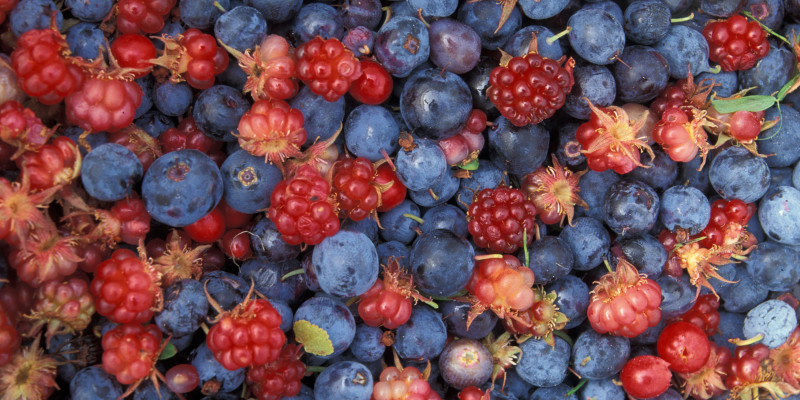
Health indulgence issues are becoming more important to consumers and the wild blueberry from Nova Scotia could be the answer, as Andre Erasmus discovered on a trip to the Atlantic Canadian coast with the Wild Blueberry Association of Northern America.
Wild blueberries are just that – wild and blue. Unique to parts of northern America that include Nova Scotia and New Brunswick in Canada and Maine in the United States, these health-filled berries are the latest antioxidant of note and are being hailed as an essential health ingredient – the ‘superfruit’.
Their use in baked products, from muffins and scones to bread and cake can prove beneficial to the consumer and wild blueberries, because of their size, are not likely to burst during the baking process – a boon for the baker as it gives a better looking end product.
There are cultivated blueberries (the ‘high bush’) which can be grown the world over if the climate and soil conditions are just right. But the wild blueberry (the ‘low bush’), unique to just a few regions in northern America, is the ‘true blue’ say the men and women who grow, harvest and produce wild blueberries in Nova Scotia – one of the world’s leading wild blueberry producers.
Harvested in the late summer – between early August and mid September – the little berry is known locally as nature’s antioxidant superfruit and its use in baked pies, muffins, scones, bread and even as a fruit juice or just eaten raw and whole will offer nutrient richness with a range of health benefits, which may improve motor skills and reverse age-related short-term memory loss; may inhibit all stages of cancer; may protect against heart disease and damage from strokes; may help prevent urinary tract infections and may improve night vision.
The word ‘may’ is used, says Jane McDonald, research scientist for Agriculture and Agri-Food Canada in Nova Scotia, because not enough clinical trials or tests have yet been carried out to assert these claims.
Bundles of Benefits
Studies that have been carried out, but not yet validated to be boasted about on labels, include neurological studies between 1999 and 2006, which show benefits for neural regenesis and, as McDonald says, if we are to live longer our brains, eyesight and other motor functions need to be protected.
“Our tests show that wild blueberry is a preventative for certain conditions, like those mentioned, but it is not a pharmaceutical and we have hardly scratched the surface in what benefits there might be in wild blueberries,” McDonald concedes.
“When it comes to generating new brain cells, wild blueberries are beneficial,” she says. And, she adds, frozen blueberries have better levels of anthocyanins – a good dietary antioxidant and anti-inflammatory agent.
Frozen is how most wild blueberries get to the UK and Europe and the harvesting process in Nova Scotia is a nature-dependant, fascinating and all-absorbing process, which involves most of the community.
For starters, the Canadian wild blueberry grows in harsh conditions. Snowy winters with temperatures around -35C are essential for a good harvest. No snow means windburn for the plants if left exposed and a severe crop loss.
Come spring and pollination by bees is the next important step as the blossoms are out. The plants only flower for five to eight days so weather conditions here are critical too. Rain or excessive cold can affect the bees and pollination.
“A worldwide bee shortage right now is not helping matters,” says Barb Hagell of Rainbow Farms, a large wild blueberry grower and processor in Rawdon, Hants County.
“We usually bring in hives to the fields to help with pollination but a virus which is prevalent since last year has led us to importing bees. And to be sure the bees are virus free, we have had to be selective. New Zealand is one of the few places from which we can export.”
Bees are brought in with the drones (worker bees) kept separate from the queen and up to 65,000 are imported at a time (enough for an average hive). In summer bees only live for around 30-40 days, which might seem a waste of time and money but they do breed in that time and they are only needed for a short period.
World Bee Shortage
“It is a worry and I’ve had to employ a beekeeper from Saskatchewan,” says John Cameron of Pictou County, another wild blueberry grower and processor. Hives are moved from field to field as needed but bees need to be in them when they are moved otherwise the swarm gets lost, Cameron added.
In April this year, for example, Hagell had no hives with imported bees. In August she had 850 hives as it was calculated that two hives were needed for each acre of wild blueberries.
Her aim is to 2,500 hives to fully service the wild blueberry area Rainbow Farms operates. “One thing we have found is that the imported bees do not necessarily produce a better yield than local bees and they do seem fussier as to which species they are prepared to pollinate,” said Cameron.
And this is one aspect Dr David Percival of the Nova Scotia Agricultural College is looking into.
“It is the darker, almost black species they seem to avoid and we’re trying to establish the reason. It could be that this species is slightly shorter in growth, so their blossoms are perhaps less accessible or it could be that they smell different,” Dr Percival reasons.
And Jane McDonald says the darker berried plant is the richer in antioxidants. But Cameron is not too concerned as the local bumblebees still seem to be doing their job and, at this stage at any rate, the darker berries are still being harvested.
Another problem growers are facing is the labour shortage during the harvest period in August and September.
Harvesting wild blueberries is a labour-intensive operation as, by definition, wild blueberries grow where conditions are favourable. And this could be a hilly field where they can only be harvested by hand, using a specially designed scoop.
On more level fields, a bigger version of the scoop is fitted to tractors and the yield is quicker.
“A few years back the local kids would all be part of the harvest,” said Cameron. “But now they seem more spoiled and don’t need to work for pocket money for sneakers or jeans. We still get some but we’re looking at importing labour for the season from Mexico or Jamaica.”
However it is still a community thing and huge companies like Oxford Frozen Foods, with many hectares of field under wild blueberries or the small lot owner with less than a hectare all harvest wild blueberries and take them to packing plants.
While our party was at one, a local farmer arrived with a pick-up truck loaded with palettes of wild blueberries from his small lot. It was about 1pm and David Sangster, executive director of the Wild Blueberry Producers Association of Nova Scotia, said the farmer had probably harvested the berries that morning and his pick-up load would be worth around $600 Canadian. Not a bad return for something that grows wild on his property.
Berry Rutlers
Oxford Frozen Foods’ joint CEO David Hoffman said wild blueberry fields had to be protected, sadly, from ‘berry rustlers’ and this meant that fencing and surveillance was being planned in some instances. Recalling the history of the wild blueberry as a food source, Hoffman said the earliest known incidence of the berries being canned and used as a food was during the American Civil War in the 1860s when canned berries were sent to the Union forces.
Oxford Foods is the world’s biggest single supplier of frozen wild blueberries andwas founded in 1968 by John Bragg and the company now has in excess of 10,000 hectaares of wild blueberries.
Hagell, Cameron and others also have their own packing facilities where berries are taken once harvested, put into refrigerated trucks in palettes and taken to processing plants. Like at Rainbow Farms in Hants and Oxford Foods in Pictou County.
Here berries are washed and detritus like leaves and stalks removed. Berries are then sized and, if necessary individually quick frozen (IQF) at -27C and stored in 1,500lb containers at -20C until needed. Berries that are broken or burst during the packing and processing application are still used for jams or juices and there is very little wastage.
Huge Market Potential
The wild blueberry market is rich in potential. With huge tracts of land under wild blueberry crop – and the area is growing as more forest land is cleared – there is much room for growth.
With over 40 million pounds of wild blue berries produced every year (and the crop in any field is only harvested every second year), the fruit is Canada’s number one fruit crop in export sales.
Hagell, for instance, part of the Weatherhead dynasty in Hants County, said her family started harvesting wild blueberries in the 1980s, using the basement of the family home as a packaging plant. The family produced 8,000lbs of wild blueberries in the first year.
This year Rainbow Farms has its own packaging plant with three IQF lines and will produce 12 million pounds of berries with 75 staff working two 12-hour shifts during the height of the season.
Wild blueberry growers expect a yield of three tons per acre this year and with wild blueberries being worth over $2.5bn to Nova Scotia in 2003 and this year expected to be better, it is little wonder that the superfruit is all-important to this Canadian province with just 920,000 inhabitants.