
Enzymes: Baker’s Little Helpers
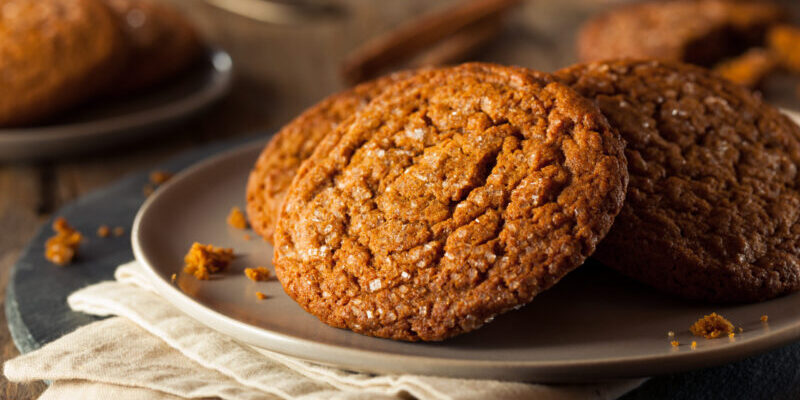
Enzymes are like Santa’s elves. You don’t see them, but they work hard at making dough flexible, keep its hydration, turn out well with less sugar and fat, and even fight carcinogenic acrylamide. Yet, when their work is done, just as with the elves, they become invisible — and allow for label friendly products across the board.
Enzymes are fast and efficient and they require small quantities – in the range of 10-150 parts per million (ppm) – to get the needed results. Here are some of these hardworking stars to keep in mind when developing production processes.
Acrylamide Fighters
“Acrylamide is becoming a growing concern for a number of reasons,” says Kees Veeke, Technical Service Manager Baking & Confectionery at DSM Food & Beverage. “Products that typically contain amounts of acrylamide, such as cookies and biscuits, are rising fast in popularity among consumers due to changing lifestyles.” As people’s eating habits have changed: they skip meals and eat out and they have redefined considerably what is a meal and what is a snack. Moreover, the market rose to the occasion to meet the needs of specific diets and offer more free-from, functional and premium products. “The snack market is booming as a result; the global biscuit market alone is now valued at USD106,233m, with an estimated CAGR of 4.97%,”, says Veeke.
Acrylamide occurs naturally due to the Maillard reaction – during baking, grilling, frying, toasting, or roasting. The chemical has only been discovered in food in 2002 and it drew a lot of debate about its potential harmful effects – it is a suspected carcinogen – and how manufacturers can reduce its occurrence in the production process.
“The introduction of the 2018 EU regulations on acrylamide levels in food helped redefine the baking sector,” says the DSM specialist. “Guidelines state that cookies and biscuits should not contain acrylamide levels higher than 350 parts per billion (ppb) across the region. And now with new proposed EU legislation for 2023, the benchmark levels are set to change yet again – alongside the introduction of maximum acrylamide levels. With the rising regulatory pressure, combined with changing consumer preferences, manufacturers are on the lookout for solutions, such as enzymes, that ensure safety and compliance, while creating baked goods that taste great and stay fresh throughout their shelf life.”
The acrylamide levels vary drastically, especially in sweet snacks like cookies and biscuits, where different types of flour, sugar and leavening agent as well as water content. However, one help to bakers are the asparaginase enzymes, which are widely used across the baking industry, particularly in biscuits and cookies. DSM’s PreventASe asparaginase enzyme, for example, works by converting the free asparagine found in food into aspartic acid. Removing asparagine reduces the formation of acrylamide – helping to reduce levels in baked goods by up to 95%, depending on the application. Biscuits and rotary molded cookies have typically been difficult to reduce acrylamide using enzyme solutions, due to the low-moisture content, but PreventASe has been found to be effective at overcoming these conditions.
Asparaginase enzymes can be used to tackle acrylamide reduction in higher pH applications, too. DSM developed its PreventASe XR solution for products like biscuits that contain chemical leavening agents or masa (corn that has undergone a lime treatment).
DSM expects pressure on manufacturers to reduce acrylamide levels in baked goods will likely increase in the coming years. Asparaginase enzymes present a viable option for manufacturers looking to align their products with the latest developments in health and nutrition – particularly for biscuits and cookies, which have typically been challenging applications.
Machinability Improvers & Staleness Delayers
Challenges appear at all stages of manufacturing. For example, a high-gluten dough can be hard to handle by machines. “Smooth processing flow is required,” says Dr. Alexander Henrich, Application Development Director, AB Enzymes. “With our bakery enzymes that support a good dough processing and handling like products from the group of xylanases, challenges like poor machinability can be addressed.”
Later down the process, enzymes can help with prolonging the bread’s shelf life. “A soft and smooth crumb is appreciated for the full shelf life of the bakery item,” says Henrich. “For this challenge our toolbox of maltogenic amylases offer solutions to reduce the retrogradation of starch and therefore the products do not stale fast.”
Label Friendly Champions
With more customers preoccupied with natural foods and avoiding ingredients that sound “chemical”, enzymes are the unexpected answer to offering label friendly products while benefiting from the full advantages of scientific discoveries.
“Baking enzymes do play an important role in the development of label friendly products,” says the AB Enzymes director. “Many bakery enzymes can be used as an alternative to replace ingredients that would otherwise require E-number labeling e.g, emulsifiers. These can be substituted using processing aids like phospholipases which use flour intrinsic lipids for improving the emulsifying properties of these wheat lipids. And there are many more examples. Since bakery enzymes are acting during the manufacturing process of bakery items and they are no longer performing their function in the final products, bakery enzymes are considered processing aids that do not require labeling on the final bakery item. Thus supporting the development of label friendly products.”
Fat and Sugar Tamers
You can read the rest of this article in the September-October issue of European Baker & Biscuit, which you can access by clicking here.