
The Road to Sustainability Is Paved with Rethinking the Process
Becoming sustainable as a large or small bakery is determined by many factors: reducing costs and carbon footprint, being resilient to market fluctuations and supply chain woes, living up to consumer’s expectations about food waste or climate change. It is a business-motivated strategic change and it cannot be done without addressing how the business is organized.
A sustainable business is an enterprise that operates in a way that minimizes its negative impact on the environment, society, and the economy. It is a business model that strives for long-term success while considering the well-being of future generations. While perfection is a constantly moving target, striving to come closer to this ideal is on everyone’s mind.
In the baking industry, a sustainable business has three main areas of focus: energy – both sourced and spent -, waste reduction, and ingredient sourcing – low carbon footprint and respecting human rights in the supply chain. We’ll look at different solutions and case studies that highlight them.
Decarbonisation and Energy-saving Technology
In most baked products – may they be loaves of bread, cookies, or crackers, the basic ingredients and production processes are quite similar. These processes typically involve mixing, shaping, baking, cooling, and packaging, with some variations depending on the specific product.
Energy consumption in the baking and freezing stages stands out as the most significant. According to a report by the Ernest Orlando Lawrence Berkeley National Laboratory, baking accounts for the largest portion of energy use for non-frozen products, ranging from 26% to 78% of the total energy consumption. In the case of frozen parbaked or baked goods, freezing takes up even more energy than baking. For cookies and crackers, which do not require pan washing or a fermentation and proofing period, baking represents 78% of their energy requirement. However, bread, rolls, cookies, and crackers, which have longer baking times, consume more energy per unit of production compared to frozen and non-frozen cakes.
While high energy use for baking and freezing are inevitable, there are many measures bakeries can take to decrease use for the other stages of production or to use an energy source with a lower carbon footprint.
What the ingredients company Lesaffre did early in 2023 was to start a decarbonization process at its largest plants in France, at Marcq-en-Barœu. Together with ENGIE Solutions, they debuted a 15-year partnership for the design, financing, construction, operation and maintenance of a waste heat recovery unit on the site. Thanks to the installation of two high-powered heat pumps that will be commissioned in 2025, the heat created by Lesaffre’s fermentation activity will be reused. In this way, Lesaffre will be able to cover 70% of its heat needs, avoid the emission of around 30,000 tons of CO₂ per year and reduce its water consumption by 150,000 m3 per year.
The whole project is based on the complementarity of one production stage to the other. The idea is to capture the heat generated on the site and currently dissipated into the air by cooling towers and redirect it to another production stage requiring the use of heat, currently generated by a gas boiler room.
In concrete terms, the installation of two heat pumps with a total capacity of 19 MW/h will make it possible to transform the heat produced in the fermentation workshop during the yeast cell multiplication stage into heat for another workshop in the plant, dedicated to drying the yeast.
This project is part of the approach undertaken by Lesaffre for several years to control its carbon footprint and its energy consumption. Lesaffre has defined a clear trajectory for the decarbonization of its production sites, based on seven pillars: improving energy efficiency, deploying electrification, using biomass and by-products, optimizing the use of biogas, developing renewable energies, entering into long-term contracts with green energy suppliers, and, finally, measuring and valorizing avoided emissions.
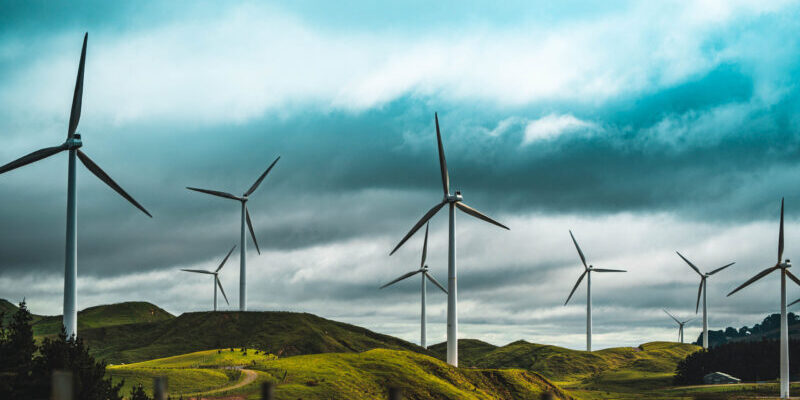
As part of this approach, Lesaffre has already undertaken several comparable projects aimed at reducing CO2 emissions, for example through the installation of a biomass plant at the LIS by Lesaffre site in Cérences (Normandy, France) or the installation of a wind turbine at the Algist Bruggeman site (Belgium) to help cover part of the site’s electricity needs.
The heat recovery technology was swiftly followed in June 2023 by a 20-year contract with Sun’R to supply the plant in Marcq-en-Barœul with green energy. This deal with Sun’R enables Lesaffre to benefit from part of the electricity generated by the solar park located a few dozen kilometers from Marcq-en-Baroeul and it further reduces the plant’s carbon footprint.
But heat recovery can be used in different ways, not just by directing the recovered heat to the next production stage. Another example of using energy resources responsibly and sustainably comes from Suikerpark, which is a neighborhood in Veurne, Belgium that is part of an innovative project that repurposes heat from a local PepsiCo’s snacks plant and transforms it into sustainable energy. The Veurne site releases heat vapors as a byproduct of cooking and baking. When real estate developer Ion wanted to find inventive environmental solutions for Suikerpark, PepsiCo proposed an idea: What if some of the heat released during the process of making snacks could be put to use? “Using a condenser, we capture the vapors from cooking and heat a water circuit from 50°C up to 80°C,” explains Frank De Clercq, Maintenance and Sustainability Manager at the Veurne snacks plant. From there, the heated water will be transported to the houses at Suikerpark, where it will flow through the central heating system into radiators and hot water taps. The first homes will be warmed with the technology starting in 2022. The project will heat a total of 500 houses using sustainable energy once it’s complete.
“The heat generated at the Veurne plant helps reach net zero emissions and replaces heat that would normally be sourced by burning natural gas,” De Clercq explains.
For smaller bakeries, switching to green energy or investing in cutting-edge technology might not be as easy and within reach as it is for the big companies, but that doesn’t mean management can’t evaluate the production process and improve practices and policies where there is proof that energy is wasted in a preventable way.
Paul McKinney, associate director with The Carbon Trust, says bakeries should ensure that ovens are regularly inspected: “Check for worn or broken oven seals or damaged insulation, both of which lead to wasted heat energy and ensure repairs are carried out promptly.” Encouraging employees to look for signs of inefficient ovens, such as hot air blowing out of the oven ends, also helps.
You can read the rest of this article in the Summer issue of Asia Pacific Baker & Biscuit, which you can access by clicking here.