
Key Business Outlooks For 2026: Onno Kuiper, Sales Director, Rademaker
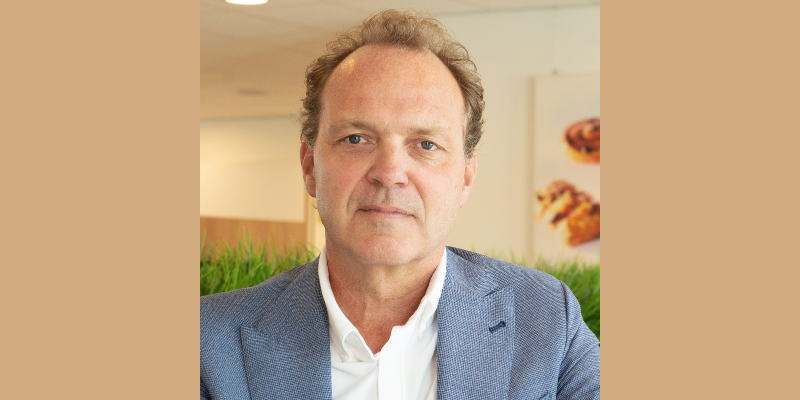
Looking ahead to the next five years, we see the bakery industry evolving toward a more automated, sustainable, and data-driven environment. Increasing labor shortages, higher efficiency demands, and sustainability expectations will continue to push bakeries toward advanced, flexible production solutions.
We asked the most important players in the European and American baking industry about their expectations for the year ahead. They talked about opportunities, changing consumer expectations, what type of support the industry needs, but also about the drawbacks of an unstable political climate and the challenges that come with labour shortage and energy prices increasing.
Onno Kuiper, Sales Director, Rademaker
How would you assess your company’s performance over the past year?
2025 was a dynamic year marked by geopolitical instabilities. Nevertheless, the market continued to grow and these challenges proved manageable. As a result, it was a successful year in which we worked intensively to demonstrate to our customers that we are a stable and reliable partner.
What are your expectations for 2026, taking into account the evolving market dynamics?
While geopolitical uncertainties continue to make precise forecasting challenging, we expect several clear trends to shape 2026. Labor shortages are likely to persist, driving continued investment in automated production lines, an area where Rademaker holds a strong market-leading position. In addition, ongoing consolidation in the bakery market creates opportunities to further improve production efficiency and scalability.
At the same time, bakers remain highly creative and continuously seek ways to differentiate their products. Supporting this need for flexibility and product uniqueness is another area where Rademaker delivers clear added value. Taking these dynamics into account, we are confident that Rademaker will continue to strengthen its role as a trusted value partner for the bakery industry.
How do you foresee the global and regional bakery markets evolving, and what are your company’s top priorities for 2026?
We expect the global bakery market to continue its growth, with regional markets developing at different speeds depending on local economic and labor conditions. For Rademaker, a key priority is ensuring that we are well prepared to meet the increasing demand for industrial bakery production equipment.
In parallel, we have observed a gradual decline in bakery-specific knowledge across the industry over recent years. To address this challenge, we established the Rademaker Academy several years ago. Demand for training and knowledge transfer continues to grow, making education and customer support an increasingly important part of the value we offer to bakeries worldwide.
What have been your primary growth drivers over the past year, and what is the most significant lesson you’ve learned in managing your operations?
Compared to several years ago, we see the increasing demand for multi-functional, versatile production lines and for higher levels of automation. Customers are prioritizing lines that can produce a wide variety of products with significantly reduced changeover times, allowing them to switch quickly and efficiently between products. This trend spans both our highly automated, high-capacity solutions and our Radini range, with dough outputs from 250 to 1,000 kg per hour.
As competition in the baking industry intensifies, what strategies are you employing to strengthen your market position? How do you balance operational investments with innovation and R&D?
Innovation in the bakery industry increasingly relies on the combined expertise of (dough) ingredients, recipes, and production processes, together with electrical and mechanical engineering and data-driven analysis. As digitalization and smart technologies continue to grow in the market, Rademaker has established a strategic partnership with Sensure. Sensure is an Italian designer and developer of online and offline vision inspection systems with artificial intelligence that work through self-learning. This collaboration enables Rademaker to accelerate the development of digital products and services.
To meet market demand for unique and distinctive products, Rademaker has acquired Form & Frys. This acquisition allows our customers to create iconic products on an industrial scale. When customer requirements call for the development of new, specialized equipment, we are fully equipped to support them with our R&D department and our Technology Center.
In response to opportunities created by consolidation in the bakery market, we have launched our Radini production lines, along with a dedicated testing facility. The Radini lines provide efficient production solutions with starting capacities of 250 kg of dough per hour.
Also, we have established a new division called the Installed Base Team. This team supports customers in keeping their existing production lines operating efficiently by upgrading individual components or sections where needed. In this way, customers can modernize their installations at minimal cost. In addition to supporting our customers, this approach also contributes to achieving our sustainability goals.
Rademaker continuously listens to its customers and closely monitors market developments to identify opportunities to strengthen its market position and deliver added value to its customers.
What unexpected developments occurred in 2025, and how did they influence your business operations or strategies?
Like earlier said, 2025 was a dynamic year marked by geopolitical instabilities, which at times led to delays in investments or installations. At the same time, these circumstances created opportunities to accelerate other projects. As a result, flexibility and a strong understanding of our customers’ situations remain essential for us as a company.
What are the most significant forces driving change in your business for 2026, and how is your company preparing to address them?
The most significant forces driving change in 2026 include ongoing labor shortages, increasing digitalization of production processes, further consolidation in the bakery market, and growing sustainability requirements. These developments are pushing bakeries to operate more efficiently, flexibly, and with fewer skilled resources.
Rademaker is preparing for these changes by continuously investing in automation, digital solutions, and scalable production concepts. We strengthen our capabilities through targeted product development, strategic partnerships, and customer training via the Rademaker Academy. In addition, our focus on modular upgrades, lifecycle services, and sustainability-driven innovations ensures that we can support both new investments and existing installations, helping our customers future-proof their operations.
Looking ahead to the next five years, what is your vision for the industry, and how is your company positioning itself to shape and contribute to its future growth?
Looking ahead to the next five years, we see the bakery industry evolving toward a more automated, sustainable, and data-driven environment. Increasing labor shortages, higher efficiency demands, and sustainability expectations will continue to push bakeries toward advanced, flexible production solutions.
Rademaker is positioning itself as a long-term partner in shaping this future by continuously reducing the total cost of ownership for our customers through optimized equipment performance and efficiency-enhancing services. Our focus areas include sustainability improvements such as reduced dough waste, higher productivity, improved product quality, and precise weight accuracy. These innovations are combined with our well-known robustness, ensuring high uptime, low maintenance requirements, and a long equipment lifespan. In this way, Rademaker actively supports bakeries worldwide in building future-proof operations and achieving sustainable growth.