
Are Ancient Grains the Future?
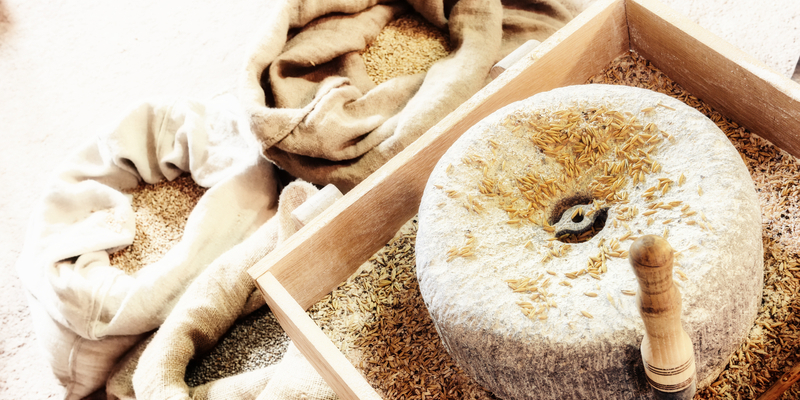
Ancient grains are making a comeback in terms of healthy baking, with consumer demand driving this comeback. Perhaps it’s a ‘back to the future’ scenario, but old habits die hard and catering for this healthier taste is not that simple.
In their favor, ancient grains generally thrive with lower levels of pesticides, fertilizers, and irrigation, making them an attractive choice to consumers who choose to shop with their carbon footprint in mind.
Add to that the fact that many of the ancient and genetically untouched grains are gluten free or lower in gluten content than wheat flour. And, because they have not been genetically altered as wheat has, the gluten found in these grains often causes celiac sufferers no ill effects. In addition, because they are whole grains, they are far richer in essential vitamins and minerals than plain white flour.
So, that’s the health aspect sorted; but what about the man in the street – or me, for example? I must admit, I am finding ‘bread with grains’ a healthier option – as opposed to the mass-produced sliced-white that so many supermarkets offer these days. It even looks healthier…
The Challenges
Moving on, though, there are challenges for modern bakeries in using ancient grains like spelt, quinoa, millet, kamut and barley for their flour and being able to constantly produce the quality of bread that the consumer expects to see on the supermarket or bakery shelf.
“Ancient grains are popular now because consumers perceive them as healthier and more natural than standard wheat,” says Dr Sven Schönenberg, technical service manager, Food and Baking at Novozymes. But he warns that ancient grains can be challenging for bakers. Without special enzymes, these grains produce lower volumes and dense bread. Ancient grain bread also tends to get stale and hard faster than commercial white bread.
Adding to that thought, Peter Hayes, national bakery sales manager at ADM, says the trend towards preferences for more natural and wholesome products has resulted in an increase in global product launches of baking ingredients and mixes containing ancient grains.
Senior scientist at Campden BRI in the UK, Joe McGurk told me: “Ancient grains such as pseudo cereals have the potential to address many challenges facing the food industry such as food security, diet related illness and health and nutrition. This is partly because they possess diverse functional and nutritional properties and are gluten free. They are already widely used in numerous gluten free applications but when this is not functionally possible for a given product, it is important to also evaluate the synergistic and complementary nutritional potential they can offer when blended with cereals, especially due to their amino acid profiles.”
The Processes: Trends
Referring to processing, McGurk said: “These grains have multiple functional properties such as water absorption, swelling, solubility, gelatinization, pasting, and oil absorption which are all important factors in numerous processing applications.
“However, despite being suitable for many applications it is important to note that due to size some must be processed whole, while others need additional processing to reduce anti-nutrients, which can inhibit the digestion process, negatively influence the biological utilization of nutrients, and interfere with metabolic pathways.”
Looking ahead, he added: “We can gain valuable insights into the potential applications of ancient grains by evaluating the starch properties along with polymer interactions, functional characteristics around water binding capability, solubility, viscosity, gelling and foaming properties as well as emulsifying capability.
Also regarding processing, GoodMills Innovation has produced an ‘innovative ancient grain’ which is said to be easy to process and will produce wholesome bakery products with a similar taste and texture to the modern wheat bread consumers are used to eating.
Billed as a healthy grain, managing director Michael Gusko says the 2ab wheat is the ‘wheat of the future’, adding: “Bakers now have a tasty solution for customers who react sensitive to wheat or who prefer original grain varieties.”
So, ancient grains can be of the future, too.