
Mühlenchemie’s Plant in China Gets Certification for the World Food Program
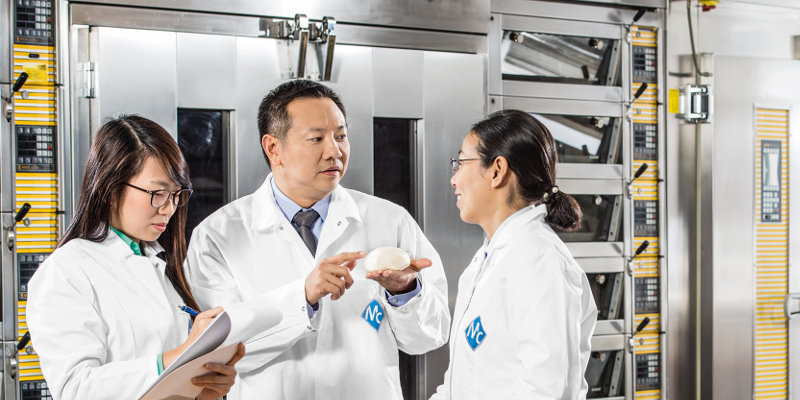
Mühlenchemie’s production plant in Suzhou, China, meets all the quality requirements for supplying micronutrient premixes to the World Food Program (WFP), following a comprehensive audit by the Global Alliance for Improved Nutrition (GAIN).
The quality requirements were necessary for supplying the United Nations World Food Program (WFP) with micronutrient premixes. GAIN was commissioned by the World Food Program to ensure that it maintains the highest quality standards in the production of foods for the WFP.
This is the fourth Mühlenchemie plant to be certified by the NGO after Germany, Mexico and the USA, according to the company. It widens the its international network of production facilities in which fortified foods can be produced locally, according to the same high quality standards.
Nearly two billion people worldwide suffer from “hidden hunger”, a vitamin or mineral deficiency. Women of child-bearing age are the most affected, since micronutrient deficiency in the mother has a negative effect on the pre- and postnatal development of her children. Fortification of flour and the distribution of micronutrient-enriched foods is one approach to address this problem.
With a network of five production plants and 18 applications laboratories extending from Europe through Africa to Central America and Asia, Mühlenchemie responds to the worldwide demand for vitamin and mineral premixes for use in flour fortification.
The audit confirmed that the plant in Suzhou meets the stringent requirements of the WFP. The certificate now permits the facility to offer vitamin and mineral premixes for “Super Cereal”, the nutritious maize and soy mixture of the United Nations World Food Programme. To ensure continuous quality management, Mühlenchemie has also invested in a humidity chamber in which real-time stability tests of its own can be carried out on-site, without recourse to outside laboratories.
“Although large parts of Asia are becoming increasingly prosperous, there is still a great need to combat malnutrition in some populations in the region. With our capacities on the spot, we can guarantee short routes and high quality standards”, says Hendrik Mögenburg, Mühlenchemie’s regional director for Asia. The construction work on a second Mühlenchemie plant in Malaysia is soon to be completed, and the facility will also be certified for the production of micronutrient premixes. “With our thorough understanding of the needs of the local milling industries, we do not just offer exactly the right products; above all, we give our customers sound advice on applications on the spot.”
One of the countries in the region in which the WFP works is North Korea, where40% of the local population suffers from malnutrition, according to WFP. Since the 1990s, the people of North Korea have been dependent on food aid from the United Nations. It is hoped that the provision of “Super Cereal” will help to improve living conditions in the country.