
Palsgaard achieved CO2-neutrality at its Danish plant
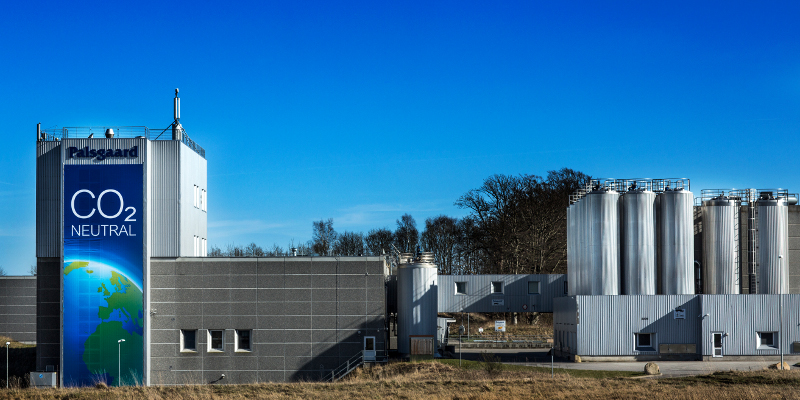
Food ingredients manufacturer Palsgaard A/S has revealed that it achieved CO2-neutrality at its Danish plant during 2015 and has reconfirmed plans to achieve a zero carbon footprint worldwide at all production plants by 2020.
The milestone was marked by a well-attended celebration held at the company’s Danish headquarters in Juelsminde with guests that included government officials, local politicians, business people, press and scientists on April 1.
During the celebration Anders Bjørn, PhD at the Technical University of Denmark, DTU explained why it’s important that companies take active measures: “It is encouraging to see Palsgaard prove that with an ambitious effort it is possible to combine energy-intensive production in this country with CO2 neutrality. It is also positive that Palsgaard not only intends to do better in Denmark, but also has a target of CO2 neutrality for its production sites abroad and is trying to reduce environmental problems from the palm oil they purchase”, Bjørn continued.
How to achieve a zero carbon footprint?
The CO2 neutrality has been achieved by optimizing the energy consumption throughout the plant in the form of heat recovery and insulation, converting from heavy fuel oil to biogas, lighting optimization and by making use of certified wind power. Palsgaard has also established its own straw-fired central heating systems, which have enabled the company to achieve a zero carbon footprint in Denmark five years earlier than planned. The reduction in CO2 emissions for 2015 alone amounted to 16,088 tons, which corresponds to the typical annual emissions of approximately 4,200 Danish households.
For years the Danish Ministry of Energy, Utilities and Climate has been determined to reduce the CO2-emissions from Danish companies. That Palsgaard has carried out its sustainability initiatives singlehandedly, greatly pleases the Minister:
“One of the reasons that we have a more efficient and energy-saving industry today is because of companies like Palsgaard, which has now achieved CO2-neutrality. It is quite impressive that they have managed to reduce the company’s energy consumption”, says Lars Chr. Lilleholt, Minister for Energy, Utilities and Climate.
Birger Brix, Group CEO for the Schou Foundation, Palsgaard’s owner, stated: “We’re immensely proud to have reached this milestone, the result of extensive efforts since the goal was established in 2010. And we’re particularly pleased to have proven that it’s possible even in an industry whose production processes are energy-intensive, to say the least.”
The company, which has subsidiaries in 13 countries and a global sales representation, develops emulsifiers and other ingredients that help manufacturers to sustainably meet a range of consumer needs and to produce excellent food products.
Palsgaard’s efforts to ensure sustainable production aren’t about to slow down, either. The plants in the Netherlands, Mexico and Malaysia have already embarked on a similar process towards global CO2-neutrality by 2020.