
GFF: Grains Really Are the Foods that Love Us Back
Christine Cochran, executive director of the Grain Foods Foundation (GFF), and Stacey Krawczyk, GFF’s principal consultant, shared in an interview with WorldBakers how bakery products combine the best of nutrition and comfort at a time when both of these characteristics are in high demand, and how this trend is likely to continue. Tapping into this dual perception is a source of opportunities going forward.
As the COVID-19 pandemic has placed an unprecedented level of attention on food, the GFF has recently surveyed consumers and found that bread and pasta represent the food category providing the optimal blend of comfort and nutrition. As recent grocery sales statistics show, many consumers have abandoned their normal dietary routines and have chosen more of the foods that provide them solace – comfort foods. Unlike most of the products in this category, grains “really are the foods that love us back,” the organization’s executive director said, a source of comfort and nutrition from a versatility-staple.
What consumption changes can be observed in the baked goods category?
Christine Cochran: The keyword here is “more”; people are buying more bread aisle products and more flour from the baking aisle. Sandwiches or burgers that might have been purchased at a restaurant at lunchtime are being prepared and eaten at home, much more than before March. It seems like consumers have remembered their old friend, bread, and have welcomed it back into their homes – both as a mealtime staple and as a new hobby, with home-baking being a huge discussion on social media in these last several months.
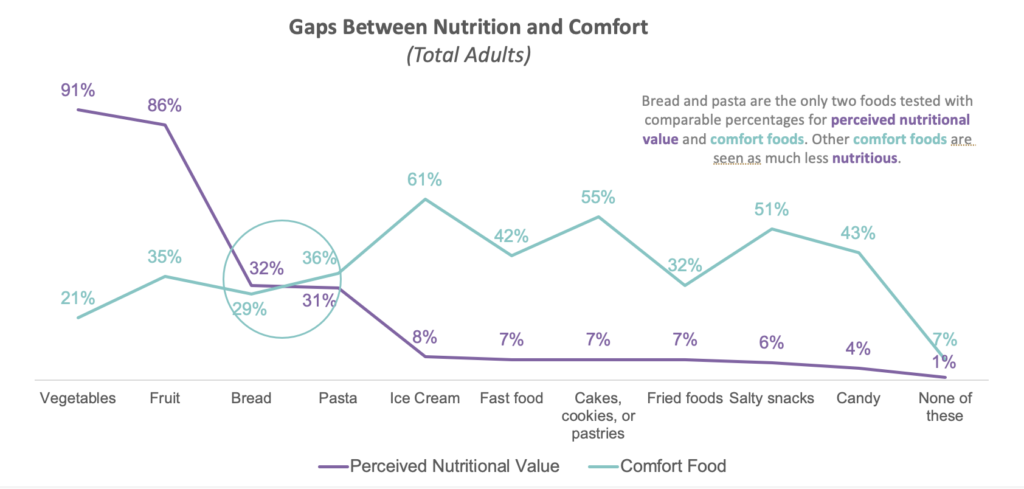
A new national study, funded by the GFF, was conducted among a sample of 1,019 American adults (18+ years representing a cross-section of the population) and was fielded from April 3, 2020, through April 6, 2020. It revealed that approximately one-third of Americans named pasta (36%) and bread (29%) as foods that are comforting during a stressful time. More significantly, of all the comfort foods they turn to in times of stress, they recognize bread and pasta among the most nutritious.
Not surprisingly, the study found that the highest-ranking comfort foods were identified as ice cream (61%), cakes/cookies/pastries (55%), salty snacks (51%), candy (43%) and fast food (42%). But when asked to identify comfort foods with nutritional advantages, consumers identified bread (32%) and pasta (31%) as the top two comfort foods with nutritional benefits. In contrast, very few consumers recognized their other top five comfort foods as having nutritional benefits – ice cream (8%), cakes/cookies/pastries (7%), salty snacks (6%), candy (4%) and fast food (7%).
GFF has been telling consumers that ‘Grain foods are the foods we love that love us back’ for years, but this survey shows that this message has become even more real during the COVID-19 pandemic. At an extremely stressful and uncertain time, bread and pasta provide comfort not just because they’re tasty and convenient but also because, unlike most comfort foods, they provide vital nutrients we can feel good about – plus the versatility that makes them an every-day, every-meal option.
What types of bread/baked goods will health-conscious consumers add to their cart? And what are the nutrition profiles of these products?
Stacey Krawczyk: What we eat will always be driven first by taste, then by perceived health attributes. So if a consumer is looking for “more” nutrition out of their bread or baked goods, they likely will lean towards options with more whole grains and/or multiple grains, less sugar or fat, more fiber or protein, fewer carbs or total ingredients, more vitamins and minerals, etc. A quick glance at the Nutrition Facts label will help consumers decide which bread or baked item will help them better meet their personal health and wellness goals based on which nutritional component(s) they prioritize.
What nutritional recommendations should be followed regarding the daily intake of bread/bakery wares?
Stacey Krawczyk: The US Dietary Guidelines for Americans recommends eating anywhere from three to eight ounce-equivalent servings of grain foods (any food made from wheat, rice, oats, cornmeal, barley, or another cereal grain) each day (three for young children and eight for young adult males) and making half of these grains from whole grain sources.
Whole grains are important sources of dietary fiber, B vitamins, and disease-fighting antioxidants, and many whole grain options exist for breads and baked goods to balance out the non-whole grain choices.
That said, it’s important to remember that non 100% whole grain choices provide essential nutrition through contributions of enrichment, fortification. Refined grain foods that have been enriched and/or fortified help to alleviate shortfalls including B-vitamins, folic acid, thiamin, niacin, riboflavin, and the mineral iron. For example, enriched grains are the largest contributor to folic acid, which is key to preventing neural tube birth defects, in the American diet.
How can the nutritional benefits of bakery products be improved?
Stacey Krawczyk: Most bakers can provide additions or subtractions to optimize the particular baked good. This must be balanced with the consumer desire of a wholesome, straightforward ingredient statement and the shelf-stability needed for the supply chain.
What opportunities are there for bakery products to fit into the comfort foods category as well, and why is this a segment they should aim for post-COVID?
Christine Cochran: There are plenty of bakery products that are traditionally perceived as members of the comfort foods category: cakes, muffins, cookies, cupcakes, donuts, etc. But I think this survey shows that there are additional opportunities for less indulgent bakery products, from breads and bagels made with new flours and seasonings, to granolas and tortillas made with unique fruits and seeds, to serve as/be marketed as accompaniments to comfort foods or perhaps even comfort foods themselves. The simple reason to do so post-COVID is that COVID has proven that many Americans already perceive these products as comfort foods, and presenting them more options in this category may increase that perception.
Please comment on the discrepancies between nutritional food vs. comfort food, as perceived by consumers.
Stacey Krawczyk: Food is more than nutrients. It is our culture and our memories – these drive the aspects of “comfort” and familiarity. Food, however, cannot support nutrition if it is not eaten. This is where we seek to make choices that offer a balance of taste and nutrition or balance out choices over the course of the day. So as our survey shows, Americans enjoy foods that they perceive as very comforting but lacking in nutrition, such as ice cream, as well as those that they perceive as very nutritious but not so comforting, such as fruits and vegetables. But most interestingly, it shows that a good portion of consumers perceives grain foods as the one food type that provides the best balance of both comfort and nutrition. So it’s easy to imagine many Americans enjoying an array of grain foods as choices that help them strike the comfort-nutrition balance, from indulging in high-comfort Nutella on a piece of high-nutrition whole-grain toast for a snack, to getting your kids to each more high-nutrition vegetables by serving them alongside high-comfort macaroni and cheese.
What are your thoughts regarding the added-value segments such as extra fibers, proteins, vitamins vs their consumer appeal? How can they advance from a health-savvy shopping list to mainstream consumption?
Stacey Krawczyk: The food technologies enabling additions of progressive and value-added ingredients are wonderful, providing “nutrition enhanced” options that support functional eating, hunger reduction, or public health. That said, It always comes back to taste, so it’s great to see the constant improvement of and evolution of new technologies and ingredients that are able to add value without compromising (and sometimes even improving) consumer appeal. What was progressive yesterday is approaching mainstream today, and I think in most cases we will continue to see early adopters with health-savvy shopping lists lead the charge to eventual mainstream consumption.
What is the role of home baking in comfort foods – and what does a prevalence in home baking mean for the industry overall? How do you anticipate this trend will evolve?
Christine Cochran: We are certainly seeing an increase in home baking – evidence from ingredient sales in grocery stores strongly supports this claim. The conversation on social media brings to light the challenge, satisfaction, and comfort consumers are finding in trying (and re-trying) home baking projects. There is a sense of returning to something familiar and good in home-baking and bringing back feelings of security that have gone missing during the COVID-19 pandemic.
That said, beyond identifying comfort foods and their nutritional value, the GFF survey mentioned above also asked consumers if they were concerned about the bread supply. 27% indicated that they worry that bread is in short supply right now, while 29% said that they didn’t know what they will do if there is a bread shortage. And despite the plethora of social media posts about the joys of making bread at home, 44% of consumers said they see bread-making at home as a fun activity but not as a practical ongoing practice. Taking together, these results lead us to anticipate that the enthusiasm for and practice of home-baking will trail off as life slowly returns to normal, or to what will be the new normal.
How will nutrition/eating occasions & contents evolve past COVID-19, as economies will eventually open and consumers’ lifestyles will become (somewhat) mobile again?
Christine Cochran: While many communities are still in Phase 1 of re-opening and many health experts are warning of a potential second wave of illness coming this fall, it is difficult to forecast what the “new normal” will be. What we know now is that Americans are falling back in love with grain foods, above all bread, and that they are providing the comfort and nutrition they crave on a daily basis. Many reports, for example, the latest from The NPD Group, also suggest that consumers will continue to eat more meals at home, whether carryout or delivery or preparing their own, post-COVID, so I think there’s a strong foundation for more people eating more meals together at home – including more meals that include grain foods!
What share do you anticipate grain-based foods can claim in food shopping post-COVID-19, and what products stand to gain?
Christine Cochran: While I can’t offer any specific predictions, grain-based foods will likely retain a larger share of the basket than we had pre-COVID-19 as consumers rediscover their favorites and at-home dining remains high. Whether that is packaged bread or pasta or flour remains to be seen.