
Renaissance BioScience Files for Patent of Non-GMO Yeast
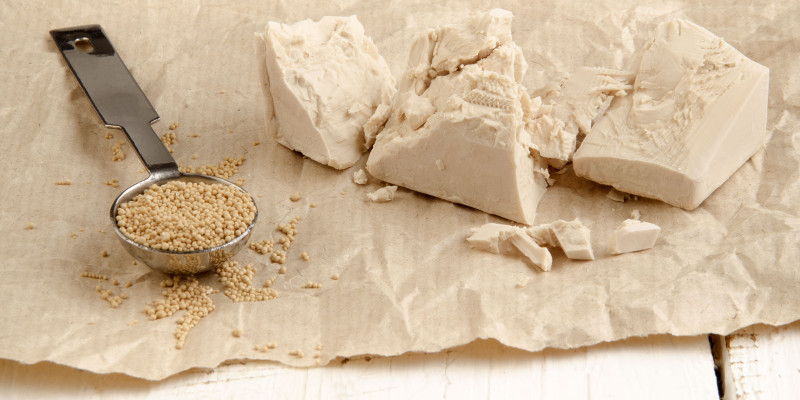
Canadian Renaissance BioScience Corp. has filed a provisional application to the US Patent and Trademark Office for the patent of its non-GMO acrylamide-reducing (AR) baker’s yeast.
The application protects the company’s work over the last two years in developing baker’s yeast strains (Saccharomyces cerevisiae) that naturally reduce acrylamide by up to 95 per cent in a variety of food products by degrading the precursor compound asparagine, the company announced
Acrylamide is not added to foods, but forms naturally from the amino acid asparagine when foods are heated above 120 °C (e.g. baking, roasting, or frying). The European Food Safety Association (EFSA) recently announced its latest risk assessment on the continuing widespread presence of acrylamide in these various foods. This report is one of many issued by food regulatory and health agencies worldwide, including the US FDA, Health Canada, and others.
“Our AR yeast is an important step towards solving the global health concerns posed by dietary acrylamide,” said Renaissance Ingredients President Dr. Matthew Dahabieh. “Our testing, both in-house and with commercial partners, demonstrates that AR yeast reduces acrylamide by up to 95 per cent in a variety of foods.”
From patent filing to product release
Dr. Matthew Dahabieh, President of Renaissance Ingredients, detailed on the development of the new yeast: “In addition to the recent patent on our novel, non-GMO, adaptively evolved acrylamide-reducing (AR) yeast, we have completed numerous in-house, laboratory scale development studies on the effectiveness of our AR yeast in a wide variety of affected food products, including bread, toast, snack foods, potato products, and coffee. We are extremely pleased to report that our AR yeast works well in all of these foods and reduces acrylamide by 70-95 per cent, depending on the product and process in question. In baked goods, our AR yeast reduces the acrylamide content by approximately 95 per cent to essentially nothing.”
The AR yeast is now ready for the next stage of testing and trials by industry collaborators in baking, snacks, potato products, and coffee. “We are actively looking to form strong partnerships with interested industry partners looking to reduce acrylamide in their products. We expect that our AR yeast will continue to perform well at industry scale and will offer food manufacturers an effective and easy-to-use solution to acrylamide, especially in foods like bread where yeast is already an ingredient. In these foods, our AR yeast can be seamlessly substituted in place of conventional baker’s yeast,” Dahabieh added.
AR yeast applications: baked goods, potato products, snack foods, and coffee
Renaissance Ingredients’ AR yeast strains are traditional baker’s yeast with an accelerated natural ability to consume asparagine, thereby reducing acrylamide. In baked goods where yeast has always been used as an ingredient, AR yeast can seamlessly replace conventional baker’s yeast with no disruption to the baking process. Importantly, AR yeast also can be used in foods in which yeast is not normally an ingredient. Renaissance Ingredients has conducted numerous successful studies on the feasibility of using AR yeast in novel ways for foods containing yeast extract, chemically leavened foods, or foods exposed to soaking steps during processing.