
Exclusive: Baking Temperature Optimization
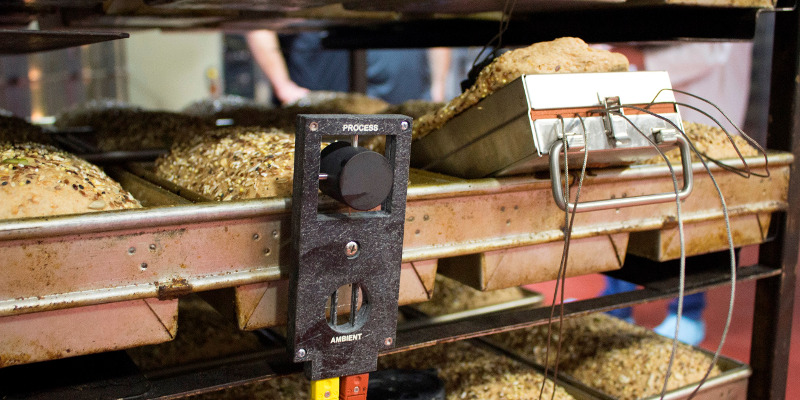
Measurement enables control of the baking process, which then replaces reacting to problems with smooth low scrap/high yield profitability for the bakery.
Thermal profiling in bakery takes into consideration all process stages, from fermentation to baking and product optimization, and on to prepackaging cooling and freezing.
Handling Temperature Variations
Permitted and efficient can be two different things, when talking about temperature variations in baking. Older ovens were not so nimble to adequately bake diverse varieties as current ovens can, which realize faster changeover conditions to set point changes and the like. Also, gluten-free varieties run hotter and longer, so the profiling equipment must keep up, with larger thermal barrier and proper rating of thermocouple insulation.
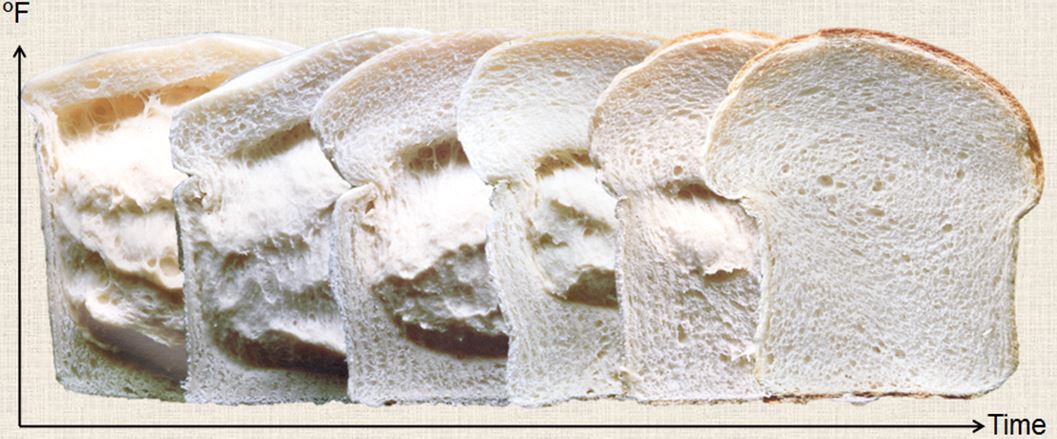
From a balanced oven, it then becomes possible to work on the bake cycle itself such that proper moisture and optimum crumb set and texture are achieved. This is accomplished with S-Curve analysis, to enable the realization of exactly when chemical changes are occurring during the bake time. Specialized instruments such as the patented Breadometer® automatically analyze and calculate when yeast kill, starch gelatinization, and arrival to baking temperature as a percentage of bake time from up to five dough depths.
Baking Temperature Optimization
A particular North American-based commercial baker was struggling with yield for its ciabatta variety – for over three years! A scrap rate of between 10% and 15%, on average, was wreaking havoc on profitability and ingredient modifications and troubleshooting efforts were having little positive effect. After receiving their V-M.O.L.E. and the 3-channel version of the Breadometer® sensor, the bakery resolved its early yeast kill, starch gelatinization and early arrival issues. Optimized moisture content and crumb set were achieved, scrap rates were reduced from 12% to 2% and profits rose significantly. Also, the bakery was able to lower oven temperatures to produce the same volume in less time, saving on energy costs. With the adjusted zone temperatures, the bake time has been shaved by 4 minutes, improving throughput and removing a production bottleneck by allowing the slicer to maintain its speed.
Meeting Food Safety Regulations
Whether the commercial bakery has come to the realization of the benefits of thermal profiling many years ago due to the productivity and quality benefits that process measurement affords, or scientifically knows and understands the importance of microorganism lethality kill and its measurement, time and temperature analysis is also a critical reason for in-transit thermal profiling for food safety.
For instance, according to the new proactive ‘farm to fork’ regulations enacted by the FDA in its 2011 Food Safety Modernization Act, not only American producers but the legion of global bakeries which supply biscuits and snack goods into the US market are held to this standard. Multinational restaurant chains that seek copy-exact taste experience and business quality methods are also requiring the so-called Kill Step Protocol to be observed to claim FSMA Compliance under the series of deadlines that are being enforced. AIB International, which developed and provides the data for Kill Step Calculators via live culture salmonella testing (also a user of M.O.L.E.® thermal profilers) provides the FDA-approved means to scientifically prove 5-log or better pathogen lethality in commercially baked goods for sale to the public. The new windows-based BakeWATCH Kill Step Calculator utilizes this data in a productivity enhancing software, which requires no cut-and-pasting nor data manipulation per tested variety from a drop list. When the prescribed quantity of channel profiles is reached (usually 30) the Pathogen Reduction report can simply be generated and saved for audit compliance.
The coldest area in a baked good indicator is a factor revealed by oven balancing for burners’ maintenance and baffles adjustment, and plays into the FSMA compliance Kill Step thermal profiling protocol as well. After all, dough bakes from the outside in and that is another reason that makes Breadometer so useful for process control.
Texture Properties
Profiling with the patented Breadometer® sensor and a 3 or 6-input M.O.L.E.® thermal profiler, initial data helps the bakery adjust for optimum Yeast Kill, Starch Gelatinization and Arrival to baking temperature as a % of bake time as automatically calculated and displayed by the software. With a typical Arrival of 85%, sufficient time to the end of the oven exists to impart optimum texture without excessive moisture remaining that would promote early staling, or too much time remaining, which would produce a poor, dry crumb.
This article contains insights on the topic by ECD, additional to the expert view article, “Profiling: Temperatures”, published in the print magazine European Baker & Biscuit and digital magazine World Bakers Digital.
You can read more in our print magazine European Baker & Biscuit (May/June 2017)!