
Italian Business on The Rise
Italy’s baking industry lifted value sales two per cent in 2007 to pass the EUR15bn barrier. Bread baking employs some 330,000 people in Italy and the sector has an EUR8bn annual turnover. Simon Jones reports.
Artisanal bakers still control two-thirds of Italian output, and over 80 per cent of sales by value. However, growing demand for convenience and long-life products has boosted industrial bread output in recent years. Packaged bread was the most dynamic segment in 2007, with five per cent sales growth.
Barilla G & R Fratelli dominates Italy’s industrial baking segment. The Parma-based food giant and Europe’s third biggest baking group, has nine per cent of the baked goods market, but claims 96% of Italian families buy its Mulino Bianco (or White Mill) range. The umbrella bakery brand is produced at six Italian plants with a total workforce of 2,500. The main site at Castiglione delle Stiviere is Europe’s biggest baking plant.
Baguettes remain the leading packaged bread segment. Industrial bakers have also opened a
new segment with a premiumisation of Italy’s regional breads – long a preserve of independent bakers. Barilla was as ever at the forefront of this trend, launching its version of the piadina loaf from northern Italy in 2007. A love of style and presentation makes Italy a fertile market for premium branding. Barilla defends its number one position with a big marketing spend, designed to win the artisanal qualities of authenticity and freshness for its own packaged output. Premium brands still have a small market share, but switching consumers from artisanal to packaged output is a key strategy for leading industrial bakers.
The Parma-based food giant also took the wellness segment mainstream with last year’s launch of its Liberi per Natura range. Wholegrain loaves such as Barilla’s Filone da Tavola Rustico line with sunflower and sesame seeds is satiating Italian demand for nutritious products: an appetite itself created by skilful marketing and packaging.
Barilla also owns leading international crispbread producer Wasabrod. The Swedish firm sells around 60,000 tons/year of crispbread in 40 countries. Wasa’s main markets outside Sweden are the other Scandinavian countries and Germany, closely followed by Poland, the Netherlands, France and the US. The unique wholemeal, long-life bread with scientifically-backed nutritional functions is a perfect fit for Barilla’s product range.
Earlier this year Barilla took closer control of its Swedish holding, incorporating Wasabrod into the group and shifting its headquarters from Stockholm to Parma. Wasabrod is now Barilla’s smallest business unit, although marketing and product development will remain in Sweden.
Barilla profits fell to EUR448m last year (EUR480m in 2006), although this decline was due mainly to several foreign disposals. The family firms continued this policy in 2008, selling former Kamps unit Quality Bakers to Dutch group Bakkersland.
And ill-starred acquisition Kamps is itself on the block. Barilla paid EUR1.8bn for Europe’s biggest baker in 2002, but has finally admitted defeat in its costly efforts to return Kamps to profitability. A Frankfurt investment bank is trying to sell the German group, with a private equity group seen as the most likely buyer. The disposal does not include Kamps’ top-selling industrial bread brands Golden Toast and Lieken Urkorn.
Group President Guido Barilla said last year’s results ‘confirmed once again the strength of our group, which in the last three years has almost halved debt levels.’ He remains ‘full of confidence’ that this year’s challenges will not undermine results or the group’s drive to be debt-free within five years.
Pastry as breakfast
Italians traditionally eat pastries or biscuits with their breakfast espresso or as an afternoon snack, although this unhealthy option is now under threat from growing public health concerns over obesity especially among children. Ferrero SpA is the leading producer of these wrapped sweet merendine. The success of brands such as Fiesta, eaten as an on-the-move indulgence for both children and adults, has established Ferrero as industry number two behind Barilla.
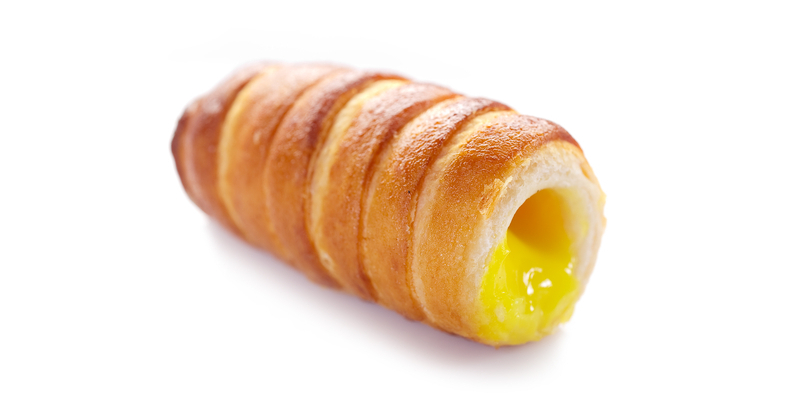
Croissants (or ‘cornetto’) are the best-selling line in this segment, with over one-third of sales. Italians enjoy both the traditional French croissant and their own cream-filled variety.
Cake and pastry sales increasingly rely on a strong seasonal market. Italy has the richest and most varied Easter baking traditions. Easter specialities include Columba and pizza al formaggio, a rich, eggy cheese bread served with scrambled eggs for Easter Sunday breakfast. These days such treats are more likely to arrive from the local bakery than the family oven.
Italian bakers also profit from extended Christmas celebrations, stretching a whole month from the Feast of St Nicolas on 6 December to Epiphany. Traditional Italian holiday baked goods include panettone (a cake filled with candied fruit), torrone (nougat with honey, almonds, and hazelnuts), and panforte (gingerbread.) All-year sales of panettone; lighter than German Stollen but with the same fruit content and rich buttery flavour, are also growing outside Italy.
Barilla marks this key period with a different original TV spot daily through December for 31 Mulino lines. But Verona bakery Bauli produces Italy’s best-selling industrial panettone range, ahead of brands by Nestle Italia unit Motta. Christmas sales of pandoro and panettone bolster these two firm’s leadership of multi-portion cake sales – itself around three-quarters of the packaged cake segment.
Yet such seasonal fare may be spread more thinly this Christmas. The dramatic spike in bakery prices has hit hard in Italy, where general inflation is already at a 12-year high. In September consumer groups organised a one-day ‘bread strike’ to protest the 30% jump in prices over the last year. Protesters handed out free loaves outside Prime Minister Silvio Berlusconi’s office, a reminder of his election pledge earlier this year to keep pastries and pasta affordable for the average Italian. Consumers association ADOC claims the industry has not passed on the fall in prices of commodities like wheat in recent months from their record highs in late 2007 and early 2008. “We have to stop this before it gets out of control, we have to halt the endless rise in prices,” says ADOC President Carlo Pileri.
Farmers’ lobby Coldiretti also issued a study to coincide with the protests, showing that bread prices vary hugely across Italy, from under EUR2 per kilo in Naples to over EUR3.50 in Milan. “This clearly shows bread prices depend only marginally on grain prices which are fixed internationally by the Chicago Board of Trade,” said Coldiretti. It estimates a “mark up of over 1,300% from the field to the table” for a typical loaf.
The government has increased the heat on bakers by instructing ‘prices tsar’ Antonio Lirosi to investigate the industry. A joint probe with Italy’s financial police Guardia di Finanza will examine why Italians are still paying more for bread and pasta despite the 40% fall in wheat prices this year. They will focus on allegations of price speculation in the cereal industry and on the process of determining retail prices. Lirosi already met with leading bakers in August, urging “everyone on every level to do their part to ensure that the drop in the cost of raw materials trickles down to the consumer.”
Employment costs
The Italian Bakers’ Federation dismisses all such claims, pointing to extra costs for wages, energy and other raw materials faced by its 25,000 members. It says higher bread prices add only a few cents a day to the average Italian family’s food bill. But there are already signs that the surge in prices could hit long-term bakery sales. Figures from Italian statistics office ISTAT show bread consumption down 5.5% in the first half of 2008, double the average fall in food sales.
The industry also faces long-term negative trends such as an ageing and stagnating population. Italy has one of the fastest ageing populations in Western Europe and the oldest mean age in the EU. This is not all bad news. These days’ older consumers have some of the highest disposable incomes, offering a profitable niche market for added value products. But a recent slump in Italy’s birth rate means the population is now growing at one-third the average European level – up less than 4% in the last 20 years.
Italy also faces long-term economic problems. The typical small- or medium sized family firm has struggled to compete in globalised markets. Barilla is the exception among Italian bakers, holding down costs and increasing productivity to compete with international rivals. The low growth, high cost economy is an unpromising backdrop for Italy’s baking sector, even among the bulk of bakery firms not looking beyond the peninsula for sales.
An on-going scandal involving the Mafia also threatens the sector’s hard-won reputation for quality output. An investigation by local officials in Naples has revealed huge infiltration of the city’s baking industry by local Mafia division the Camorra. Hundreds of underground bakeries are marketing cheap and potentially poisonous bread at unlicensed sites across the region. Perhaps even more damaging for the industry’s image are claims that, as in other economic sectors, the Camorra is now forcing its products into official food outlets.
The latest Euromonitor survey of the Italian baking market predicted steady one to 2% annual growth over the next few years. That may now seem optimistic, as this autumn’s financial drama compounds widespread anger over rising prices. But consumers’ growing health concerns, coupled with a traditional Italian focus on quality and image, promises long-term growth in the most profitable value-added segments for Italy’s bakers.