
Good And Easy: Bake-off Products
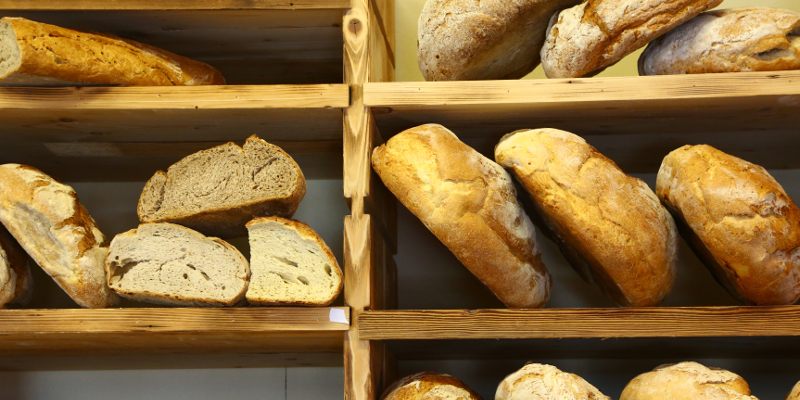
In some European countries, bake-off products are well established; in others, the potential for growth is being realised while the export market is also being exploited now. Bernadette Tournay examines the latest developments.
Bake-off is doing good business. Its market share, within Europe’s total Bread, Viennoiserie and Patisserie (BVP) sector, is growing by around 5 per cent a year, comparing more than favourably with the annual growth of the total BVP sector which is just 0.3 per cent.
“Today the total BVP sector in Europe has a volume of 39 million tonnes, valued at €120 billion with fresh products representing a little over 70 per cent of the value and volume. Bake-off products have 12 per cent of the total BVP market and 20 per cent of the fresh BVP market,” said Anne Fremaux, manager of French research consultancy GIRA and author of four studies about the European bakery market.
The most recent, to be published mid-2010, is ‘Bake-off Bakery Markets in the EU 2009/10 – 2014′, which looks at the bake-off sector in 15 EU countries plus Switzerland and the strategies and opportunities there during the next five years.
Bake-off’s biggest markets are France, Germany, Italy, Spain and the UK due to bake-off products being already well established there in super and hyper markets. “Those countries with very strong potential for bake-off, even if the markets are still small, are Portugal, Poland and Romania,” said Fremaux, who sees innovation in bake-off products going in two main directions. “The first is convenience, products which are easy to prepare at the point of sale and this favours par-baked and baked products. The second is snacking and savoury products. For bread the trend is for products with a traditional, old fashioned image.”
The report identifies artisanal bakers as a sector continuing to decline but one that can offer profitable opportunities for bake-off manufacturers capable of targeting properly. Significant also, says the report, is the growing presence of hard discounters in distributing fresh bakery products and the growing presence of chilled, ambient and controlled atmosphere packaged bake-off products.
Exports
Exports are also becoming more important to bake-off manufacturers, says the report, with on average 20 per cent of producers’ turnover now being generated by them. One example is Europastry, the leading Spanish producer of frozen dough and par-baked and frozen pastries, which opened a commercial subsidiary in Holland in September last year serving the German, Belgian and northern European markets.
Exporting to 20 countries, Europastry also has subsidiaries in Portugal and France. Turnover grew 10 per cent in 2008 to €360 million. Doughnut exports rose 40 per cent in the first six months of 2009 making Europastry the largest European producer of frozen doughnuts. The company’s traditional rustic loaf Pan Gran Reserva, launched in 2008, is enjoying good growth due to its acceptance by European consumers. Europastry has also introduced new products, duo chocobread and cheese and turkey puff pastry, which it launched last August, having developed them for the Spanish market with the idea of introducing them into France and Benelux.
Daan Groenendijk, managing director of Europastry Benelux, has observed that demand for bake-off products is changing both from consumers and clients. “In general consumers are now looking for more European-style products whereas a few years ago they purchased local products. Bake-off stations are looking for more efficient products such as fully-baked or pre-proved products. Baking times and temperature are important at the point of sale to improve availability but also to avoid having too much product left over at the end of the day. We are also seeing traditional artisan bakeries now buying bake-off products to stay competitive and provide a wider range to their customers,” he said.
At the iba show in Düsseldorf last year, Dutch company Ruitenberg launched a range of new products suitable for the bake-off sector. Rudin®Glaze Deco is a clean label solution to prevent grains used to coat bread from falling off and Dorayaki, a Japanese pastry originally stuffed with red bean paste for which Ruitenberg has created new versions, including salmon and spinach and feta, which are enjoying success in Spain and USA. Ruitenberg also launched its version of the traditional filo pastry burek for which it has developed new fillings as well as new additions to its bake stable Rudin®Filling range for pastries – kebab, fresh cheese, honey mustard, quark (sweet cheese) and chicken fajita.
“Visitors at iba were very interested in the Rudin®Filling range. The new flavours we launched are more mature and the Rudin®Glaze Deco was well received by the bread industry,” said Ruitenberg’s bakery industry account manager Alies Poel, who sees Europe as having the best potential for bake-off at the moment.
“We are seeing a move from sweet to savoury in the bake-off market at the moment and expect growth of more than 10 per cent in the bake-off savoury sector in 2010. The market is also increasingly requesting salt reduced and clean label products and we are reacting to these demands. We already have a range of clean label fillings and we are working on reducing salt as well as increasing product convenience,” she added.
Because bake-off technology is more energy-hungry than conventional baking, an important focus of the EU-FRESHBAKE project, which ended in October 2009, was to develop technology to reduce energy needs. One development is an infrared oven which can save around 35 per cent energy compared to a similar electric oven. Baking is done in the usual two step process of preheating followed by baking with heating being done by infrared radiation lamps. The benefits of the oven, for which a patent has been submitted, include fast preheating, low energy consumption, easy implementation, no modification of the baking process and production of bread quality equivalent to conventional ovens. The system can also be installed in existing ovens.
“The concept we have developed allows for the reduction in energy consumption of an electric oven by around 35-40 per cent while the pre-heating times can be reduced by over 70 per cent,” said Professor Alain Le Bail of the Ecole Nationale d’Ingénieurs Des Techniques des Industries Agricoles et Alimentation (ENITIAA) in Nantes, France, who led the EU-FRESHBAKE project and who received the prize for innovative technologies benefiting the environment awarded by the French Association for Environment and Energy (ADEME) at the POLLUTEC exhibition last December for his work on the new oven.
Le Bail sees the end users of the new oven as artisinal bakers and bake-off stations. FRINNOV (www.frinnov.com), the technology transfer arm of the Centre National de la Recherche Scientifique (CNRS), France’s national scientific council for research, is currently looking for industrial partners to develop and apply the technology within the baking industry. For more info contact FRINNOV at Corinne.Monnier@fist.fr or Le Bail at alain.lebail@enitiaa-nantes.fr.
Energy Saving Option
Another energy saving oven tested during the EU-FRESHBAKE project was vacuum baking using low pressure. This method was found to require 50 per cent less energy than conventional baking methods. It also resulted in moisture loss reduction of at least 30 percent and increased bread volume of 20 per cent.
“Energy is economised because the oven works at low temperature. This is possible because the partial vacuum is what makes the product rise reducing the importance of the energy source although there must still be enough energy to set the starch,” said Tiphaine Lucas of L’Institut de Recherche pour l’Ingénierie de l’Agriculture et de l’Environnment (CEMAGREF), who is continuing the research. “The reduction of energy by 50 per cent is an initial estimation and must be verified using an industrial prototype. The calculation has been done for par-baked products without crust formation. For the finished product to brown using this system infrared lamps are needed or an increase in oven temperature.”
With the vacuum baking method the flux of energy between the top and bottom of the product can be controlled and this controls the homogeneity (fine grain crumb) or the heterogeneity (coarse grain crumb) of the product texture.
Among the possible benefits of vacuum baking could be the development of more bake-off products which do not need to rise very much such as wholemeal breads. In addition this method could compensate for freezing, storage and thawing used in bake-off technology which negatively affect the final volume of products. Lucas is looking for an equipment manufacturer continue the research on an industrial scale. For more information contact tiphaine.lucas@cemagref.fr.
Another EU-FRESHBAKE project finding was that using the enzyme amyloglucosidase in bread dough can save 30 per cent of energy when bread is baked using par-baked bake-off technology. “Amyloglucosidase is an enzyme which separates glucose from amylopectin, amylase, dextrin and maltose. Glucose improves the fermentation in dough and additional, improves browning because glucose favours the Maillard reaction. This means the baking time and therefore the energy necessary for baking can be reduced,” said Thomas Park of the Bremerhaven Technology Transfer Centre (ttz) in Germany who participated in the EU-FRESHBAKE project.
Another development is a new dough fermentation technology – an ultrasonic smokescreen generator – to replace the normally used vaporising system which can save a further 17 per cent of energy during baking using the bake-off method.
“This new technology, developed and tested by the Bremerhaven Institute for Food Technology and Bioprocessing (ttz-BILB/EIBT) can achieve humidity of 100 per cent in the fermentation chamber whereas with the vaporising system only 80-90 per cent is obtained. With the new system the surface of the dough does not dry up therefore the dough has better heat conductivity and improved heat transportation during baking. The browning is stronger and baking times can be reduced. The new fermentation chamber and system also need much less energy,” said Park.
The new fermentation chamber with ultra sonic smokescreen technology is commercially available from German company Ungermann.
French organic bread producer Biofournil, which also took part in the EU-FRESHBAKE project, is currently working on an innovative organic bread formulation for the bake-off sector. According to Romane Dubois, responsible for marketing at Biofournil, bake-off products have been in constant progression in France over the last few years. “This is notably thanks to an increase in the organic market in our case. This progression concerns all products but it is most important for three breads in our Balance (Equilibre) range – spelt, wholemeal and whole grains. Consumers today want good, quality bread while our supermarket clients are looking for products that are easy to prepare which have rapid cooking times.”