
Accurate Dividing for All Doughs
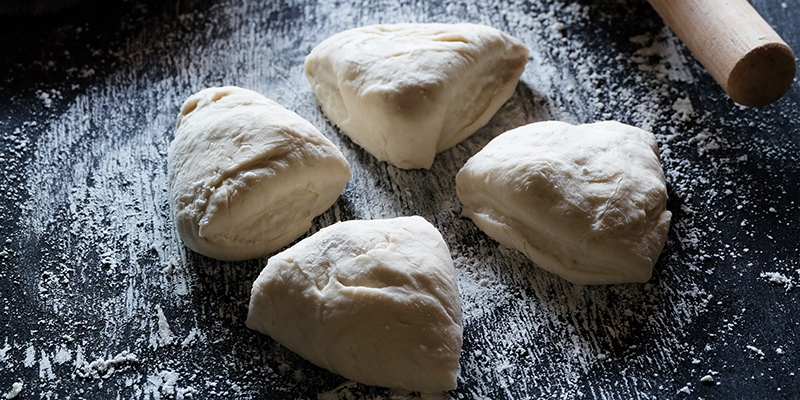
Designed to automatically and accurately divide the fermented dough into pieces of preset volume for making into loaves, automated dough dividers work primarily by determining dough volume instead of dough weight, as is the case with manual scaling. The actual weight of a dough piece of a given size is a function of dough density, which in turn is variably influenced by such factors as time, temperature, yeast activity, and formulation.
Experts agree that the main challenge when forming dough comes from maintaining the internal structure obtained during the proofing stage. The hydration level of the dough also plays a role in the design of dough dividers. Bakeries deal with anything from low-humidity dough like the one used to make rusk, for example, to high rye content, sourdough, or sticky, long-fermentation and high-hydration level dough, with water levels of up to 80% or even more – and equipment needs to handle them equally well.
Harald Burgstaller, international sales manager, WP Kemper told Asia Pacific Baker & Biscuit that customers are usually interested in the capacity and weight accuracy of the dividers above all else. In addition to this they also want to be able to produce a wide range of products on the same machine. “Dough dividing and round-molding machines of the SOFT STAR range (SOFT STAR, SOFT STAR PLUS, SOFT STAR CT and SOFT STAR CTi) make up WP Kemper´s divider portfolio. They differ in their capacity and design, with the CT and CTi being our latest dividers with an emphasis on hygienic design. The CTi is also our high-speed divider with a capacity of 60 strokes per minute,” he explains.
Niklas Alricsson, export sales director, Sveba Dahlen, says their company offers their Suction Dough Divider in three different models with different levels of capacity, to cater to the needs of their customers. “We manufacture all dividers on order and we make sure every divider has the correct features for each customer. We consider all the extreme types of doughs and the different challenges they present. We are then working with different options on the divider to create the optimized machine,” he points out.
Dough Viscosity
To produce quality baked goods, it is crucial bakers use a divider that maintains the texture and hydration levels of the dough, gently moving the dough through the machine, preserving cell structure while minimizing shear, compression and ram movement. But the divider must also maintain scaling accuracy.
According to Burgstaller, the SOFT STAR dividing and round/molding machines are developed to process soft doughs like bun or donut doughs and also stiff doughs like pretzels. This is due to its proprietary design, which enables the machine to handle the soft to stiff doughs very gently and accurately, so that even cookie doughs with chocolate chunks, for example, can be processed without issues.
Alricsson explains that Sveba Dahlen takes a personalized approach, where the company closely works with their clients and the machine is optimized for their specific needs in order to produce the best results for each type of product.
Hygiene, Maintenance and Safety
Highly hydrated doughs can be sticky which, as well as making handling difficult, can be a concern when it comes to cleaning. This is particularly relevant given the spotlight on allergen issues and specialist diets such as gluten-free.
For this reason, some bakers opt to use a dedicated piece of equipment to handle allergen-free dough, although suppliers have worked to ensure their machines can be cleaned down as thoroughly as possible.
Alricsson says of paramount importance is to be using the correct and optimized materials for food safety compliance and when it comes to maintenance, to make sure the operator has the proper training for cleaning and operating the machines.
You can read the rest of this article in the Spring Issue of Asia Pacific Baker & Biscuit magazine, which you can access by clicking here.