
Innovation at Work: Process Optimization in Baking
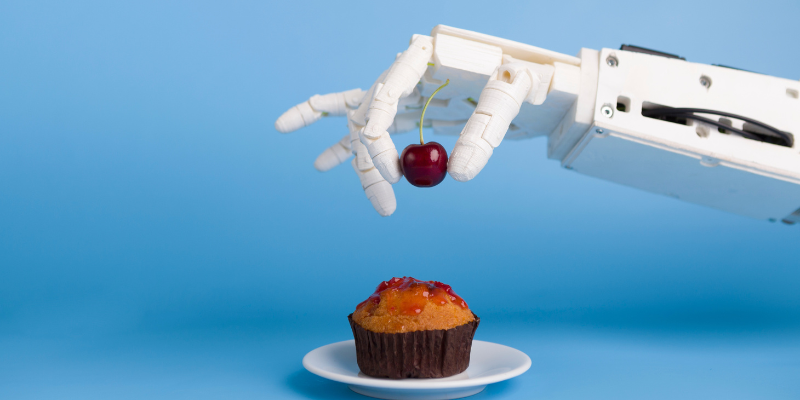
The modern bakery faces rising production costs and increasingly complex challenges such as tighter regulatory requirements, fluctuating raw material prices, and the constant pressure to improve efficiency. In this reality, industry innovators are developing solutions that transform traditional baking processes.
Today’s industrial bakeries are embracing cutting-edge technologies that streamline production, reduce waste, and enhance product quality, ensuring they remain competitive in an ever-changing market.
Continuous Mixing
Take, for example, the evolution of mixing technologies. For decades, bakers had to choose between batch and continuous mixing systems, each with its inherent strengths and limitations. With the introduction of high‐capacity continuous mixers, such as those by Exact Mixing, the industry is witnessing a paradigm shift. These mixers are engineered to produce dough at rates as high as 7,000 kg per hour, and in some configurations even higher when systems are linked together. One of the most compelling advantages of continuous mixing is its cost efficiency at scale. While a traditional batch mixer sees a near doubling of cost when production capacity doubles, continuous mixers only experience a modest increase of about 25%. This lower cost per kilogram of dough, coupled with the precise, automated metering of ingredients via loss-in-weight technology, ensures that every blend adheres strictly to recipe specifications. In doing so, continuous mixing not only reduces the likelihood of human error but also eliminates the need for extensive manual labor and additional dough handling equipment—a common issue with batch processes. Moreover, by minimizing the volume of dough “at risk” during production shutdowns, continuous systems help maintain product consistency even in the face of unexpected stoppages.
Control Systems
While advanced mixing systems address one part of the production chain, the challenge of integrating diverse production equipment remains. Many industrial bakeries operate with a myriad of machines and systems that rarely communicate with one another, often leading to inefficiencies and inconsistencies. ProLeiT’s Plant iT control system has emerged as a powerful solution to this problem by offering a modular platform that spans the entire production process. Whether it is raw material delivery, dough production, fermentation, or packaging, Plant iT collects and centralizes data from all areas of the bakery. This comprehensive approach not only ensures adherence to recipe specifications and statutory regulations but also supports dynamic adjustments to account for variations in raw material quality or environmental conditions. The system’s ability to seamlessly integrate with existing equipment—even those from different manufacturers—transforms a fragmented production environment into a synchronized, transparent, and fully automated operation. This integrated control is critical for maintaining consistency across high-volume production lines, where even minor discrepancies can lead to significant waste and quality issues.
Robots & Cobots
In addition to mixing and process control, robotics has begun to make a transformative impact on the bakery floor. Olmia Robotics is pioneering the use of collaborative robots—or cobots—to perform tasks that are repetitive, hazardous, or require high precision. Unlike traditional industrial robots that require large workspaces and significant safety buffers, cobots feature a compact design that allows them to be easily integrated into bakeries of all sizes. For example, automated bread infeed systems ensure that dough is accurately and consistently delivered to downstream equipment, reducing waste and enhancing overall production efficiency. Similarly, cobot-driven cleaning and greasing solutions maintain high hygiene standards while optimizing water and energy use, and cobot-equipped waterjet cutters bring unprecedented precision to pastry production by minimizing waste and reliance on manual labor. Importantly, these cobots are designed to work safely alongside human operators, effectively blending the best of automation with the artisanal skills that remain central to bakery production. This collaborative approach not only improves operational efficiency but also supports a more flexible and adaptive production environment—qualities that are increasingly important in today’s competitive market.
Optimizing Ingredients
Another crucial element of process optimization comes from the realm of ingredient science. Corbion’s Ultra Fresh® Advantage 600 is a prime example of how enzyme-based technologies can radically enhance product quality while also reducing costs. As raw material prices, particularly for sugar, continue to rise, bakers are under constant pressure to maintain the sweet, appealing flavor of their products without overspending. Advantage 600 addresses this challenge by using a patent-pending enzyme formulation that breaks down long-chain carbohydrates into simpler sugars. The result is twofold: not only does the product naturally taste sweeter—allowing for a reduction in the amount of added sugar—but it also experiences extended shelf life, improved softness, and a balanced moisture profile. For instance, in a typical bread formulation where sugar content might be around 10 percent, the enzyme solution can reduce that figure to as little as 3 percent without sacrificing flavor or freshness. This multifunctional innovation not only improves the economics of production but also enhances the eating experience, ensuring that each loaf, bun, or pastry meets the high standards consumers expect.