
A Holistic View of Raising Bakery Products
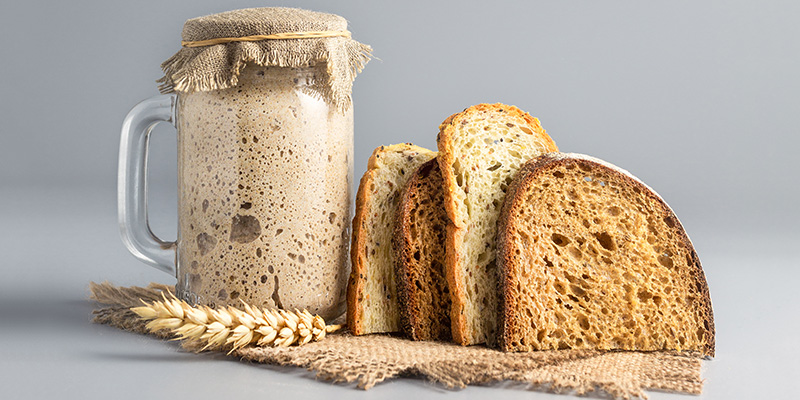
Creating the desirable aerated structure in baked goods is one of the fascinating challenges facing the industry. The recipe, mixing method, oven conditions and product geometry all interact to influence the structure. It is important to understand how this works because aeration has a major influence on the quality of bread, cake, crumpets, biscuits and other baked goods.
by Gary Tucker, Campden BRI
A well-risen product has a higher value than one of low volume. Both yeast and baking powder are commonly added to help generate gas in baked products. However, the carbon dioxide produced by these raising agents is not sufficient to give the required structure to the product, and trapped air and steam generated during baking are also important.
The Importance of Mixing
Bubbles of gas do not form spontaneously because the pressure required to expand a small bubble is greater than that required for a large bubble (a phenomenon that anyone who has blown up a balloon is familiar with). As well as blending the ingredients, mixing incorporates air into the batter or dough. The number and size of bubbles incorporated are determined by factors such as viscosity, geometry and mixer speed. Having introduced bubbles into the raw product it is essential that they remain stable during the rest of the processing steps. For bread dough, the quality of the wheat flour is important for several reasons. It is essential to create a complex gluten network to support the bubbles but also the soluble wheat proteins play an important role in stabilizing the bubbles. Other ingredients can be added to help with their stability such as fats or oils, emulsifiers and enzymes. This approach is used in cakes that rely on the emulsifying properties of eggs to stabilize the bubbles.
The Role of Raising Agents
There are two types of raising agents used with baked goods – yeast and chemical leavening. Bread is usually yeast leavened. Yeast fermentation produces carbon dioxide that causes bread dough to expand during proof. Fermentation also produces ethanol and other volatile compounds, which contribute to gas production. Various types of yeast are available to the baker including dried, compressed and liquid, together with fast acting and freeze tolerant strains. Some of the fermentation products also modify dough rheology and this will change the way in which the gas cells expand. Most of the carbon dioxide will dissolve in the aqueous phase of the dough, which is released in the oven as the dough increases in temperature.
Cakes, biscuits and soda bread are chemically leavened. Chemical raising agents are based on a carbon dioxide carrier, which is typically sodium bicarbonate, also known as baking soda. Ammonium bicarbonate is often used in biscuits and other low moisture products due to the need to reduce the level of sodium in food. Sodium bicarbonate will start to release carbon dioxide when heated above 60°C, but it is more common to add an acid to release the carbon dioxide. Traditionally organic acids, such as cream of tartar (potassium bitartrate) or citric acid are added. These are fast acting and in commercial bakeries, where the size of the batch can result in a delay between mixing and baking, slow acting acidulants such as sodium acid pyrophosphate (SAPP) are preferable. These are available with a range of different reaction rates, and by choosing an appropriate baking powder it is possible to achieve consistent high product quality.
Raising agents play a role in product quality beyond increasing volume. Yeast influences product flavor, texture and shelf life. One of the color reactions is the Maillard reaction, which is pH dependent, and so ingredients such as bicarbonates will enhance browning and give a yellow color to cake. Unless neutralized, bicarbonate also darkens the color of cocoa powder and increases bitterness.
You can read the rest of this article in the September / October Issue of European Baker & Biscuit magazine, which you can access by clicking here.