
Mondelēz International announced its 2020 sustainability goals
Mondelēz International has announced its sustainability goals for 2020, an ambitious end-to-end approach to reduce its carbon footprint.
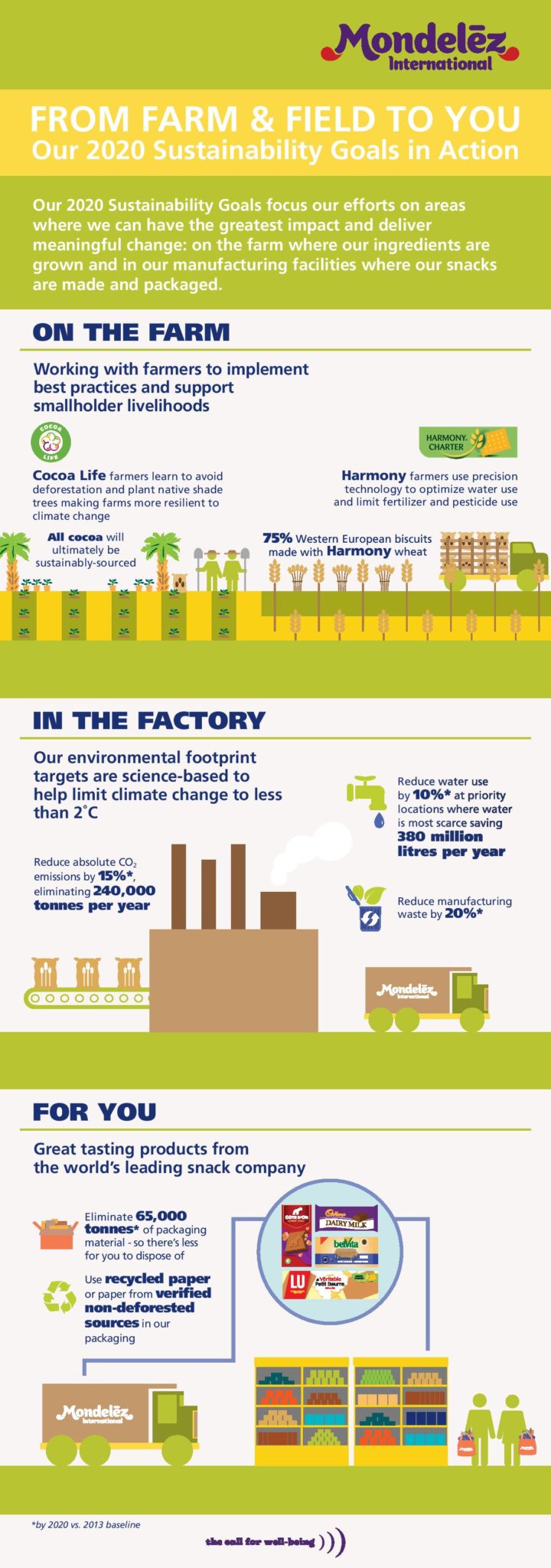
The new goals include reducing absolute carbon dioxide emissions from manufacturing in line with science-based targets; reducing deforestation within its agricultural supply chain; focusing water-reduction efforts in high-priority locations; and eliminating packaging material.
“Our Sustainability 2020 goals place us at the forefront of the fight against climate change and support our ambition to be the leader in well-being snacks, while reducing costs and generating efficiencies that accelerate our growth,” said Hubert Weber, executive vice president and president of Mondelez Europe. “In 2014, we were a year ahead of schedule in accomplishing our 2015 goals for packaging, greenhouse gas emissions and net waste. These new goals take our commitment a step forward using the power of our global resources and partners to drive meaningful change at scale.”
The new goals focus on reducing key end-to-end environmental impacts – from the field through distribution.
By 2020, the company wants to:
- Reduce its carbon footprint by:
- Adopting science-based targets to reduce absolute CO2 emissions from manufacturing by 15 percent. This aligns with current approaches to setting science-based targets to support the global effort to limit climate change to less
than 2º C. The company is also switching from reporting emissions per ton to a more demanding absolute basis; and o Addressing deforestation within the company’s key agriculture supply chains, primarily in cocoa and palm oil. The company will measure and report publicly the resulting end-to-end carbon footprint reduction.
- Cut its water footprint by reducing absolute incoming water use in manufacturing,
focusing on priority sites where water is most scarce. The company aims for 10
percent reduction at those priority sites.
- Reduce waste by eliminating 65,000 tonnes of packaging, without contributing to
food waste; and
- Reduce total manufacturing waste by 20 percent.
Mondelēz International says that will continue to invest and expand its signature Cocoa Life program to empower 200,000 cocoa farmers in six key origins. Ultimately, the company aims to source all of its cocoa sustainably, mainly via Cocoa Life. It will also maintain its European Harmony wheat program and go beyond this by creating a global approach to wheat.
The goals announced are a part of Mondelēz International’s Call for Well-being, a
call to action focused on four areas that are critical to the well-being of the world and where the company can make the greatest impact: sustainability, mindful snacking, communities, and safety.
Related articles:
Cargill and Mondelēz International signed agreement for sustainable cocoa
Mondelez campaign focuses on “the fun side” of Oreo
Mondelez installs the largest Oreo production line in Africa
Mondelez Romania appointed Ivaylo Naydenov as general manager