
Convenience and Clean Label Pizza: Functional Flours
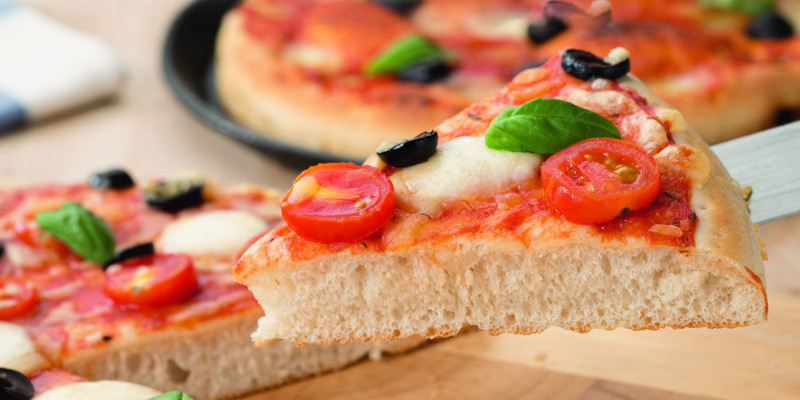
Kampffmeyer Food Innovation’s functional flours allow for the industrial production of pizzas without additives.
Today’s consumers are looking for a healthy, balanced meal, even when it comes to fast food like pizza. Although these foods were not developed with a healthy lifestyle in mind, and more as a means of satisfying hunger quickly, producers are now looking to meet growing consumer demands towards healthier food options.

One way of satisfying current demand for healthy eating is to use only natural ingredients and to banish additives. This certainly appears to be an approach that consumers will welcome, as the company’s study into Clean Label found.
“Nearly three quarters of respondents agreed with the statement that natural ingredients lead to healthier products, 61 per cent confirmed that natural ingredients in frozen snacks such as pizza and pizza baguettes are important to them. Overall, our research supported the conclusion that Clean Label alternatives are a buying incentive. The field of convenience foods in particular offers huge potential for reformulation with natural ingredients. However, it is important that these ingredients are able to replace commonly used additives without any disadvantages in terms of stability, shelf life, texture and taste,” according to the study.
“As experts in the field of grain, we at Kampffmeyer Food Innovation are committed to providing grain-based natural ingredients that can replace additives wherever possible.”
When it comes to frozen pizza, manufacturing on an industrial scale without additives has been largely impossible until now, because manufacturer demands for ease of processing and prolonged shelf life, and consumer expectations of high quality texture and taste could not be satisfied using solely natural ingredients, Kampffmeyer explained.
Its new functional flour includes Purafarin Hydrosoft, which allows for large-scale manufacturing of pizza dough with just the four basic ingredients – flour, yeast, water and salt. No additives are required. Based on wheat flour, which has been treated with a special hydrothermal process, Purafarin Hydrosoft® has defined functional properties: it is especially suitable for use in frozen pizzas and baguettes as it gives dough high freeze-thaw stability. Additionally, the flour provides pizza dough with high volume and a good pore structure, so that end products have an excellent texture and a short bite. “With its multifunctional properties, our new flour can therefore replace commonly used additives such as diphosphates, emulsifiers and raising agents.”
Tomato sauce, naturally bound
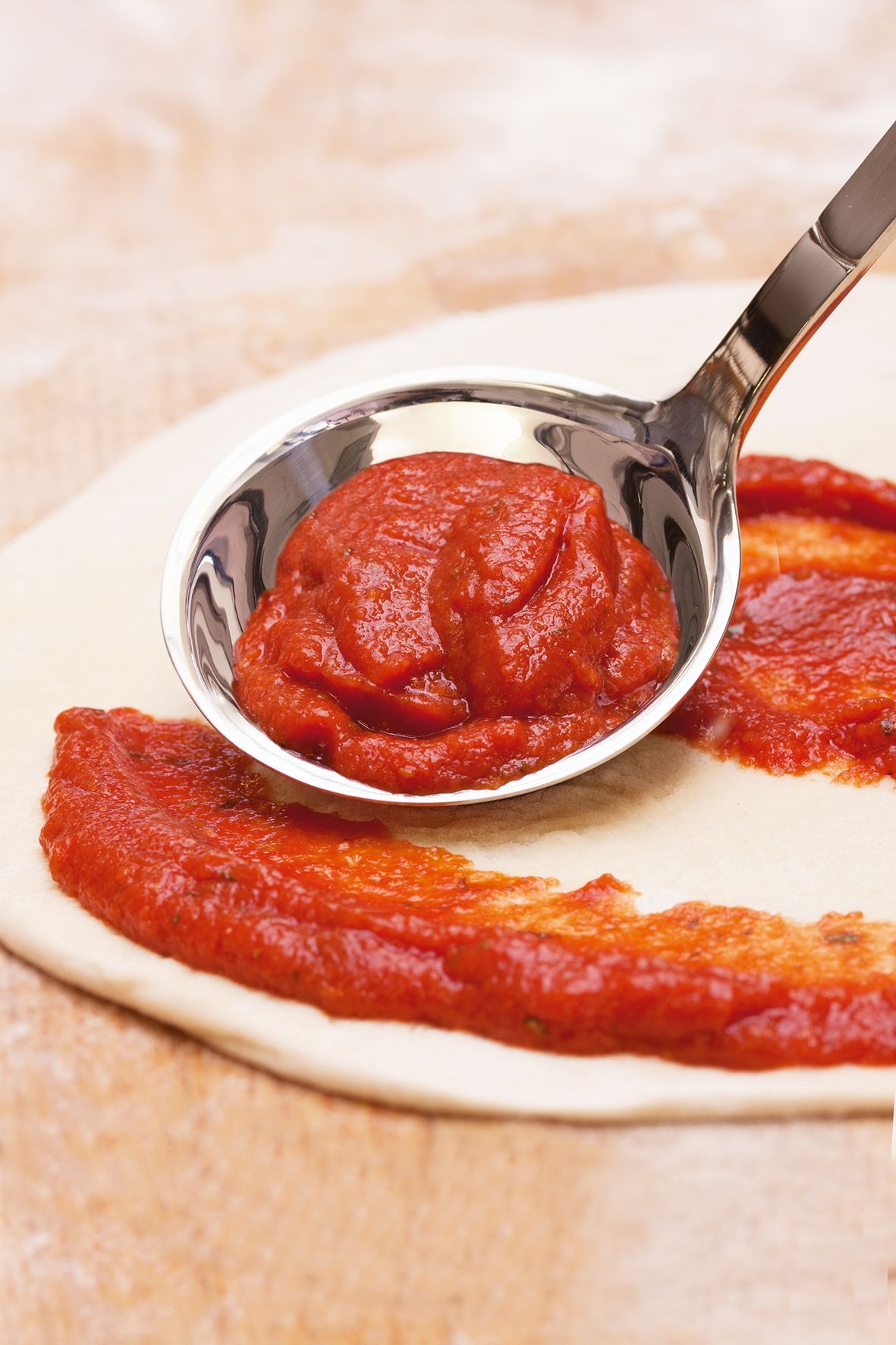 Although perfect dough is crucial, it is just one element of a successful pizza. A good, classic tomato sauce is also vital for the overall quality of the finished product. Kampffmeyer Food Innovation introduces a functional ingredient in this respect as well: Purabind® C 600 Pulp, which has been developed to work as a Clean Label binding system for the cold preparation of tomato sauces. As no cooking is required, the sauce remains pulpy and fresh, and retains its texture – making it ideal for automatic dosing processes.
Consisting of physically treated wheat flour fractions, PurabindC 600 Pulp develops a stable viscosity even in cold processes and can thus bind sauces permanently without heat application. The visual appeal of cold processed sauces is another advantage: “Sauces thickened with our ingredient look light and fresh and have a typical pulpy structure.”
Applying tomato sauce made with PurabindC 600 Pulp onto pizzas via fully-automatic dosing systems is simple: once prepared, the sauce is stable and maintains its viscosity. Thanks to the binding system’s excellent freeze-thaw stability, the sensory properties remain the same, even after thawing.
Clean Label: The art of omission
“We understand that for a successful reformulation, natural ingredients have to perform impeccably if they are going to replace additives. In this respect, there are many parameters that have to be considered, including shelf life, processing tolerances, pH and freeze-thaw stability, texture, etc. We therefore invest a great deal of time and effort in continuous R&D, and this has enabled us to create a comprehensive portfolio of grain-based ingredients – Purafarin Hydrosoft® and Purabind® C 600 Pulp are just two successful Clean Label stories,” Kampffmeyer detailed its solutions.
“Our decision to conduct such in-depth market research was also prompted by our desire to help manufacturers create successful Clean Label products. We know that this is an area many manufacturers are keen to explore, but often don’t know where to start. Our study was the largest ever conducted in Europe and it shows that Clean Label is no longer a USP; rather, it is something that consumers expect.”
Market research insights
Understanding what constitutes a Clean Label for consumers is key to develop naturally healthy products with widespread appeal. In order to cater to consumer demands, understanding what makes a product attractive comes first. “To answer this question, we asked our study respondents which ingredients and processing methods they thought had to be used in order for a foodstuff to be considered as “natural”. We discovered that consumers think ingredients are natural if they are familiar with them from their own kitchens. Indeed, wheat flour, yeast, cream and sugar were the products thought of as being most natural,” according to Kampffmeyer’ report.
“Similarly, when it came to processing methods, we found that cooking, baking and milling are top of the list of manufacturing processes that are perceived as being natural. In general, it is clear that consumer familiarity with the processes and end products from their own households plays an important role in their beliefs in “naturalness”. This is reflected in perceptions of the drying process: 70 per cent of respondents consider the drying of pasta to be natural. However, using the same process to turn cream or milk into powder is thought to be unnatural.”
The report “How to make Clean Label” is designed as a guideline for creating Clean Label concepts. Market research findings were combined with insights based on areas such as food regulations and current scientific research in the field of neuropsychology, which explains how people make buying decisions. On top of this, Kampffmeyer Food Innovation included information based on its own experience of Clean Label to produce a comprehensive guidebook for any manufacturer interested in finding out more about producing food that is natural, healthy and appealing to consumers.
Read more on pizza trends and the market status in Europe, in European Baker’s new issue, out soon.