
Raising the Bar: Inspection and Monitoring Solutions for Perfectly Baked Goods
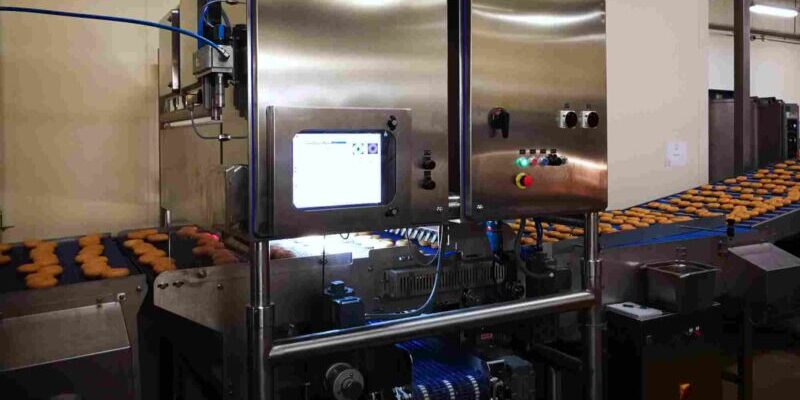
In the world of baking, ensuring product quality and consistency is critical to success. To achieve this, manufacturers rely on inspection and monitoring solutions to detect and address issues before they become larger problems. KPM Analytics is a leading provider of such solutions, offering a range of advanced technologies that help baking companies optimize their production processes and maintain the highest levels of product quality. In this interview, we speak with Andrea Bertuolo, KPM Inspection Managing Director, KPM Analytics about their portfolio of solutions for the baking industry and the latest trends and innovations in the field.
Please describe some of the inspection/monitoring solutions in your portfolio and their uses for the baking industry.
KPM Analytics leverages its EyePro System and Sightline product brands to provide Vision Inspection Solutions specifically tailored to the food manufacturing industry. With decades of experience in designing and manufacturing vision technologies, KPM partners with customers to supply vision systems that best fit their goals and operations.
We began serving the baking industry in the early 2000s when Vision Technology had limited capabilities due to the type of sensors and the limited processing power of computers. Nowadays, KPM provides a wide range of solutions for both Process Control and Final Product Inspection.
Final Product Inspection solutions are typically used to check the conformity of the finished products to defined quality standards such as shape, size, bake color, and topping. These vision inspection machines are typically integrated into the manufacturing line and installed before the automatic packaging systems. They integrate one or more vision modules: 1) a conveying system to transport and inspect the products; 2) a product-specific rejection mechanism to physically remove the non-conforming products from the line.
Vision Process Control Solutions are typically installed at key production process stages. Data visualization and real-time feedback connected with process machinery can automatically act to keep the process performance on target. This vision solution is becoming part of a “Smart Manufacturing Line.”
One example of this type of application is after a tortilla press. The system checks the product diameter and automatically adjusts the pressure of the press. Another example is a system positioned at the oven exit to assess tortilla color after baking and automatically adjust the oven settings if necessary.
We see more customers adopting a multi-vision system approach, where vision technology is used in multiple locations on the same production line. Vision Process Control Systems monitor the forming, proofing, and baking processes.
In contrast, Final Product Inspection Systems check the finished products before arriving at the automated packaging system.
All of these systems collect data in real time and make them available to the key players through the integration with SCADA supervisor and MES systems. Dashboard displays are installed across the plant and stored on Database servers for ad-hoc reporting and statistical analysis.
How can vision inspection equipment help boost productivity and reduce costs and product waste?
The information provided by Vision Systems represents the key to understanding what is happening on the line. These technologies make it possible to inspect products for key visual parameters in real-time, either directly on the HMI (typically a touchscreen display) and/or on a Dashboard. Applications also exist to automatically warn or alert line operators and supervisors to take action if the process drifts out of control. The statistical analysis of the data acquired by the systems and stored on database servers aids operators in identifying the root causes of process inefficiencies.
Using multiple Vision Process Control Systems makes it possible to monitor different production process phases in real-time and, if necessary, react to fix issues causing non-compliant finished products.
For example, a Vision Process Control System installed at the proofer exit and used to monitor the product’s height variation when they come out from the proofer can optimize the monitoring of the yeast rise effect. This will increase the product height consistency and minimize the amount of product waste due to height compliance.
The same can be done with vision-based bake color monitoring at the oven exit.
What are the differences between equipment designed to detect foreign bodies in food, and those designed to check quality and compliance?
Nowadays, the division between these types of technologies is less visible, and we see a continuous increase in the demand for integrating foreign bodies’ detection and quality/compliance inspection functionalities. KPM Inspection Systems integrate the latest developments in AI techniques which now permit a significant advancement in detecting anomalies on the acquired images of the inspected products. In many cases, these innovations bring the capability to detect color anomalies or foreign objects on the surfaces of the products in addition to size, color, and other standard measurements in a system.
How do bakers verify detection equipment performance, and how often are recalibrations and maintenance necessary?
KPM Inspection Systems integrates a series of calibration and verification tools that can be used by line operators to check and verify the status of the systems and their performances.
The frequency of the verification sequences depends on many factors. First, we must consider that systems are “High Precision Instruments” integrated into a production line that typically runs 24/7 in a harsh environment.
The main requirements to obtain optimal performance are:
- The mechanical frame’s robustness and the inspection conveyor used to measure the products. This is key for consistency and reliability over the time of the inspection tasks performed by the system.
- The respect to the periodic sanitation and preventive maintenance procedures suggested by the system manufacturer.
- The level of commitment of the users to the use of the systems.
Very robust and well-maintained systems require only periodic sanitation and verification of performance. This can vary from a daily routine verification for harsh environments to a weekly check for a relatively clean environment.
What role does the IoT (Internet of Things) and smart solutions play in the design of modern inspection equipment? What are the key differences between a connected, continuous monitoring system and an offline traditional system?
You can read the rest of this article in the March-April issue of European Baker & Biscuit, which you can access by clicking here.