
Oils, Fats and the Health Trend
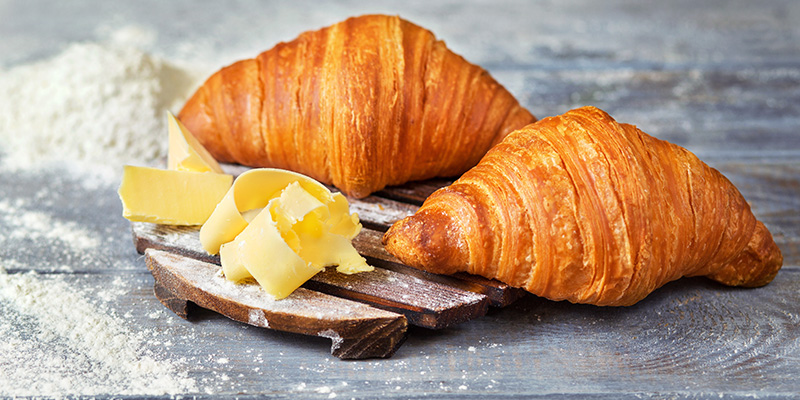
In bakery applications, fats and oils play important roles in structure development, tenderness, aeration, leavening, flakiness, emulsification and flavor enhancement. The choice for one or the other solution depends on formulation, desired viscosity and shopper preferences.
Food brands attuned to their consumers’ needs are avidly striving to align their products with sustainability values, including an increasing demand for organic products. Last year Mintel reported that globally, one out of eight food introductions were organic and in Europe this ratio was even higher at one out of five.
“Food companies increasingly view ‘organic’ as an expression of transparency and being closer to nature — messages that strongly resonate among the growing community of conscious consumers,” says Marcel Henneman, director of Product Management EMEA for Bunge Loders Croklaan. “To achieve an ‘organic’ label status, food manufacturers are required not only to ensure the ingredients in their products are sourced organically, but also that the manufacturing processes employed are certified organic.”
Bunge Loders Croklaan, announced earlier this year that it was, growing its organic portfolio in Europe, offering a steady and scalable supply of organic oils and fats, ranging from sunflower, rapeseed and soy to palm, shea and coconut. The company is also broadening its select network of organic farmers. According to the company, this new offering lifts a common barrier — the difficulty in finding a reliable organic supplier — hindering food companies from moving toward organic status.
“We invite brands to tap into our long-standing knowledge and experience in lipid processing,” says Feike Swennenhuis, marketing director Europe for Bunge Loders Croklaan. “Whether formulating from scratch or reformulating traditional products, we can tailor any kind of fat solution to meet our customer’s specific organic aspirations and our approach is centered around our ‘let’s create together’ principle. We deliver organic quality for both primary lipid sources and more specialty lipids, such as lecithins and fat formulations for infant nutrition, confectionery, bakery, culinary and plant-based. We will continue to extend the options of customized organic solutions to a comprehensive range of food applications,” he added.
Changing Consumer Priorities
Cargill also believes it is important to have a deep understanding of consumers in order to give their customers the right solution at the right time. “Through TrendTracker, our proprietary perspective on food and beverage trends, we keep our fingers on the pulse of consumers, ensuring that we stay in touch with changing consumer priorities,” says Susen Gottwald, Cargill’s Customer Innovation Manager Bakery. “We’ve identified ‘Healthy for Me’ as a key influence in the fat and oil space, as consumers embrace a more proactive, personal and holistic approach to health. They seek balance and are empowered to make their own determination of what is and is not healthy for them.”
Consumer interest in ‘cleaner eating’ is part of this larger health-focused movement. Many consumers seek to avoid processed bakery and confectionery products, referring to the ingredients to help them determine how processed a product is. Here, recognizable ingredients are key. More than half (55%) of European consumers say recognizable ingredients are important in brand selection. One in four (42%) look for clean label ingredients and a similar percentage say “has fewer ingredients” is important in brand selection.
“Cargill’s CremoFLEX line of plant-based, filling fats are a great example of how Cargill uses consumer insights to inform our product development efforts. One aspect that all products in the range have in common is the focus on responsible and sustainable formulations. When it comes to the CremoFLEX options in the range that contain palm oil, all are made through the sole use of sustainably sourced palm oil. The entire portfolio consists of label-friendly and healthy solutions, made with non-hydrogenated fats,” Gottwald explained.
You can read the rest of this article in the Summer Issue of Asia Pacific Baker & Biscuit magazine, which you can access by clicking here.