
Equipment for the Perfect Mass
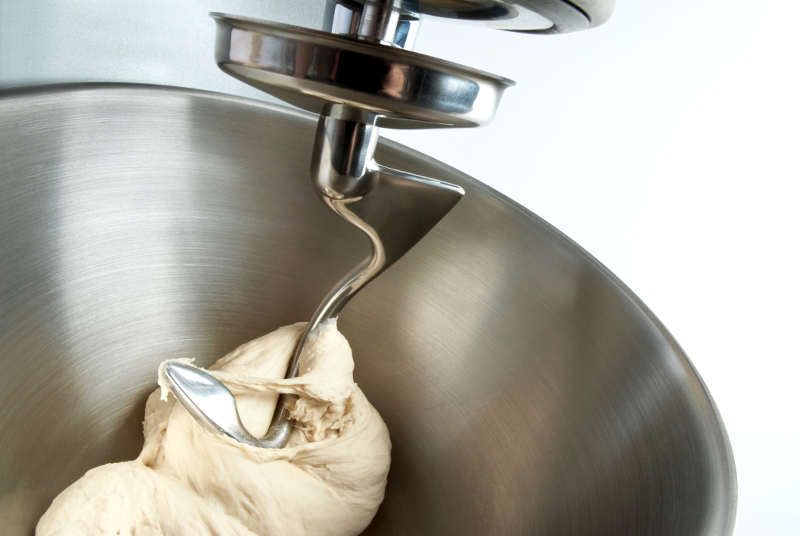
Mixing is an integral stage in biscuit and cookie production as it is the first step where the various ingredients are merged together. How well the inclusions are mixed can determine the taste and texture outcome, which means that manufacturers need to ensure that this is not overlooked.
By Daisy Phillipson
Investing in efficient and modern mixing technology is important for biscuit and cookie manufacturers to ensure that the mass is perfectly blended. Throughout this process, flour, sugar, water, fat and other additions are mixed to form the dough and it is important that aspects, such as temperature, are monitored to achieve the correct consistency.
Accuracy is Indispensable
VMI Mixing Company offers a range of comprehensive solutions that are adapted to the mixture of various raw materials. The company is now able to offer machinery for important production stages such as kneading, blending, mixing, homogenization, dispersion, and emulsion.
According to VMI, the accuracy of planetary mixers has increased a great deal. Accuracy is an indispensable quality when making bakery mixes with many ingredients. VMI has particularly worked on these accuracy gains to meet the expectations of consumers, as well as the productivity requirements of industrial users.
The company describes how they have measured and optimized the parameters that influence the quality of the mix. These include the speed of the planet gear (satellite), the ratio between the speed of the planet gear and the speed of the whip, the diameter of the whip and the center distance.
The optimal adjustment of these parameters helps to obtain a better overrun and the quality remains the same regardless of the quantities that are mixed. Therefore, industrial users can control their production, which is essential during the mixing stage.
This new mixer also meets the requirements in terms of space saving and easy cleaning. A new, patented, extra flat gearbox, reduced center distance, built-in vacuum and pressure supply, vertical incorporation of ingredients, and smooth surface for easy cleaning of the satellite all make it a more compact equipment with less dead volume, says VMI.
Ease-of-use and maintenance are characteristics that cookie and biscuit producers require for their mixing equipment and these aspects have been considered by VMI. The holding and raising/lowering functions have been mechanically disconnected and a flush band prevents any potential internal pollution of the frame. There is easier access to the tools and hygiene is better controlled due to the clean-in-place capability.
Regarding kneading technology, VMI’s latest studies show that oxygen plays an essential role. Pressure adjustment and availability of oxygen during kneading open new possibilities for the kneading of dough. To this effect, VMI has developed a kneader prototype on which trials are made with different types of dough. The effect of pressure changes during kneading modulates the final aeration of the dough and the volume of the product.
Moreover, kneading follow-up and duration are often determined subjectively based on what the dough looks like, its extensibility and its elasticity. Kneading can also be assessed from the global energy that is transferred to the dough, which is obtained by integrating the power consumed by the tool. The control of the kneading with energy adds accuracy. It also allows the adjustment of the installed power required for the kneader and therefore, saves energy.
In addition, it is often necessary to slow down the kneader’s bowl, which picks up speed with the rotating movement of the dough and can end up turning too fast. VMI’s latest spiral kneader, KNEADSTER, recovers the energy of the rotation of the bowl and uses it for driving the tool. Thus, the energy consumption is reduced by 15%. The KNEADSTER can be in operation and integrated to its newly designed robotic system with a suspended shuttle. This kneading solution is ideal for high-volume manufacturing entities, while conforming to the quality, safety and hygiene standards that are applicable to the baking industry, says VMI.
Adapt Speed to the Product
Baker Perkins is a company that continues to upgrade its proven range of HS (High Speed) multi-purpose batch mixers, which handle dough for every type of biscuit, cookie and cracker. The latest innovations include variable speed drives, which match the mixer speed to the requirements of the product. The soft start and gradual ramp up create less stress on components, and provide far more flexibility than the previous two-speed drives. They also ensure much smoother and more stable power consumption with no spikes, says Baker Perkins.
A new reverse tilt option allows the addition of hand ingredients and easy removal of unwanted dough, which is particularly helpful when a dough feed system is installed in front of the mixer. As previously mentioned, an essential aspect of the mixing process is to ensure that the ingredients are blended and mixed accurately. According to Baker Perkins, a shaftless blade ensures thorough mixing through good dispersion and rapid dough development. Having no shaft in the mixer bowl means that there is no static point where debris can build up. A shaft also prevents ingredients circulating freely around the bowl, which slows the blending process.
The blade is a one-piece steel casting, which is free of welds or crevices where cracks could start. This makes it both more hygienic and more reliable than fabricated blades. It brings lower costs and higher productivity through quicker mixing of both soft and hard dough, says Baker Perkins.
A market trend for mixing equipment is easier cleaning and hygiene. Baker Perkins mentions that fast, automatic discharge is achieved with no dead spots in the bowl where debris can accumulate. A 150° bowl tilt eliminates operator intervention at discharge. The shaftless blade provides a non-stick, stain resistant finish and no static spots to which the dough can stick. Total discharge removes the possibility of contamination in the bowl, so when the recipe is changed, no time is wasted in cleaning.
HS mixers feature automatic cycling including loading and discharge. PLC control with color touchscreen can be connected to line control/SCADA systems. Modern baking facilities require flexible, hygienic and efficient mixing technology. If this process is overlooked, it can lead to uneven and imperfect batches. Concurrently, choosing up-to-date machinery with intelligent technology can ensure the smooth running of biscuit and cookie production.