
Unilever to Use Satellites, AI to Preserve Palm Oil Sustainability
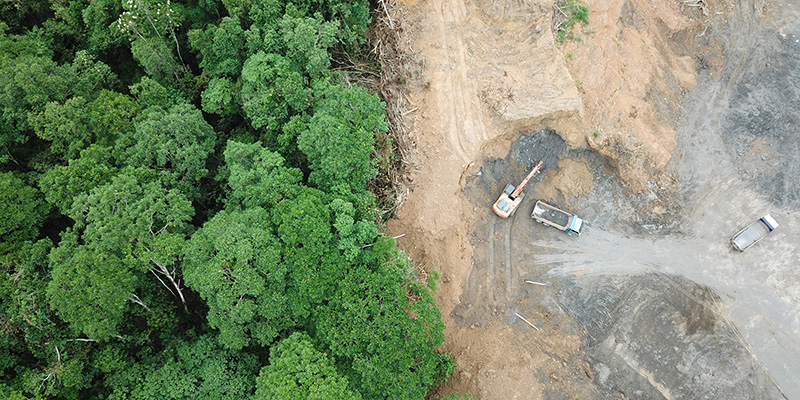
Unilever has announced it is piloting geolocation technology, in collaboration with Orbital Insight, to monitor its palm oil supply chain more effectively.
The company has highlighted its intention to end deforestation across its supply chain, particularly in the cultivation of crops like palm oil and soy.
By partnering with Orbital Insight, Unilever is set to leverage geolocation data to identify the individual farms and plantations that are most likely to supply the palm oil mills in its extended supply chain. The technology utilizes GPS data, both aggregated and anonymized, to enable Orbital Insight to spot traffic patterns. Where there is a consistent flow of traffic between an area of land and a mill, it represents a potential link.
By combining tens of thousands of satellite images with geolocation data and applying artificial intelligence and scalable data science, the new system will provide unique insight by showing the predicted likelihood that a farm or plantation is supplying any given mill. The initial pilot program will test the technology at a small number of palm oil mills in Indonesia and soy mills in Brazil.
This new approach is thought to bring a new level of sophistication to traceability that has the potential to work on a massive scale for Unilever and the wider industry.
“Better monitoring helps all of us to understand what’s happening within our supply chains,” says Marc Engel, chief supply chain officer. “Through companies coming together and using cutting-edge technology to carefully monitor our forests, we can all get closer to achieving our collective goal of ending deforestation.”