
Turnkey Lines: A Full-proof Solution
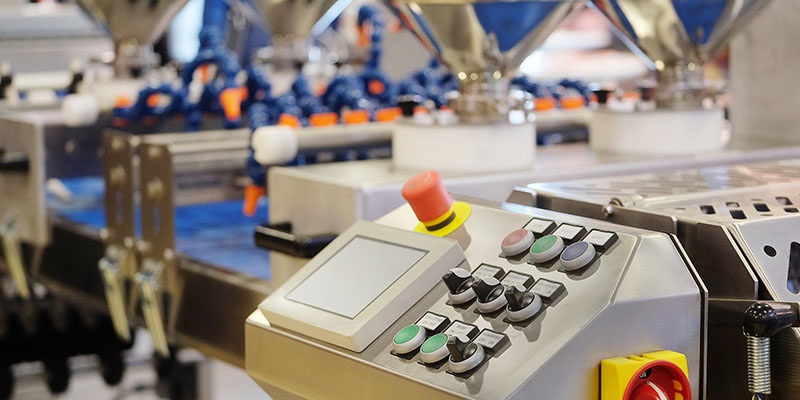
Working with turnkey lines is essential for the industrial manufacturing of baked goods. Versatility is a key feature, as the equipment lines must support the production of different ranges of baked goods, and formulation updates.
Changing the product running on the line is a challenge regarding hygiene standards, the product standard and the consistency of the recipe itself, especially if it includes allergenic substances, Simone Schiller, managing director at DLG-Competence Center Food, explained for European Baker & Biscuit.
Challenges
Schiller underlined an important, core, aspect impacting the design of turnkey lines for bakeries: very quick and rigorous cleaning must be possible. Furthermore, hygienic design, and data evaluation and documentation present the most challenges to bakers using this type of equipment, according to Schiller. The cleaning and maintenance protocols must be very clear.
Another big challenge is to save time during retooling and cleaning, she explains; however, changing the product manufactured on a processing line always includes a risk of mistakes.
In terms of networking processes and their specific equipment, for an optimal configuration, it is very important to have interfaces between the process, sensory equipment and the control of sensory equipment. “This allows predictive maintenance, which is one way to increase effectiveness of a process line,” DLG’s director highlights.
From the manufacturer’s perspective, one of the most common requirements is the connectivity between new and existing parts of production lines. This means monitoring and synchronizing processes, which is when the use of sensors is an opportunity. “For successful synchronization, producers need very smart software, which usually means a tailor-made solution,” Schiller adds.
On the other hand, to optimize energy consumption, it is necessary to analyze individual production processes and take prompt action to make improvements or even replace old machinery.
As far as further technology innovation is concerned, the major direction for technology development in the long run is digitization, Schiller says. This will have as a result a reduction in the number of employees.
“This is desirable as employees can be a source of hygiene problems, and it is also becoming more difficult to find suitable staff. Other external influences that will drive technological development include new legislation and upcoming standards, for example on traceability and authenticity, and changing consumer demands,” Schiller underlined.
Single Source Supplier
Turnkey solutions offer one single source supplier, which makes installation, commissioning and maintenance easier. Partnering with one company to supply equipment expedites the service to sales date and makes the entire project more manageable.
Rademaker‘s specialists walked us through a typical installation of a turnkey project. First they closely look at the customer requirements and together they discuss the possibilities and impossibilities of the ideas and plans. This results in the product data & the functional specifications of the sub processes being defined.
“We provide the optimal combination for the different systems that lead to a customer satisfying overall system. Our approach is bringing together the best for every single section of a production facility. Reliable suppliers are chosen, with a proven track record in the bakery industry, who have a regional presence where needed and can offer the required service when needed. The aim of the collaboration is solid and long-standing partnerships to exploit the joint expertise to the fullest. With these system-integrated solutions, Rademaker covers the complete dough processing activity, from dough handling to finished product,” the company specialists explained.
“In the second step we develop an added-value solution that incorporates all the modules and systems needed. Partners are chosen carefully to provide the right system for each particular system-integrated solution. During the co-development process every partner brings in its own expertise. Our client brings in the customer demands & provides the knowledge of the product. In the third step we, as main contractor, provide the overall management of the project under the direction of a Senior Project Manager. This way the client can keep focusing on their core activity, without getting lost in complicated technical discussions and calculations and without having to allocate valuable manpower.”
The proposed production line and factory layout takes into account the customers wishes with regard to capacity, the required flexibility (for instance with regard to fast change-overs) and the available space. The emphasis is placed on developing cost-efficient solutions with a good ROI (return-on-investment), where standard Rademaker modules are the starting point. With this basis, a system is created with customized modules and subsystems from the partners, and the result is a well though-out system integrated solution.
Equipment Tailored From the Product
Tremaine Hartranft, director, Technical Sales at Reading Bakery Systems told us that before a project can be approved, the product needs to be finalized. This is where R&D comes in. “At RBS, we have a full-service R&D facility where customers can work confidentially to bring their new product ideas to life. At the Innovation Center, our process experts work closely with R&D teams to validate new products and ingredients on our pilot production systems. After the product is confirmed, the equipment configuration is designed. The installation and commissioning are fairly straightforward since we have already proven we can make the product on our equipment. We use the SCORPION® 2 Profiling System to profile the pilot line at the Innovation Center as a benchmark and use this during the commissioning phase to make it easy to scale up production to a production size line.”
You can read the rest of this article in the September / October Issue of European Baker & Biscuit magazine, which you can access by clicking here.