
Using Industry 4.0 to Reduce Waste
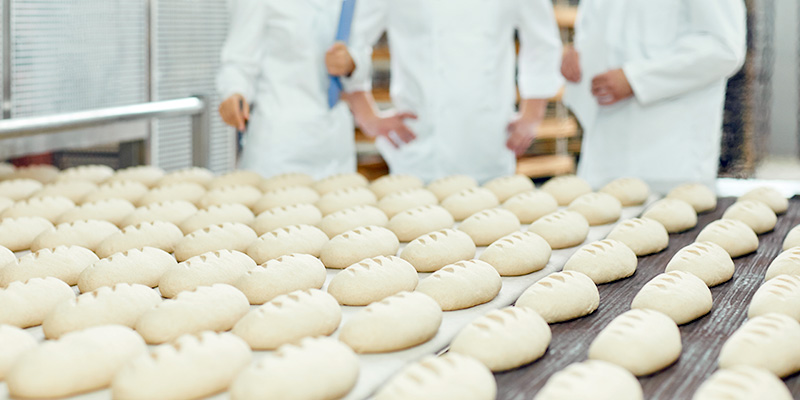
Bread is one of Britain’s most wasted foods. According to figures from the Office for National Statistics, around 24 million slices of bread are thrown out by UK households every day – making up more than a third of bakery food waste. But this isn’t an issue exclusive to the UK, we see the same story play out across Europe; 10% of bread and baked goods end up as waste after going stale or not being sold on the day of production.
by Zsófia Kertész and Viktória Parrag, Development Engineers at Campden BRI Hungary
What causes this volume of waste? Many different factors, but one that’s potentially under the industry’s ability to control lies within supply and demand.
The Challenges of Predicting Demand
Consumers’ demands and expectations often determine how many baked products end up as waste, and these are influenced by several external factors including the day of the week, the weather, holidays, big events or even the time of year. For example, bakers often expect a rise in demand for different types of baked goods around the Christmas period and prepare accordingly. For bakers who plan production solely on experience, this seasonal change in demand is reliably easy to predict. However, it’s when you consider the sheer number of different variables and factors that a manufacturer must juggle that you realize the limitations of predicting demand from experience.
More recently, restrictions caused by COVID-19 have been the single greatest influence on demand that the industry has seen in recent years. In fact, demand for bread exceeded 50% in the UK at one point during the current health crisis – a prediction that no one could have made in 2019, even with a wealth of experience in the baking industry.
Small and medium-sized enterprises/bakeries (SMEs) produce a large variety of products including buns, bagels, French bread, rolls, croissants and pastries that each come in different sizes with varying preparation and baking times and temperatures. These need to be put into an optimal sequence for the best use of the manufacturer’s production capacity, energy and labor. If production planning is based on the conventional method according to the routine (without rationalization) then the use of these resources will be far from optimal. This is where big data can help – after all, complicated challenges sometimes require complex solutions.
Digitalization as a Solution
Our team at Campden BRI Hungary is currently working on an EIT Food-funded project to optimize bakery processes and predict actual consumer demand with computational tools. The project, known as PrO4Bake, will help small and medium-sized bakeries remain competitive by saving on costs associated with the production of baked goods. This has never been more crucial during the current competitive economic conditions, which are compelling industries to meet production demands in a cost-effective manner. The project is coordinated by the University of Hohenheim, and partners include Siemens, Campden BRI Hungary, universities of Turin, Aarhus and Lund, the Spanish National Research Council and the Institute of Animal Reproduction and Food Research of the Polish Academy of Sciences.
The computational tools will allow manufacturers to adjust the amount and range of baked products to the demands of consumers while adapting production planning and processes to best practice. This will make machine-powered processes more efficient, which, in turn, will reduce raw material use, energy consumption and CO2 emissions. We expect these outcomes to lower manufacturers’ production costs all while offsetting some of their carbon footprint. With its contributions to accelerating Europe’s transition to a greener, healthier and more digital future, the PrO4Bake innovation project was nominated for the 2020 EIT Innovators Award.
You can read the rest of this article in the January/February Issue of European Baker & Biscuit magazine, which you can access by clicking here.