
Expert View: Technology Behind Pizza Production
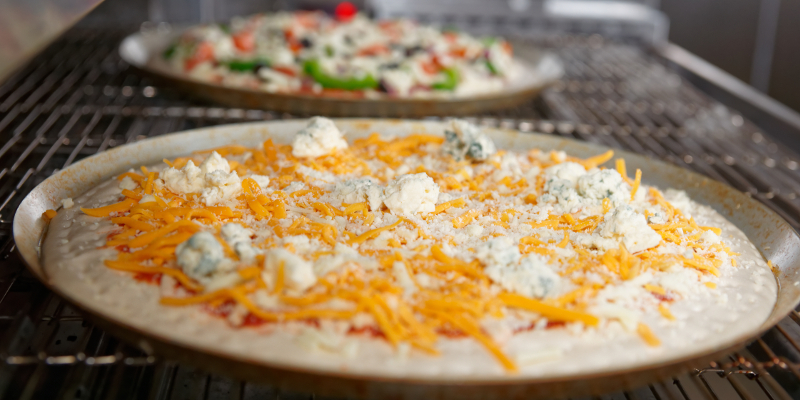
Pizza topping automation includes solutions for sauce depositors, topping applicators and their respective conveying systems.
Randy Medina, Grote Company contributed to this article
As the founder of Donatos Pizza (an Ohio-based chain with 200 stores in five states), Jim Grote was driven to find a better way to slice and apply pepperoni to his pies. He created the first automated pepperoni slicer/applicator in the late 1960s. This machine that helped reduce labor cost, while increasing productivity and efficiency, inspired him to found the Grote Company.
Since 1972, Grote Company has continually developed the latest innovations in slicer/applicator technologies.
Randy Medina shares insights into equipment dedicated to the industrial production of pizza, based on Grote Company’s almost 50 years of experience in this area.
In trend with all technology types, pizza lines are increasingly looking to optimize footprint as well as resource usage (ingredients as well as utilities). In this respect, servo motor technology is one of the key components and it continues to improve in size and speed. “This allows us to utilize the technology in our equipment to help improve speed, deposit consistency and overall size of the equipment,” Grote’s specialist tells us.
Dough meets sauce
Targeted sauce depositing is another production step that can be optimized to process consistency and ensuring minimum product waste. The depositor components help achieve this with accuracy for pizza of all shapes and sizes, either with or without edges. How is this accomplished? “A photo eye detects and measures the crust. A signal is sent, telling the sauce pump when to deposit.
The consistency of the sauce pattern is determined by several factors, including air pressure, sauce viscosity, temperature, and deposit weight. The sauce insert (shower head) is developed based on the characteristics of the sauce. The insert equipment can have various numbers of holes, hole spacing and hole diameter, according to this,” says Medina.
Adding ingredients
The next step in the production line is adding toppings to the pizza dough. “The ingredient applicators are designed to apply a wide range of different IQF (individually quick-frozen) ingredients,” he explains. A solid mechanical design and program helps make sure downtime is kept to a minimum, while ensuring dosage versatility as required by the input recipes.
The entire process can be automated through all stages, from adding the sauce to toppings, from shaping and cutting to packaging and storing.
Theory into practice
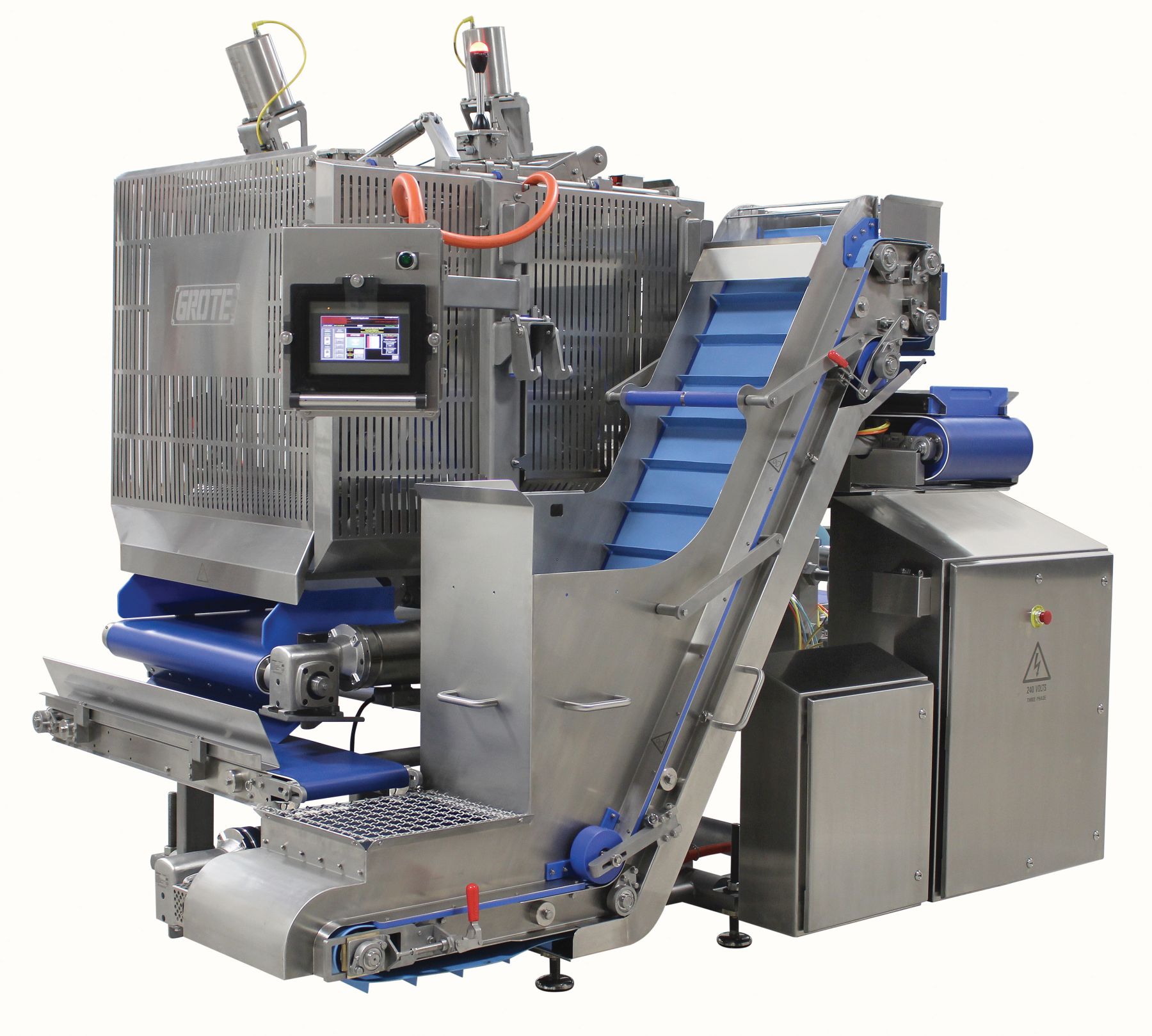
Grote’s TruTop Waterfall Topping Applicator will apply a variety of cheese or IQF ingredients. “The ingredients can be manually loaded into the applicator or for cheese products, a shredder can be used. Ingredients will be applied onto the sauced crust as it passes below. Any ingredient that is not applied to the crust will transfer back to the applicator through a return conveyor system. Load cells can be integrated into the applicator to help with weight consistency,” according to Medina.
In addition, Grote’s Peppamatic will slice and apply pepperoni directly onto pizza crusts in a predetermined pattern.
Some possible variations to pizza production lines include the number of lanes and production rates. Grote manufactures production lines that range from single lane of 45 pieces per minute to multiple lanes of 300 pieces per minute.
You can read more in our print magazine European Baker & Biscuit, March/April!