
Tailored Fats Give Power to Product Development
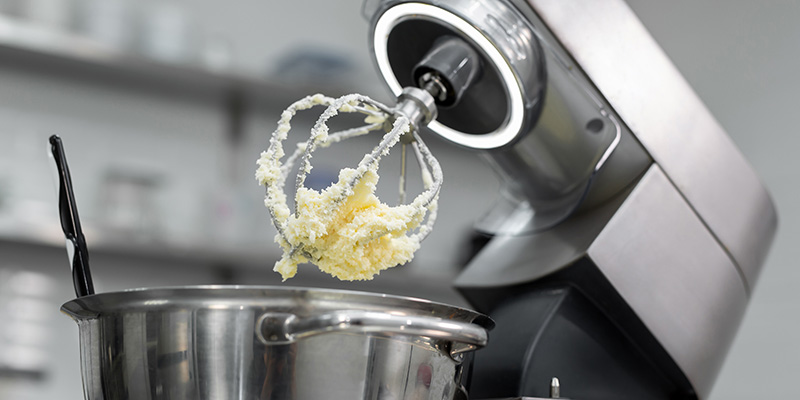
Fat is one of the most important flavor carriers, as it has a decisive influence on the market success of an end product. Among both consumers and industry, healthy vegetable fats are currently in high demand.
From a sensory quality perspective, fat is one ingredient that has a defining influence on the overall texture of baked goods. For example, it has been found that increasing fat level in the dough increases cookie tenderness, while decreasing it delivers cookies with higher breaking strength.
During baking, the fat melts quickly, which, together with the gradual dissolution of sucrose, boosts the system mobility and cookie dough spread rate. These macromolecules are critical raw materials and functional ingredients for cookies and other bakery products. Fats and oils influence finished product texture by means of forming structures of crystalline networks and additionally by means of interrupting the structure on account of their interaction with non-fat components.
Consistency
In baked goods, manufacturers typically rely on solid fats (such as palm or palm-based blended shortenings and margarine and animal fats like butter) to provide the necessary structure and fulfill other functional roles. Liquid oils (like rapeseed and sunflower oil) can be used for all-in-one-doughs, like muffins, digestive biscuits or soft cookies to bring the required lubricity. However, in certain bakery applications, liquid oils don’t provide the necessary structure and functionality due to the low amount of saturated fatty acids. They can’t capture air in the creaming step, resulting in lower volumes for baked goods and denser crumb structures.
Shopper preferences can also influence customers’ fat and oil selections. Today, consumers are becoming increasingly mindful of the food they eat and where the ingredients come from. They seek innovative, sensory experiences, but other factors, including clean label, plant-based, improved nutritional profile, and sustainable sourcing also influence their purchase decisions.
Broad Selection
Susen Gottwald, Cargill’s Customer Innovation Manager Bakery, explains that bakers have many factors to consider when selecting fats and oils. “Cargill offers a broad portfolio of fats and oils, enabling us to partner with bakeries to find the best tailored solution for their unique needs. At Cargill, we listen to our customers to understand their needs, and then create tailor-made solutions for optimum fat crystallization, ingredient blending and process management.”
Cargill’s portfolio is supported by a dedicated team of customer-facing, qualified technical service specialists that work with an intense analytical quality management program on raw material sourcing. According to Gottwald, the company has an advanced and dedicated refining process, with capabilities in Germany, Belgium, and the Netherlands. Their product offerings include:
Dough Fats. Bakers rely on dough fats to give their baked goods structure. They contribute to texture, machinability, air incorporation, and can serve as a dispersing agent for many ingredients. They also play an important role in the overall sensory appeal of finished baked goods, providing a tender mouthfeel, flakiness and flavor enhancement.
Filling fats. Cargill’s CremoFLEX filling fats are suitable for biscuits, wafers, fillings, sandwich cookies and many other applications in the bakery, biscuit and confectionery sector. All of the products in the CremoFLEX family represent plant-based solutions and support responsible and sustainable formulation, Gottwald points out. Those that use palm oil are made with sustainably sourced palm oil. The entire portfolio consists of label-friendly and healthy solutions, made with non-hydrogenated oils. Equally important, CremoFLEX products are customizable, enabling them to tailor solutions to address specific customer needs.
Compound Coating Fats. Cargill also supplies a range of compound coating fats. These highly functional fats offer rapid crystallization for hard, yet flexible coatings, yet still deliver optimum mouthfeel and flavor release.
Custom Solutions
Grüninger is one of the leading manufacturers of margarines and other baking fats in Switzerland. The portfolio includes high-quality specialties for the industry, such as tailor-made margarines and puff pastry fats, buttercream substitutes and other components for baked goods and confectionery.
“While the products are designed to fit the individual application in terms of texture and mouthfeel, we also comprehensively adjust the formulation to meet manufacturer and consumer demands with regards to the ingredients,” says Michel Burla, CEO Grüninger AG. “Accordingly, we work with vegan, vegetarian and organic products, and those containing in-demand micronutrients, such as omega-3 fatty acids from plant oils. Recently, we established a new flavoring process, which allows us to tailor the flavor profile precisely to our customers’ needs, whether it’s industrial production of baked goods or private label goods.”
According to Burla, there are several parameters that influence the decision as to which bakery fat to choose – technical or product-specific aspects, but also strategic ones. Plant-based products are in high demand, with the use of comprehensive technology making it possible to add, for example, milky or nutty natural flavors to vegan margarines for the best of both worlds – vegetal ingredients and a butter-like taste.
“Our solution is an innovative flavoring process which optimizes taste profiles and oxidation stability. This is a three-step procedure: First, any oxidation-labile fatty acids are stabilized during refining and crystallization with the help of a natural antioxidant. This significantly extends the shelf-life of the end product and also prevents the occurrence of heat-induced off-flavors that can arise during baking. By adding special masking flavors to the fat phase, any undesirable flavors are masked in a second step. Finally, the desired top note is integrated into the structure during the precisely controlled crystallization stage.
You can read the rest of this article in the May-June Issue of European Baker & Biscuit magazine, which you can access by clicking here.