
Controlling Fermentation: How Modern Proofers and Retarders Shape Bakery Quality
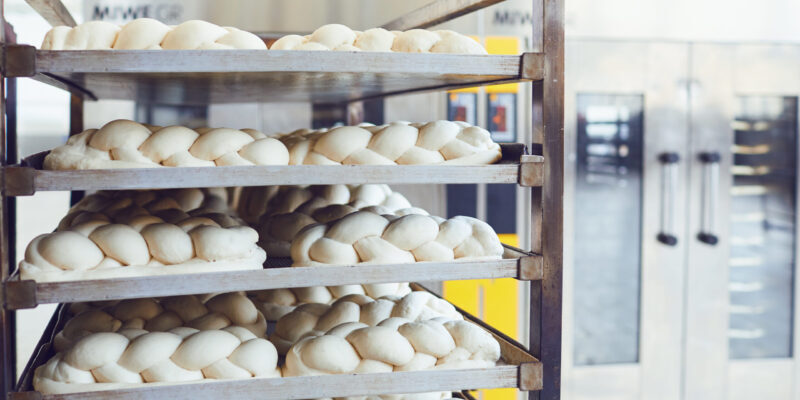
In baking, few processes are as deceptively simple yet critically important as proofing. It is the moment when dough becomes alive—when yeast activity, temperature, and humidity work together to create structure, volume, and flavor. For the professional baker, controlling these conditions is not only a matter of craft but also of consistency and efficiency.
Modern proofers and retarder-proofers are crucial tools for managing that balance, combining precise control of time, temperature, and humidity with designs that fit operations of every scale—from artisan bakeries to mid-size industrial lines.
The Science Behind the Rise
Proofing, or final fermentation, is the stage after shaping and before baking, where yeast metabolizes sugars into carbon dioxide and alcohol. The gas expands within the gluten network, producing the open crumb and texture characteristic of well-made bread or pastry. If the temperature is too low, fermentation slows and volume suffers; too high, and yeast activity races ahead, risking collapse. Humidity plays an equally delicate role: too little dries the dough surface, restricting expansion, while too much weakens structure and promotes stickiness.
Typical proofing conditions fall between 35 °C and 43 °C, with relative humidity around 80–85 %. Achieving uniformity throughout a cabinet is far from trivial: airflow patterns, door sealing, and control precision all influence product outcome. Equipment design therefore focuses increasingly on independent control of temperature and humidity, allowing bakers to fine-tune both parameters without one affecting the other.
Retarding: Slowing the Clock for Quality and Workflow
Retarding is controlled refrigeration that delays fermentation. By cooling dough to 0–5 °C, bakers can extend schedules overnight or synchronize production across product lines. Beyond scheduling flexibility, retarding improves flavor development as slow enzymatic activity releases more sugars and organic acids. Modern retarder-proofers integrate both functions in one insulated cabinet, holding dough cold for hours before automatically warming it to proofing conditions. For busy bakeries, this allows “set-and-forget” overnight fermentation with ready-to-bake dough by morning.
Precision, Efficiency, and Hygiene
Where earlier proofers relied on manual thermostats and water pans, today’s units feature microprocessor control, dynamic airflow, and energy-optimized insulation. Separate heating elements and humidity generators enable rapid, stable recovery after door openings, while variable-speed fans distribute air evenly across trays. Smooth stainless interiors with removable ducting simplify cleaning and meet modern hygiene standards.
Energy efficiency is another priority. Heating and humidifying continuously can be resource-intensive, especially when cabinets also act as holding units. Manufacturers now employ insulated floors, programmable fans, and door sensors that pause operation when open to minimize heat loss. The goal is no longer only perfect fermentation, but predictable, repeatable performance at lower operating cost.
Three manufacturers illustrate how differently the global bakery-equipment industry approaches proofing technology—ranging from advanced European systems to dual-purpose North American cabinets.
Sveba Dahlen: Integrated Precision for Full Control
Swedish manufacturer Sveba Dahlen has long specialized in bakery ovens, mixers, and proofers, and its F-Series F500 cabinet ranks among the most advanced standalone retarder-proofers available. The unit combines proofing, retarding, and freezing in a single insulated structure, addressing bakeries that need flexible production schedules without compromising product quality.