
Flexible Machines Give Leeway for Business Fluctuations
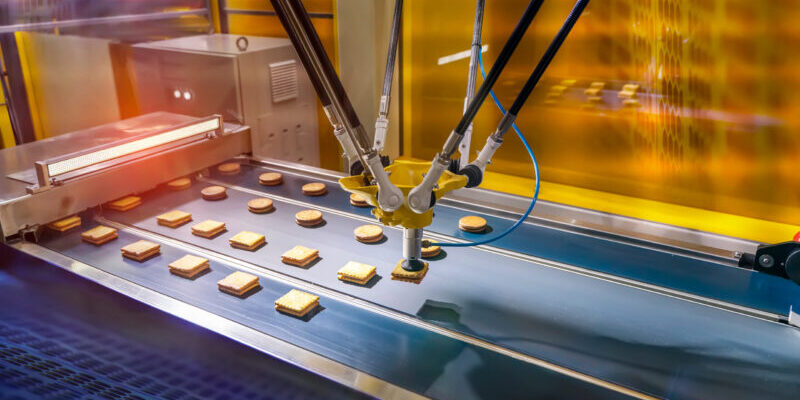
When it comes to bakery business, building in flexibility for product variety comes with mechanical considerations, as bakers have room to innovate only within the limitations of their machinery. There isn’t one piece of equipment that can do everything, but by identifying opportunities for equipment synergies, bakers can accomplish specific production goals.
The modern bakery needs to be versatile to meet today’s needs. And these range from the ever-changing demands of the consumer market as it bends to trends and fads to the need to have equipment that can produce more than one baked end product without too much change-over downtime.
Ingredients, too, can offer the baker better flexibility as they evolve along with market needs. So, the goal, in many instances for the smaller bakery, is to have one line that can produce, for instance, bread, croissants, baguettes and rolls.
This flexibility can also help reduce energy costs – the biggest single cost for most bakeries the world over. High energy cost items are the proofer, oven, cooler and associated steam boiler plant which can account for between 50-60% of the costs, with the oven using the most energy.
Multi-mode Baking
In an effort to reduce these costs, some bakers are turning to multi-mode or hybrid baking ovens which, in general, provide bakers with more flexibility in baking an assortment of different products by using different oven modes as well as proving additional adjustment capabilities in the bake time and overall oven profile.
Also, the introduction of data loggers and heat flux sensors have allowed the oven process to be documented in much more detail in terms of its operational performance and provide an avenue to support maintenance and troubleshooting activities to a level not possible the past.
Multi-mode baking is defined as using various oven modes to control the baking reactions that determine final finished product attributes through decoupling of conduction, convection, radiant and dielectric heat transfer modes.
For example, microwave, direct-gas-fired and radiant heat mainly impact structure, thickness and texture. Microwave and convection have the greatest impact on moisture and weight. It also allows for color to be adjusted by radiant and direct-gas-fired heat. This approach to baking develops an understanding of the fundamental characteristics and interactions for baking reactions in terms of materials, process and product.
Further to this, it permits optimized process and oven designs through specific heat transfer data for scale-up from pilot plant to production.
These systems came about based on experience and significant research and development and by understanding the fundamentals and characteristic heat transfer properties of the different modes.
Several bakers with a wide product range are combining the best baking methods by specifying a hybrid oven. DGF (direct gas fired), direct convection and indirect convection baking all have characteristics that are ideal for one part of the process but not necessarily all of it. Combining the benefits can create a unit that exactly matches a specific bakery need.
Flexible Means Modular
For Auto-Bake Serpentine‘s customers, future proofing in today’s dynamic market means introducing new product formats continuously. According to the company, their hybrid oven technologies coupled with flexible complete line automation enables customers the ability to quickly and affordably create trendy new products that feed the market’s insatiable appetite for diversified premium products. “The agility and performance of the Auto-Bake baking system is second to none, which is why the largest producers in the world continue to trust our technology as the best investment to future-proof their bakery. […] To put it simply, customers want innovative equipment that give them an advantage over their competition with flexibility to pivot quickly as market trends and demands change rapidly. Large capacity lines are not as desirable as they once were, today dynamic and flexible lines are much more important,” says Scott McCally, Auto-Bake’s President.
“We encourage our customers away from building a new custom line that is one dimensional. We want to offer a standard solution with the ability to create custom products through accessory additions that can come and go as demand peaks and wanes,” he adds.
Just as today’s larger food manufacturers need baking systems that offer greater flexibility to keep up with the expanding consumer palate, similarly, smaller manufacturers undergoing rapid growth need systems that can transform manual or semi-automated baking processes into large-scale industrial production.
Leaving Room for Innovation
The new Pita Chip System from Reading Bakery Systems (RBS) does both and more – it fully automates pita chip production and gives snack food manufacturers the ability to optimize operations and differentiate their baked snack product portfolio. With the RBS Pita Chip System, manufacturers can produce up to 1,000 kg of baked pita chips per hour, plus a wide range of baked multi-crisp products on the same production line, with minimal changes and operator labor.
You can read the rest of this article in the September-October issue of European Baker & Biscuit, which you can access by clicking here.