
Naan of Your Business
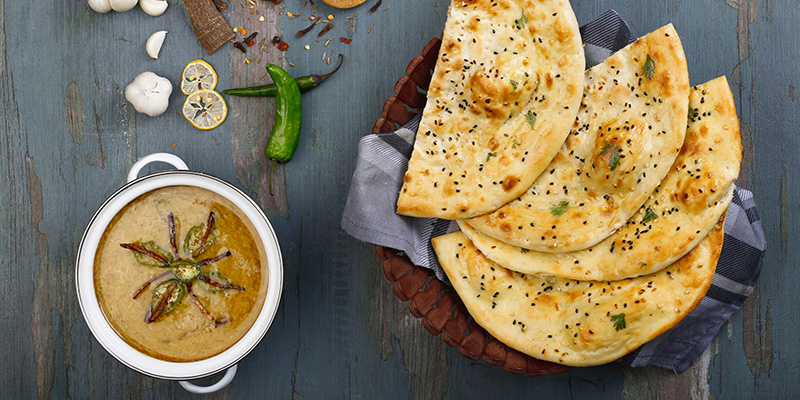
One of the main trends within the European bread market has been the growing consumer interest in specialty and artisanal varieties. Although traditional types such as white bread continue to account for the bulk of consumption, more Europeans now appear inclined to seek out products with a more premium image as purchasing frequency of bread has declined.
By Jonathan Thomas
The market for specialty and artisanal bread is wide ranging and encompasses various products, some of which have a unique history and heritage – flatbread, for instance, is believed to date back some 6,000 years.
Interest in specialty and artisanal form of bread amongst European consumers has been boosted by the expansion of the street foods market, to which growth has returned in the post-pandemic world. Cuisines such as Mexican, Indian, Middle Eastern and Mediterranean (which make heavy use of varieties such as flatbreads) occupy a strong position within the market for street foods. In addition to the traditional favorites such as burritos and wraps, other dishes incorporating specialty breads include gyros (a Greek version of doner kebab), sabich (a pita stuffed with vegetarian foods which originates in Israel), roti canai (a pan-fried flatbread most often served with curry) and bake and shark, a Trinidadian dish consisting of a fried flatbread filled with shark meat.
In global terms, what might generally be termed street food is eaten by around 2.5 billion people every day, or almost a third of the world’s population. Consumption is heavily skewed towards younger age groups such as millennials, for reasons such as its wide variety, its convenient nature, the fact that it is freshly prepared on the premises and its suitability for sharing images on social media platforms such as Tik Tok and Instagram.
Sourdough & Others
One of the real successes within the European market for specialty bread of late has been sourdough, which is made using a fermented dough. According to Mordor Intelligence, the global market for sourdough bread is set to increase from USD2.45bn in 2024 to around USD3.3bn by 2029, representing growth of almost 35%. Much of this can be attributed to its association with healthy eating (for example, it usually features only natural ingredients, it is less processed than other types of bread and has a relatively low glycemic index) and rising consumer interest in long-fermented forms of bread. Market growth should also be boosted by its versatility, since it is finding favor in other sectors of the food industry such as pizza bases, biscuits, desserts and patisserie.
Sourdough has been especially successful in the UK, where it accounts for an estimated 45% of the specialty loaves sector. This rises to 50% of all specialty loaves sold via in-store bakery (ISB) channels, with retailers such as Tesco and M & S having expanded their offerings within this category in recent years. Although white varieties are the most popular, accounting for over 60% of all sourdough loaves sold in the UK, alternative types featuring brown or rye flour have emerged as the market has developed.
In addition to the qualities mentioned previously, many consumers appear to associate sourdough bread with improved digestive health, which further explains its recent growth in popularity. In 2023, research from Holland & Barrett found that 58% of UK consumers had experienced digestive health problems in the past, while 63% of the more health-minded people claimed to be actively seeking out food and drinks aimed at combating these. However, price has been perceived as a potential barrier to further growth of the market for sourdough bread since it often costs more than standard equivalents. To address this, some of the UK’s main grocery retailers have attempted to make sourdough loaves more attractive from a price perspective.
Sourdough starters are typically used by many European bakers in the manufacture of pumpernickel bread, which has its origins in Germany and is also finding favor throughout the region. Its distinctive dark color comes from the coarse rye flour used in the baking process and it has a slightly sweetish taste. Health represents a main driver within the market for pumpernickel bread, since it is rich in fiber (and therefore aids digestion) and antioxidants, due to the presence of minerals such as copper and selenium.
Rye bread is also becoming more popular in parts of Western Europe on account of its health benefits. Not only is it rich in fiber, but also it has been linked with assisting in cardiovascular health. Rye bread is especially popular in Eastern Europe, where rye grows well and produces large harvests, but has struggled in western markets such as the UK on account of its dense nature and strong taste. To counter this perception, some bakers have been blending rye with wheat flours to produce bread with a lighter color.
Read the rest of the story in the January / February edition of European Baker & Biscuit.