
From Batter to Better: How Bakery Depositing Equipment Stacks Up
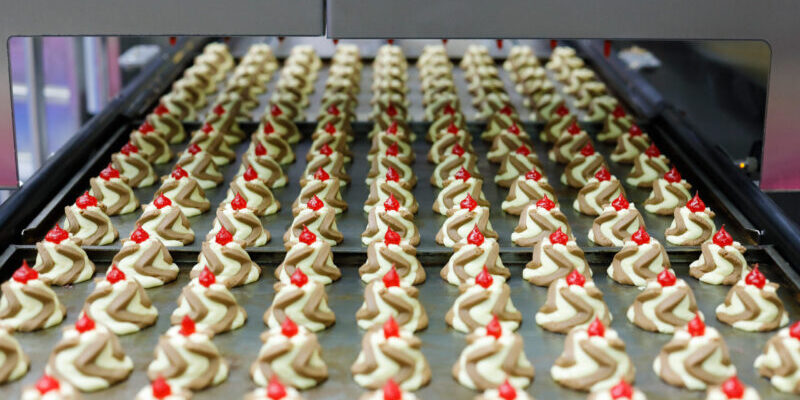
Depositing and topping equipment have undergone a remarkable evolution throughout the years, offering unparalleled consistency, speed, and versatility. Utilizing sophisticated engineering and precision controls, these machines are capable of depositing precise quantities of batter, fillings, creams, and toppings onto various bakery products with remarkable accuracy. From cakes and pastries to cookies and bread, the applications for this technology are extensive and varied.
One of the primary advantages of modern depositing and topping equipment is its ability to handle a wide range of batters and toppings, accommodating the diverse needs of bakery manufacturers. Whether it’s thick cake batters, delicate creams, or crunchy toppings, these machines are equipped to handle them all with finesse.
Moreover, the versatility of these systems extends beyond the type of ingredients to the presentation of the final product. Bakeries can customize their offerings with intricate designs, patterns, and toppings, enhancing the visual appeal and consumer experience of their baked goods. This level of customization not only meets consumer expectations but also provides bakeries with a competitive edge in the market.
In terms of operation, automated systems can run continuously, significantly reducing production time and labor costs while maintaining consistent quality. Additionally, these machines minimize waste by accurately depositing ingredients, ensuring optimal utilization of resources.
The integration of smart technology has further elevated the capabilities of deposition and topping equipment. Advanced sensors and controls enable real-time monitoring and adjustments, ensuring precise deposition and topping even in the most demanding production environments. Additionally, data analytics capabilities allow bakeries to optimize their processes for improved efficiency and quality over time.
European Baker & Biscuit looked at some of the leading equipment producers, and gathered insights on their most recent advancements in the field of depositing / topping equipment.
Repeatability Is the Prize
Rademaker serves industrial producers of bakery products, ranging from rich and luxurious pastries to enticing pizzas and topped baked goods. According to the company, consistency over time is a key feature of this type of equipment. “All Rademaker depositing equipment captures years of experience in handling various fillings and topping materials, ensuring highly accurate solutions that have stood the test of time and provide repeatable results. Servo controls with recipe management, combined with smart algorithms, allow the equipment to follow specific parameters for each individual ingredient in a repeatable manner. This ensures that bakers minimize their give-away and provide high-quality, repeatable products,” the company explained.
When it comes to choosing the right depositing equipment, bakeries are presented with a range of options to suit their specific needs and production requirements.
Rademaker’s portfolio includes all-round Mohnopump Depositors, which offer individual lane control for bakery fillings with particulates like fruit fillings, Piston Depositors designed to handle chunky fillings for pies or quiches, Smooth Filling Depositors for dosing fillings on high-capacity Croissant lines requiring minimal space, Gearwheel Depositors for tougher fillings such as chocolate, batters, and (waffle) doughs, and Target Depositors for high-speed applications.
Fillings can be as versatile as the mind can imagine, requiring a multitude of solutions tailored to their specific characteristics and required shape. Having an extensive range of depositing solutions, nozzle types, and process knowledge ensures that customers receive the appropriate solution for their specific challenge.
“Rademaker Depositors are meticulously designed to accommodate customers’ ingredients and fillings. Depending on the application, the most suitable solution is provided to ensure the highest level of weight control. Individually controlled nozzles further ensure minimal wastage of filling, adhering to the principle of “no product = no fill.” This approach not only avoids unnecessary waste of expensive filling on the belts but also ensures precision. As standard, Rademaker Depositors are engineered for high-speed, high-capacity situations while maintaining precision. Advanced high-tech systems are employed during validation trials to confirm their performance,” company representatives told us.
Looking ahead, Rademaker believes we will witness an increasing integration of application knowledge into equipment. Processing expertise and know-how will empower producers to transition into solution providers, becoming the go-to resource for customers facing challenges in retaining personnel.
Versatility Is Highly Sought-after
Handtmann is another leading provider of solutions for pumping, dosing, dough dividing, forming and cutting.
All their equipment solutions come with a Handtmann portioning machine. The single machine is adaptable with different depositing devices. “With this flexibility, we are able to provide machines for a large variety of baked goods such as liquids, creams, rye doughs, wheat doughs, short pastry, marzipan, toppings or fillings. Product weights are freely adjustable from 0.5 g upwards no matter the application: using a hand valve, filling into tubs, containers, trays, jars with our dosing valve or depositing directly onto dough sheets for multilane applications. Therefore, we are able to operate in a continuous dosing, strip dosing or spot dosing,” the company representatives told us in a previous interview.
During the recent Anuga FoodTec trade show, Handtmann introduced their new DS 554 and DS 560 P depositing systems to the public for the first time.
The multi-lane DS 560 P model offers a high line output in the dosing of fluid, low-viscosity, high-viscosity, pasty, inhomogeneous and chunky filling products, above all thanks to its coordinated interfaces to packaging machines.
The intuitive, easy-to-operate and servo-controlled lifting and lowering device in combination with servo-driven flow technology with integrated cutting function in the valves ensures drip-free and weight-accurate dosing. The valve, which can be flexibly used for all types of filling products, is available with the option of an outlet diameter of 16 or 32 mm with ejection piston, 8 mm with internally closing stamp or 32 mm with diaphragm. As a result, the high flexibility of Handtmann valve technology with its unique selling point allows the production of very different filling products and various portion sizes with just a few simple steps. This saves time and costs and facilitates the permanent expansion of the product range to be able to respond to current market trends.
The single-lane and flexible-in-use DS 554 depositing system comes into its own when dosing chunky, fibrous and inhomogeneous filling products with portioning accuracy to the gram. “The two new systems are characterized by a high degree of variability and interface capability, innovative valve technology and intrinsic safety, but also by ease of operation via the control panel of the vacuum filler,” the company commented.
AI-based Digital Solution for Quality Control on Pizza Toppings
AMF Tromp a business unit and brand of complete systems solutions supplier AMF Bakery Systems, has bet on AI for their Smart Applicator Solution for pizza production. By facilitating automated quality and quantity control for pizza toppings such as cheese, this AI-based software solution will enable pizza producers to minimize product waste and giveaway, reduce labor requirements, and operate more efficiently.
In conjunction with AMF Tromp’s pizza production machines, the Smart Applicator Solution can be retrofit or newly configured for the AMF Tromp Waterfall Applicator, a machine that deposits toppings, such as cheese, onto pizza products. The Smart Applicator Solution rapidly takes images of each item on the production line. Cloud-based software using artificial intelligence (AI) then collects and analyzes these images in real-time to determine whether the quantity and weight of the cheese topping is correct. While analyzing, this software adjusts the applicator’s speed and volume settings to deliver the optimal cheese distribution.
Using machine-learning technology, the Smart Applicator Solution optimizes this process over time, detecting and indicating any anomalies. Its baseline settings can also be used for quick production recovery or to make subsequent runs more effective. In this way, the Smart Applicator Solution accelerates production speeds and improves topping application accuracy by at least 3%. This results in pizzas with standardized topping distributions regardless of external influences, human interaction, or the sophistication of the AI technology.
This allows pizza producers to minimize the waste and giveaway of cheese – typically an expensive ingredient – as well as lowering their energy consumption. The automation enabled by the system can also reduce labor requirements and costs, since operators will not need to monitor cheese quantity or change the applicator machine’s settings. In this way, the solution drives efficiency, sustainability, and profitability for pizza producers.
Conclusion
From standalone machines to fully integrated production lines, manufacturers offer a variety of solutions tailored to different scales of operation and product portfolios.
By combining precision engineering, automation, and smart technology, these systems empower bakeries to enhance their productivity, consistency, and creativity. As consumer preferences continue to evolve, investing in state-of-the-art depositing and topping equipment will be crucial for bakery manufacturers to stay ahead in the competitive market landscape.