
The Right Surface for the Right Product
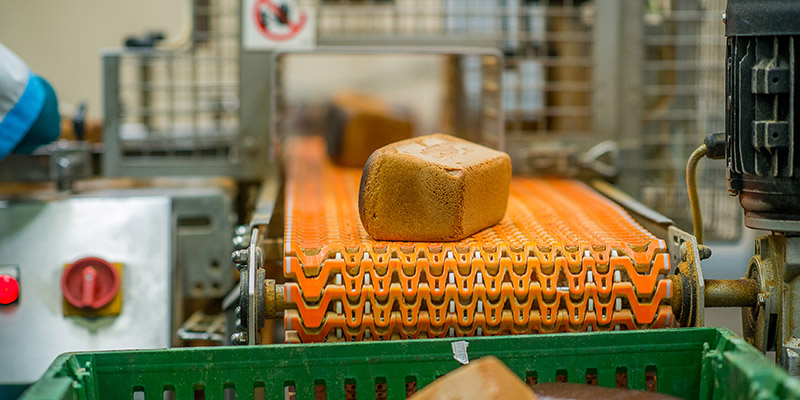
Processing, or simply conveying a number of different products along a single conveyor line is always a challenge. It requires a balance involving all the needs of grip, speed, product stickiness, differing geometries, etc. It is almost impossible to efficiently manage conveying a wide variety of bakery or confectionery products without having to switch from one belt surface type to another.
There is a relationship between the surface of the product that comes into contact with the belt to the belt’s contact surface. The grip level that a belt can offer depends on the amount of textured surface on the product to be carried. Selecting an appropriate belt surface (textured or not) for the type of product to be conveyed is key.
According to specialists from Ammeraal Beltech, baked products usually seem more complex to convey than confectionery, because of the impact of crumbs on the belt and differing levels of friction during conveying.
Confectionery products, where a chocolate layer is in contact with the belt, are easier to manage. “Across both food segments there is always the issue of a product’s stickiness to contend with, and the related release properties required of the belt. A soft belt surface is best for product grip, and a hard belt for non-stick performance, but the belt finish can be matt or glossy for both options. All such combinations are available within our Ropanyl and Nonex food grade synthetic belt product ranges,” the experts point out. They add that smooth belts offer optimal grip and, importantly, the ability to achieve efficient deep cleaning. “Homogeneous belts such as our Soliflex PRO offer the optimal solution in terms of food safety, optimal throughput, and reduced levels of maintenance.”
Energy Efficiency and Cost of Maintenance
In terms of maintenance, belt specialist IPCO says that regular checks and preventative maintenance are essential whatever type of belt is installed. Solid or perforated steel belts will deliver a much longer working life than other types – 20 or more years in a bake oven is not unusual, 50 not unheard of – but they all need maintaining, the experts say.
One thing to consider is the weight of the belt: the lighter the belt, the less energy is required to heat it through each cycle through the oven. A solid steel belt is as much as 30% lighter than wire mesh – perforated steel belts lighter still – so cost up to 30% less to heat. Ovens can account for up to 45% of a bakery’s overall energy consumption and as much of 25% of this is used heating the belt, so the savings are considerable.
You can read the rest of this article in the November / December Issue of European Baker & Biscuit magazine, which you can access by clicking here.